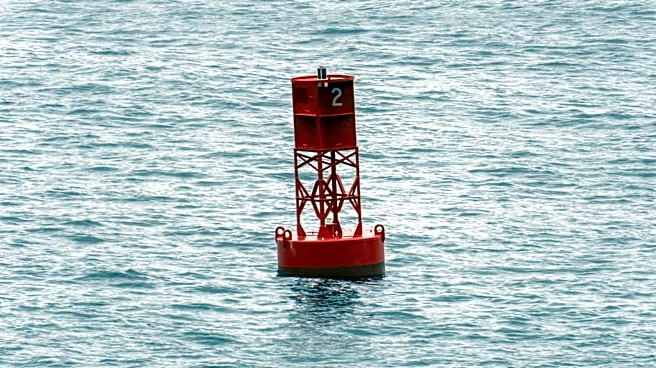








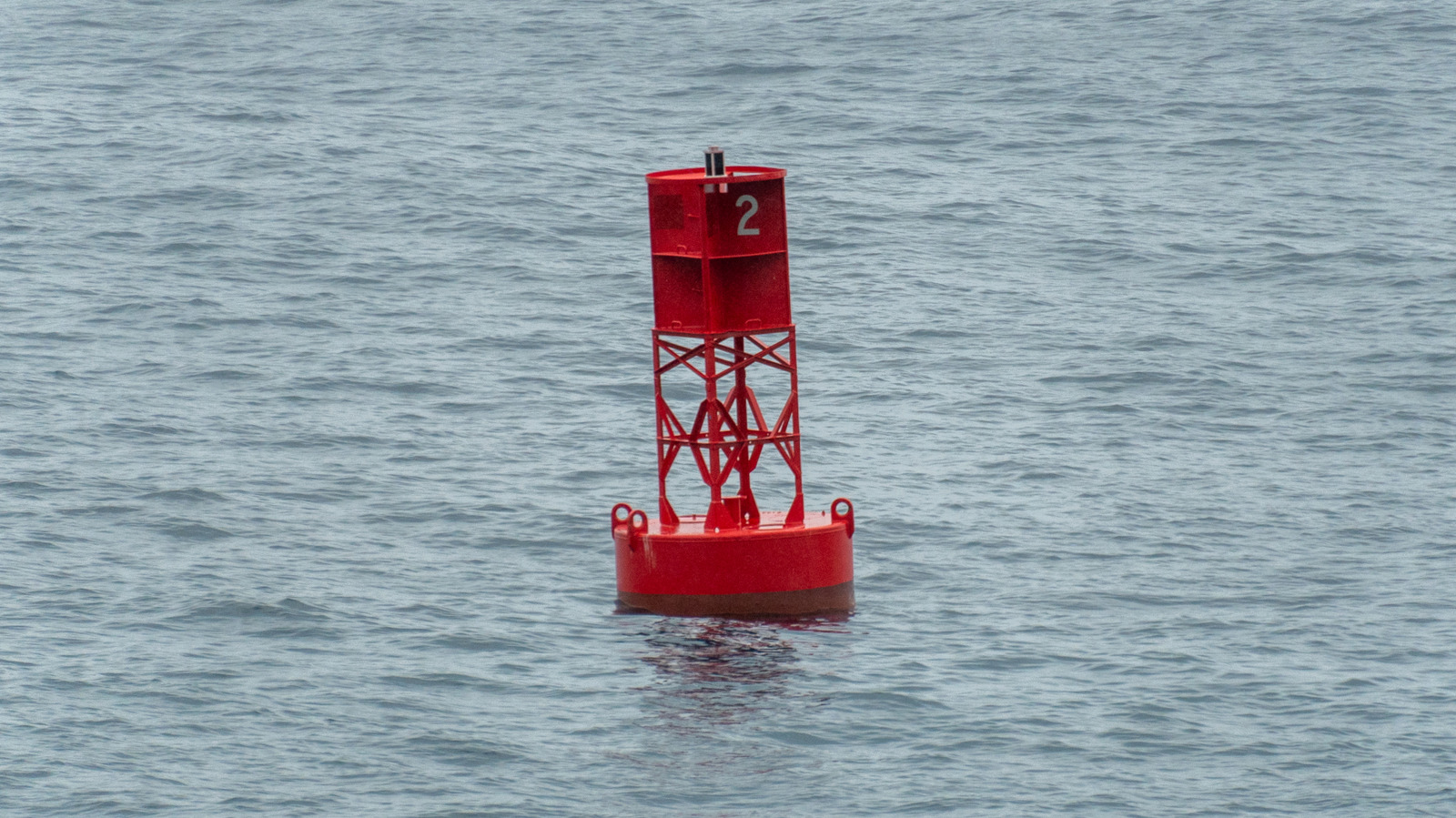
Drop a solid metal object into water and it will quickly sink, yet metal buoys remain tethered in place in the ocean without suffering the same fate. It's down to Archimedes' principle, which states that any object that is fully submerged into a liquid will displace an amount of that liquid equal to the object's volume. If it's partially submerged, the amount of liquid displaced will be equal to the volume of the submerged part of the object.
If the weight of that object is equal to or less than the weight of the displaced
liquid, the object will be buoyant. In the case of the ocean buoy, all that's required for it to remain floating at the surface is for its total weight to be less than the weight of the water it's displacing. The easiest way to do that is to fill a metal shell with air, but that isn't the only option.
Some steel buoys are available with foam cores instead, which can help improve their long-term buoyancy. Over time, steel buoys corrode in ocean water, and if they corrode enough, a hole could potentially appear in their surface and let water through. This not only increases the buoy's weight but can also lead to further corrosion.
Filling the buoy with foam instead provides an extra layer of protection, as the water can't displace the foam in the same way that it could displace air, meaning there's less chance that the buoy becomes less buoyant if its shell gets damaged. As long as the foam remains light enough to keep the overall weight of the buoy under the weight of the water it displaces, it will remain floating.
Read more: Every Class Of Battleship The U.S. Navy Operated In WWI And WWII
There are plenty of alternatives

Regardless of what they're filled with, there's no getting around the fact that a metal shell is heavier than many alternatives. As a result, plenty of buoys, including weather buoys and other smart buoys, often use plastic foam hulls instead. They're also often cheaper to maintain than steel buoys. Small marine buoys can also be made entirely from styrofoam, although this has a variety of negative environmental impacts, since small pieces of material can break off and form debris clusters or be ingested by wildlife.
Researchers are developing new materials to address some of the concerns about the current range of options on the market. In mid-2026, a group of researchers based at RMIT University in Australia unveiled a new metal-polymer hybrid material that could eventually be used in marine buoys, documenting their work in the Advanced Materials journal. Advances like these could lead to buoys that last longer in the ocean or cut the risk of pollution, but for now, foam-filled steel buoys offer a compromise between being long-lasting and reliable without being prohibitively costly.
Want the latest in tech and auto trends? Subscribe to our free newsletter for the latest headlines, expert guides, and how-to tips, one email at a time. You can also add us as a preferred search source on Google.
Read the original article on SlashGear.