






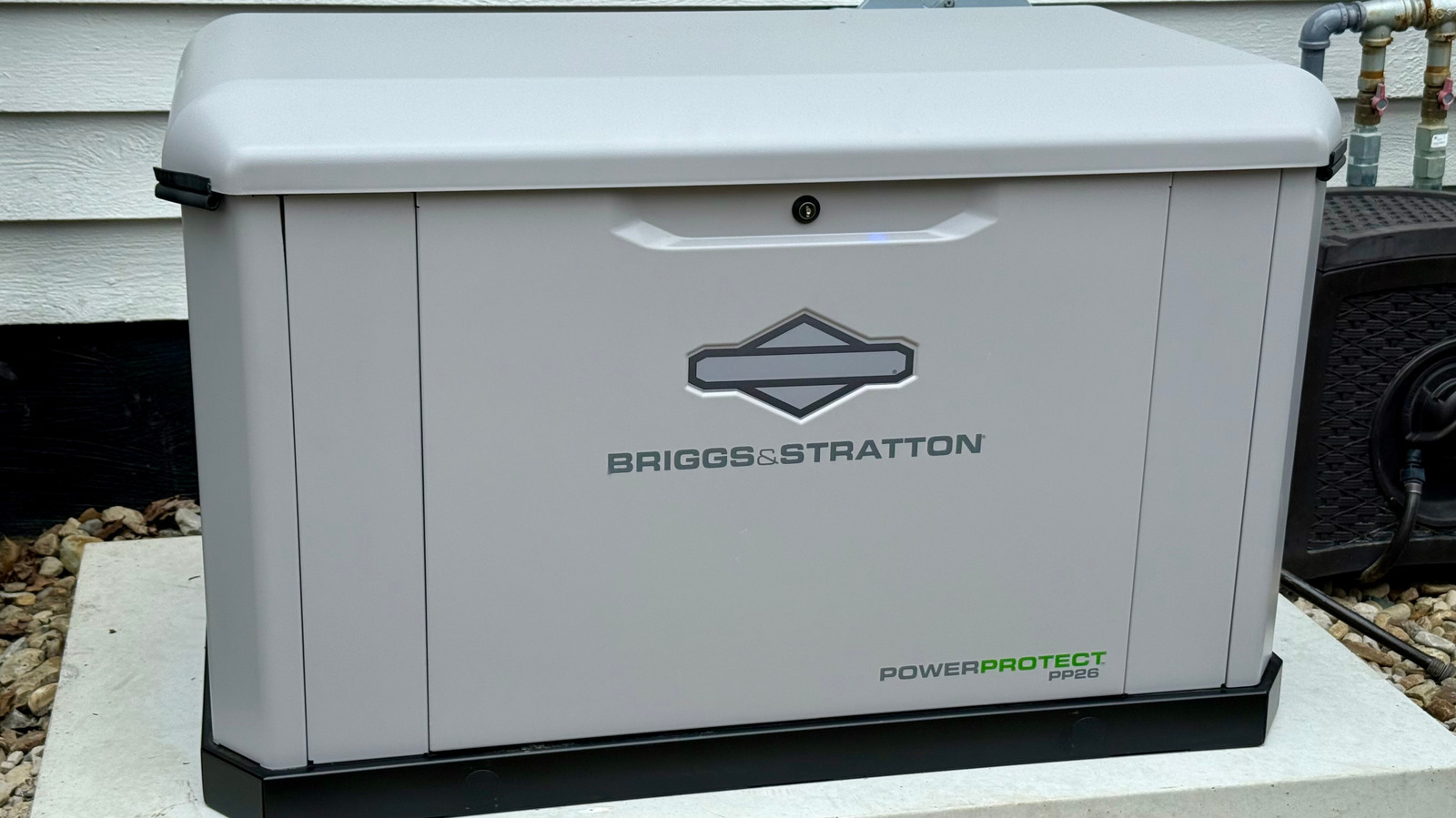
If you want to supply power to your entire home during a backup situation or emergency, one of the more reliable ways to do so is to spring for a whole-home generator through companies like Generac, Briggs & Stratton, and some others. Choosing the right size generator is all about how much power you'll need and what you aim to achieve — like if you want to keep your refrigerator running for days at a time. But then you also have to decide which brand to go with. Which one is the most reliable, especially
in a situation where you need to draw power for your essentials?
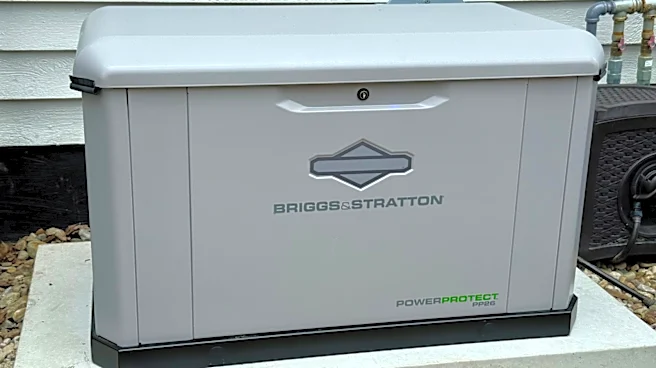
As trusty as ever, Consumer Reports delved into the particulars of popular brands and models and sussed out which ones are worth investing in. What's surprising is that Briggs & Stratton is not in the top recommendations. In fact, according to CR it gets the lowest score overall, with the 40746 13 kilowatt-hours model lagging behind most others; it earned markdowns because of its fuel efficiency and noise production. So, what brands and models does CR recommend if you're looking for this kind of system?
The top pick is the Generac G007043, which is praised for its large capacity at 22 kilowatt-hours. Next is the Kohler 20RCAL-200SELS with 20 kilowatt-hours, followed by the Champion 100179 with 12.5 kilowatt-hours. Prices range from about $4,100 to $7,000 depending on the model and where you buy.
Read more: Major Washing Machine Brands Ranked Worst To Best
Why did Consumer Reports recommend these generators over others?

The full report is always worth a read, notably since Consumer Reports does rigorous lab testing with products. But in that testing it also incorporate a lot of real world elements, such as the average runtime for each system and how easy they are to use and set up. That's why all three generators from Generac, Kohler, and Champion get the high marks. Bear in mind, portable generators are another beast entirely and generally offer smaller capacities overall.
When it comes to whole-home coverage, the Generac G007043 offers excellent power, with CR stating it has "superb" delivery and reliable quality. That means, when you really need power for your appliances and gear, there's little to worry about. However, it does have "mediocre" fuel efficiency. Consumer Reports says it will last for about 195 hours on average with propane as a fuel. It delivers 22,000 watts of output with propane and 19,500 watts of output with natural gas. Self-testing via the mobile app, with Wi-Fi connectivity, and its electric start if you buy an optional $200 battery, are call-outs in the feature department.
The Kohler 20RCAL-200SELS also gets high marks for many of the same traits such as power delivery, quality, and ease of use. It offers 20,000 watts of output with both propane and natural gas. You're looking at about 141 hours of use on average with propane. The smart functionality allows you to conduct maintenance checks on your phone, which is a neat feature. However, CR mentions it gets sub-par energy efficiency.
Go with Champion if you want something under 15,000 watts
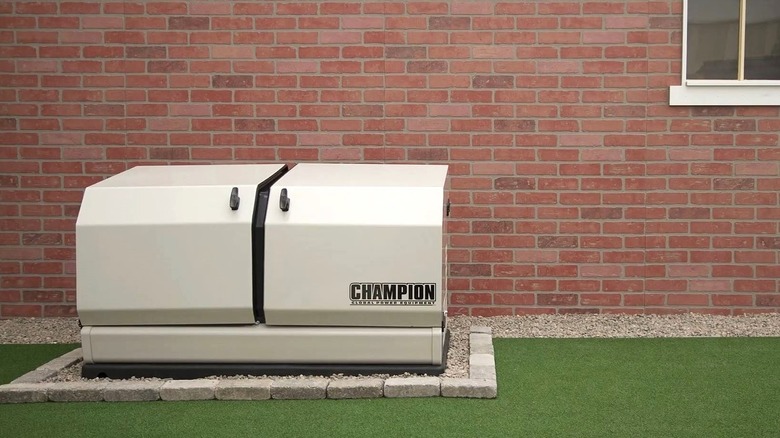
The value add option is the Champion 100179 for $4200 or the Champion 100177 for $3300. Both have higher scores than the other offerings on the list, even higher than the Generac and the Kohler to be exact. However, with under 15,000 watts of capacity, they remain in a separate category, for those who want to spend less and don't need anything larger.
Power delivery, quality, and ease of use are all lauded here. Meanwhile, the running times are impressive for the sizes. The 100179 can last for 198 hours on average with propane, while the 100177 can last 247 hours on propane, though the outputs are limited, too. The 100179 supplies 12,500 watts on propane or 11,000 watts on natural gas, while the 100177 supplies 6,500 watts via propane and 7,500 with natural gas. Granted, we're not talking about your standard 20-pound propane tank size that's used for portable generators. Generac recommends at least a 250 pound tank for whole home systems.
CR praises the 100179's intuitive design since it allows easy access to the maintenance doors, including the internal breaker. Both models are capable of powering a majority of residential home appliances just fine from water heaters and refrigerators to central air conditioning systems. It is unlikely that whole home generators, such as those you see here, will pay for themselves over time because of their up-front expense, but the peace of mind you feel when the power stays on may be worth it to you and your family.
Want the latest in tech and auto trends? Subscribe to our free newsletter for the latest headlines, expert guides, and how-to tips, one email at a time. You can also add us as a preferred search source on Google.
Read the original article on SlashGear.