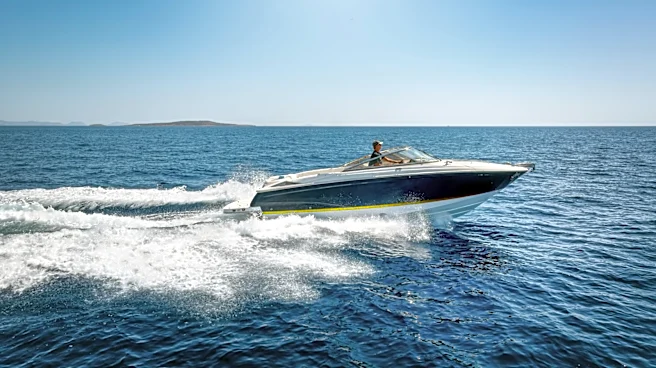




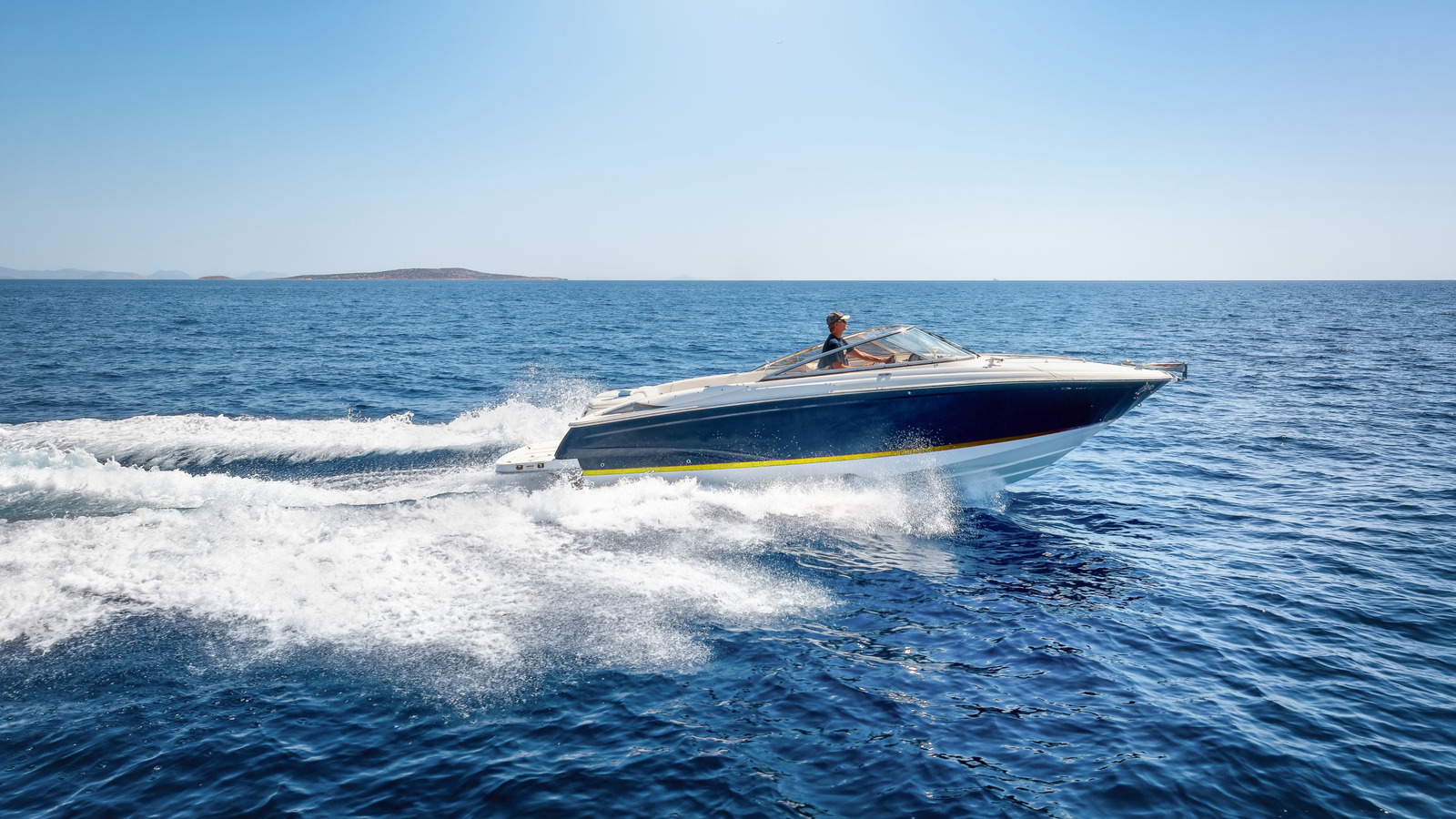
Boats come in a great deal of shapes and sizes. More importantly, they're designed around four types of boat engines, all of which work differently. For instance, outboard motors are the simplest of the four, as they're attached to the boat's back. Yet, they're also super maneuverable. Outboard motors can tilt up, so they can easily prowl the shallow water at slow speeds even if it's just six inches deep. In contrast, inline motors are fixed inside the boat's hull. While that is efficient for overall
stability, they can't tilt, making them harder to drive at slower speeds. This raises the question: can you switch to an outboard motor on boats that are inboard?
Absolutely, but it's not going to be easy. You can't just slap on the new motor and hope for the best. The first step is plugging up the hole in the transom (back of the boat) to accommodate the motor. Since the old steering system will be redundant, it's generally helpful to remove it and replace it with a hydraulic steering system. With the old engine gone, the boat will likely be out of whack, so you'll need to hire someone to readjust the lift bunks or bunk brackets in order to achieve a perfect balance.
Overall, this modification isn't for the faint of heart. The entire weight dynamics of the boat must be taken into account. The stern will be heavier than before, so depending on the type of vessel, you might have to counterbalance the extra mass in the back by adding extra weight to the bow. That said, if you successfully manage the conversion, there are a few advantages as well.
Read more: Every Class Of Battleship The U.S. Navy Operated In WWI And WWII
Is converting an inboard boat to an outboard worth it?
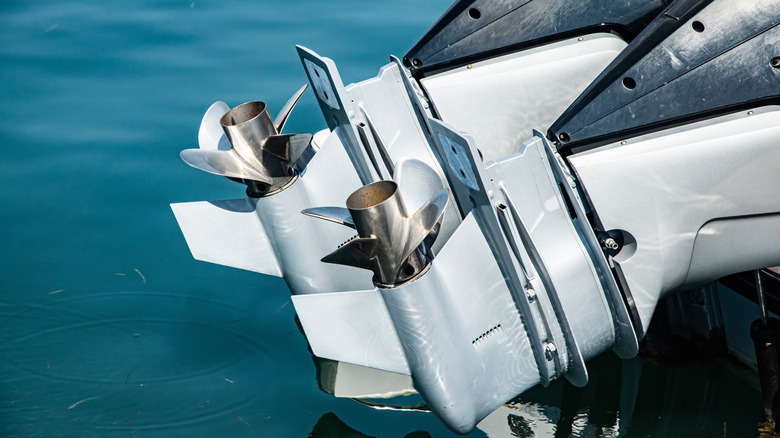
For some marine enthusiasts, signing up for a complex conversion job may be worth it. Maintaining an inboard engine can be a hassle, and even a simple oil change can be uncomfortable because you'll be working in tight spaces. In many cases, you'll also have to put down extra cash toward maintenance, owing to the complexity of the rig, which isn't a problem when the motor is exposed. An outboard motor may also be safer since its risk of fire is much lower than with the simpler type of propulsion system.
Nonetheless, converting your entire boat is pretty complex and oftentimes costly. Though it all depends on the model of the boat (you'll have to ask professionals to give you a quote), the project can knock out a significant amount of money from your bank account, anywhere from $25,000 to $40,000. It's not a small sum, especially when you consider that the starting price for a Tahoe 2150, a popular outboard motor model, is around $48,000.
An outboard motor is fine, but it's not without its faults. One of the biggest disadvantages of outboard motors is that they're loud as all hell. Even worse, despite the maintenance being easier, they're no strangers to corrosion. A full-on conversion may be worth it if you've got the budget and the patience. For most boaters, it's much simpler to either get an outboard from the get-go or first sell the inboard boat before getting a new one.
Want the latest in tech and auto trends? Subscribe to our free newsletter for the latest headlines, expert guides, and how-to tips, one email at a time. You can also add us as a preferred search source on Google.
Read the original article on SlashGear.