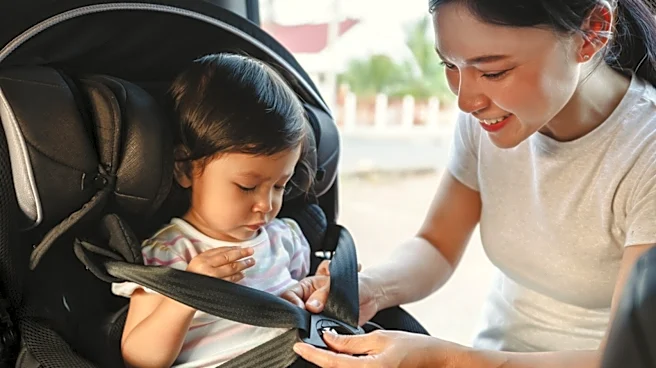











There's a lot to prepare for when taking a road trip across Europe. First, there's the difference between American and European cars. Then there's the fact that gas is way more expensive. But the biggest watch-out, particularly for parents traveling with toddlers, is you might not be able to use your child's favorite car seat in your rental car. That's because the U.S. and the EU use completely different rules in terms of sizing, testing, and even whether a baby should ride facing backwards.
In the
United States, car seats have to meet Federal Motor Vehicle Safety Standard 213, or FMVSS 213 for short. It's been the standard since the 1970s, and a compliant seat carries a sticker. Europe, on the other hand, uses a different standard. It follows regulations developed under the United Nations Economic Commission for Europe (UNECE), which the EU, the UK, and many other countries have adopted.
For years, that was the R44 standard. However, that's been replaced by the R129 standard, introduced in 2013. Currently, retailers in the EU predominantly sell seats tailored to R129 standards, though parents owning seats with the former standards can still keep using them in the meantime. Both seats carry a label, usually orange, with a capital E in a circle and the regulation number (R44 or R129).
Read more: 5 Drawbacks Of Using All-Weather Tires
Is the sticker the only difference between American and European car seats?
No. But the ratings and standards the stickers represent definitely set the seats apart. For starters, the European R44 standard divides seats along weight classes, while the newer R129 measures by height instead. Parents find this makes it much easier to find a seat that matches their child's size. American FMVSS 213-rated seats use both height and weight limits, which seems like a "tomayto-tomahto" situation until we get into testing, the direction of the seat, and the hardware itself.
R129 mandates that children should ride rear-facing until at least 15 months, with exceptions made for newborns and infants with medical or developmental needs who require a specialized lateral-facing car seat. The FMVSS 213 doesn't have the same age limit. It only bars manufacturers from recommending forward-facing seats for children weighing less than 12 kg (roughly 26.5 pounds). The R129 also prioritizes side-impact crash tests, which the National Highway Traffic Safety Administration (NHTSA) only just introduced in 2022. Manufacturers have until December 5, 2026, to incorporate side-impact testing.
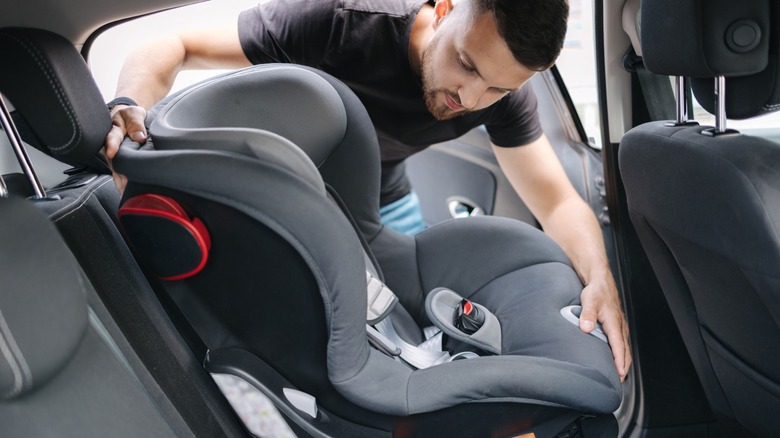
Then there's the hardware. American cars use LATCH straps, while European cars use ISOFIX. The two systems do the same job of getting the car seat installed but with slightly different specs. This is why some parents who travel with their car seats sometimes struggle to install American versions, which aren't always plug and play. At times, it's not even clear how to install rear-facing seats correctly. American harnesses also use a chest clip, which European seats don't have.
Want the latest in tech and auto trends? Subscribe to our free newsletter for the latest headlines, expert guides, and how-to tips, one email at a time. You can also add us as a preferred search source on Google.
Read the original article on SlashGear.