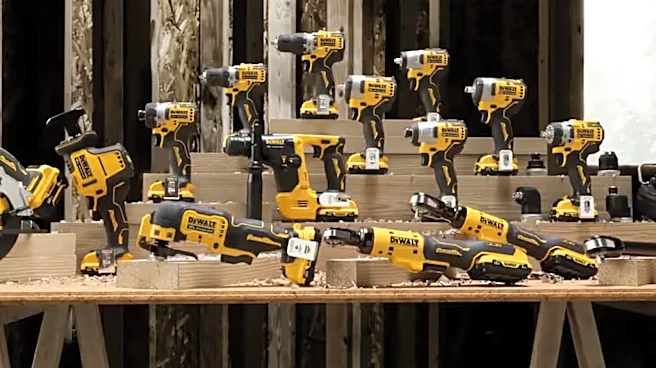






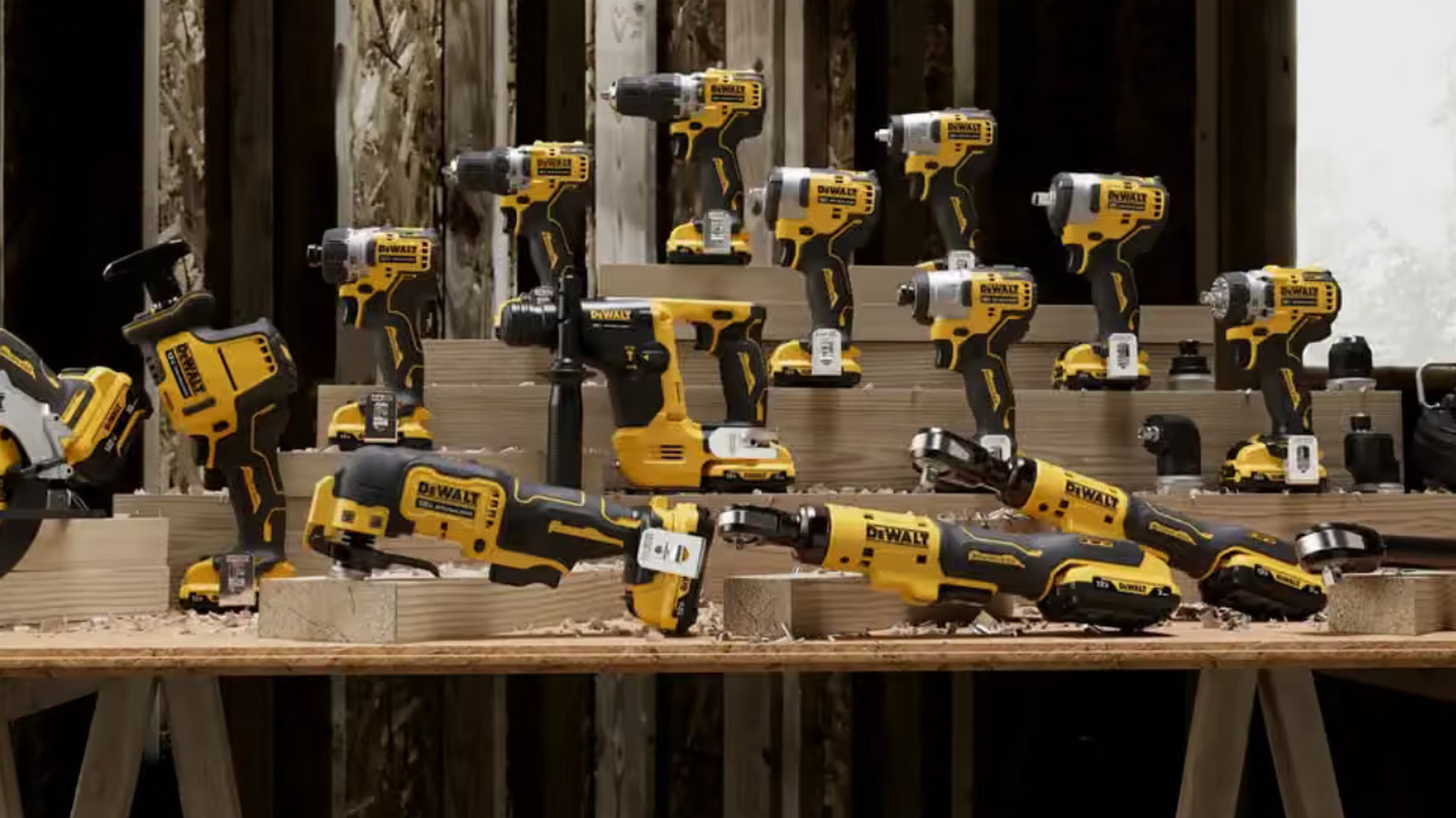
Unless you're a beginner when it comes to using DeWalt tools, you're probably familiar with the company's 12V and 20V Max platforms. If so, then you know that 20V tools can typically handle more demanding work than 12V tools, depending on the job. So with that being the case, why not use a DeWalt 20V tool for every task since it can reliably get the job done?
The fact is that each tool in DeWalt's 12 and 20V Max tool lines is designed and manufactured for different purposes. Some tools from one line may
not be suitable for certain tasks, and you could have a tough time finishing a job without a specific tool from the other line. Because of this, it's important to use the tool that the job calls for. However, making that call can be tough at times, which is why it's a good idea to consult your owner's manual before reaching for either a 12 or 20V device.
What you'll find here are just some examples of when a DeWalt 12V tool could be the better choice over a 20V tool for a DIY job. Your experience may vary, of course, and there may be times when you might need to switch it up to suit your particular situation. But this list can serve as a good baseline for the next time you're trying to decide between one tool or another.
Read more: 13 Highly-Rated Harbor Freight Pittsburgh Tools With A Lifetime Warranty
Overhead drilling, driving, or fastening
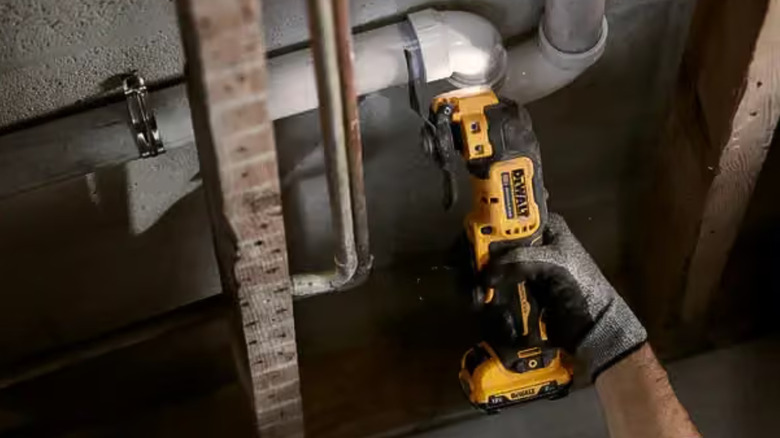
If you've ever had to work on a low ceiling for an extended period of time, then you know how tiring it can be. Holding your arms up over your head while you're trying to drill, drive, or fasten can take much longer than it should, especially if you're resting here and there as you work. This is where a DeWalt 12V Max tool can come in handy.
DeWalt makes its fair share of cordless drills, including the cordless 12V Max Drill/Driver, which weighs 1.9 pounds for the tool only. Add in the weight of a 12V Max 2Ah lithium-ion battery, and the total combined weight is 2.41 pounds. In contrast, the 2.75-pound DeWalt Atomic 20V Max 1/2-inch Drill Driver with a 0.82-pound 20V 2Ah battery weighs 3.57 pounds combined. That may not sound like much weight, but after a couple of hours working overhead, you could very well feel the 1.16-pound difference.
That weight difference may also come into play when you're going up and down a ladder. Unless someone is handing the tool to you, you're likely trying to carry it, or it's hanging from your belt. Either way, the added weight of a 20V tool could unnecessarily complicate an already difficult job. This is one of the reasons why DeWalt designed its 12V line to be so lightweight, as it can help reduce the amount of physical effort you have to exert.
Working in cramped spaces
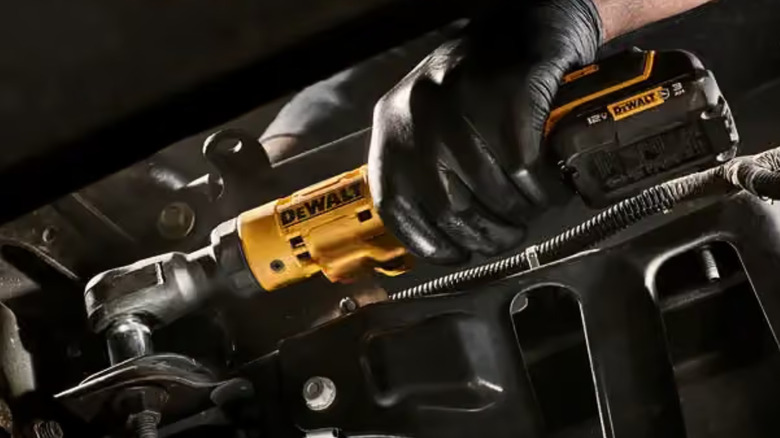
When was the last time you worked in a tight space, like under the hood of your car, and thought, "This is the wrong tool?" It's easy to do, especially if your DeWalt 20V tool is handy and you have to get the job done quickly. But this is exactly why a 12V tool could be the better choice, as it can give you easier access in spots where you legitimately don't have enough wiggle room.
For example, you're working on your car's engine and need a cordless ratchet. If you select the 12V Max version, you'll be using a tool that is 12 inches long and weighs 2.21 pounds with the battery. Since the 12V line is both compact and lightweight, you may have just the ratchet you need for those tight corners. But if you grab the 20V Max ratchet, you're adding 1.2 inches of length and nearly a half pound more, for a total tool and battery weight of 2.65 pounds. Now that tight space is even tighter.
That added bulk could actually impact the work you do in any cramped area, like your home's attic or crawlspace. Choosing a 20V tool means having to carry it as you're ducking a low ceiling, or dragging it on your hip as you're squatting down. It's only when you get to the area where you're going to use the tool that you realize it's just too big for the work you're trying to do.
Assembling furniture and installing small hardware
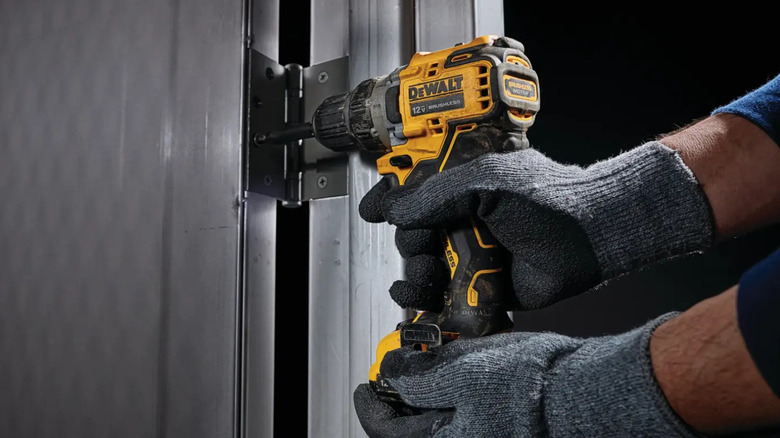
Putting furniture together can be tough, especially when you're staring down a massive box, several bags of hardware, and instructions that read like a technical manual. While it may be tempting to grab a DeWalt 20V Max drill for its power, keep in mind that it might be more tool than you actually need.
DeWalt uses a measurement known as Unit Watts Out (UWO) to gauge the power output of its cordless drills. The 12V Max drill/driver has a rating of 250 UWO, with a maximum speed of 1,500 rpm. In contrast, the 20V version has a maximum speed of 1,650 rpm and a UWO rating of 404. That's 61.6% higher possible power output versus the 12V model. Considering the ability of the 12V drill to handle everyday tasks, using it for something like assembling a desk or a gaming chair could be the right move.
The same idea applies when installing hardware like cabinet hinges and drawer knobs, where careful precision is more important than sheer power. While you may not want to use a regular screwdriver for these DIY tasks, a 20V driver might just have more power than you actually need. A 12V DeWalt driver can typically handle these jobs without much of a problem, as you'll have plenty of power to get the work done.
Hanging picture frames and wall accessories
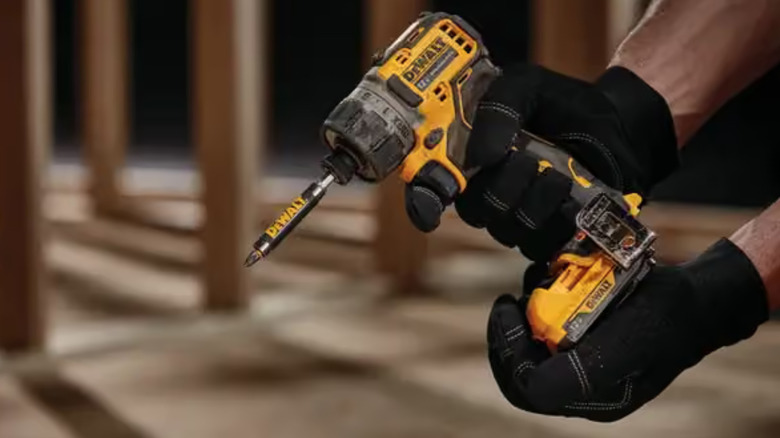
Using a DeWalt 20V Max driver to drill into a wall stud makes sense. After all, this kind of work can require a bit more power. That's where the driver's 404 UWO and 1,650 rpm can be not only useful, but effective as well. However, tackling the same job with a 12V driver may or may not yield the same results. But what if you're just hanging a picture frame on the wall?
The 12V Max drill/driver is designed to handle everyday tasks just like this one. It has plenty of power with 250 UWO and more than enough speed at 1,500 rpm. So if you're drilling into drywall and hanging a standard frame, the 12V option can be more than enough to get the job done. The tool's compact and lightweight design is another benefit, as the work can be that much easier to accomplish.
The same is true for hanging wall accessories. Shelves, brackets, and certain items like a towel bar in the bathroom can typically be hung using a 12V drill/driver. Of course, not every wall is the same, and sometimes there may be a reason to use a 20V tool besides drilling into a stud. But for everyday DIY work that requires a capable tool, DeWalt's 12V line might be exactly what you need.
Methodology
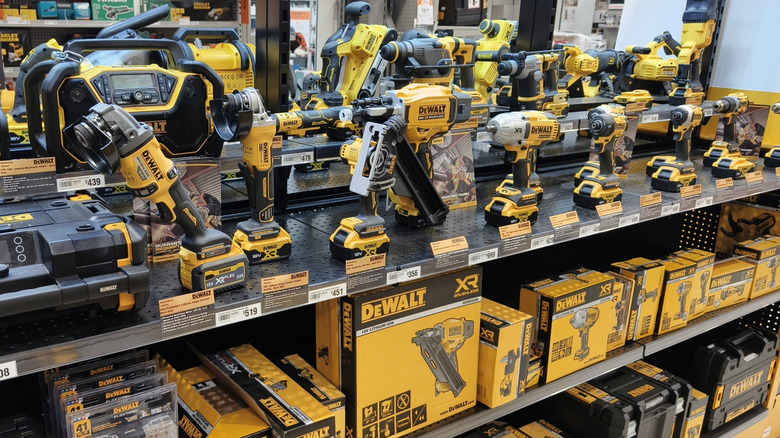
The examples given on this list represent some of the most common tasks homeowners tackle every day. That includes basic car repair, standard DIY jobs throughout the home, and more challenging work that requires a specifically designed tool. In order to understand how these everyday tasks are handled by DeWalt's 12 and 20V Max tool lines, we dug into the specifications of several different devices. We looked at tools like the drill/driver and ratchet to understand their design, as well as power output and speed. We then applied that information to the real-world scenarios on this list.
Want the latest in tech and auto trends? Subscribe to our free newsletter for the latest headlines, expert guides, and how-to tips, one email at a time. You can also add us as a preferred search source on Google.
Read the original article on SlashGear.