








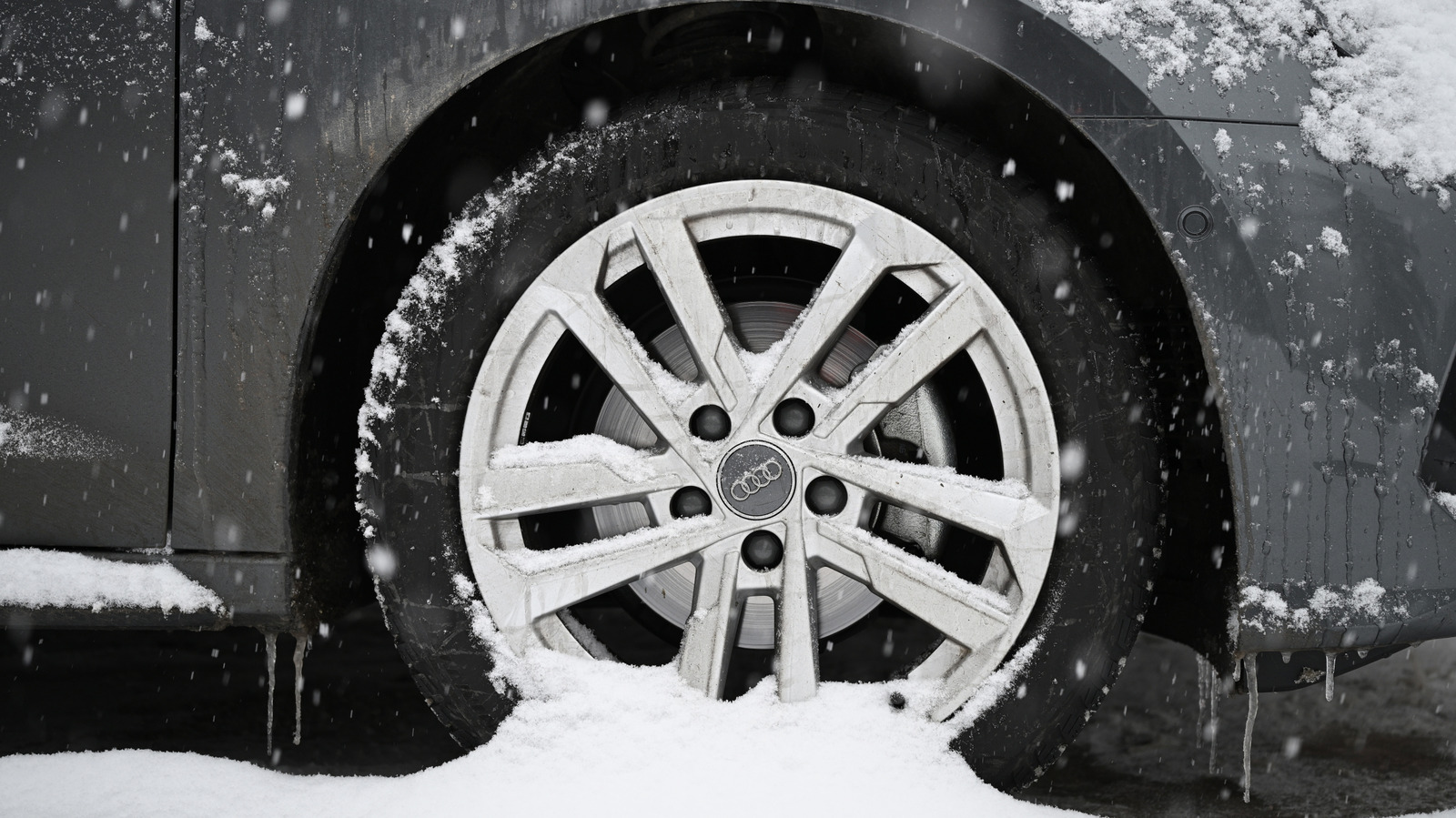
Drivers who live in climates where winter and snow tires are necessary may have many questions. First, of course, is whether your car needs winter tires at all. Then there are questions about which winter tires to choose, as well as when you should swap your tires in fall or wait for colder weather. Another question, particularly for those looking to save money, is whether it's advisable to install winter tires only up front and leave the rear tires as-is. Put simply, if you want to maximize safety,
no.
Many modern cars and crossover SUVs deliver power only to the front wheels, so that's where most of the traction demand will be when driving on snowy or icy surfaces. However, even if your vehicle is front-wheel-drive, that doesn't mean the rear tires are simply there for the ride — especially in low-traction conditions.
While there's nothing physically stopping someone from mounting winter tires only on the front, it's not the safest thing to do regardless of the drivetrain layout of your car. It's not just that you'll be getting less traction overall. The vehicle's balance can be thrown off, and with more traction on the front, the rear of the car can become more likely to lose traction and spin.
Read more: 5 Drawbacks Of Using All-Weather Tires
It's about traction and balance
Winter tires and all-season tires are designed much differently. While drivers who live in warmer, drier climates likely won't need them, winter tires can add major confidence when driving in ice and snow. If you've driven a front-wheel-drive vehicle in wet or snowy conditions, you may have noticed the sensation of the front tires struggling for grip during acceleration, and this might make you think it's a good idea to only install winter tires on the front axle.
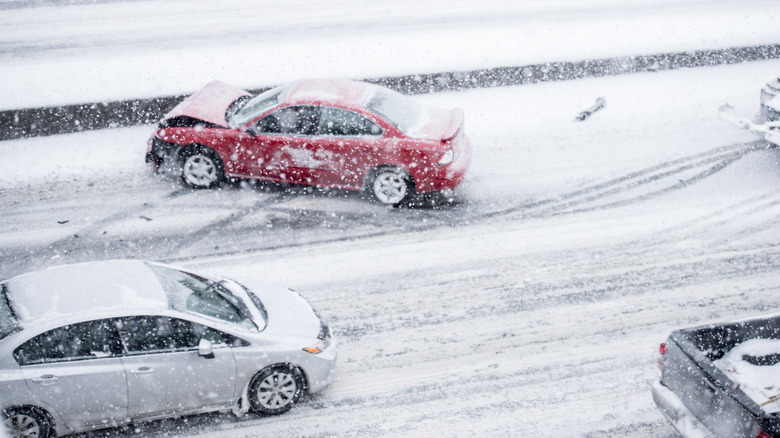
In winter conditions especially, there's a lot more to traction than just initial acceleration — and this is why neither tire makers nor tire installers recommend fitting only two winter tires on a car's front axle. It goes without saying that overall traction will be down with just winter tires, but the bigger issue is that the car's balance can be thrown off in a way that could make the rear end more likely to oversteer — and the car to spin out while driving. Even if the rear tires aren't used for acceleration, their traction is still very important for braking and lateral direction changes, and mismatched tires can dangerously amplify the issue.
Not a place to cut corners
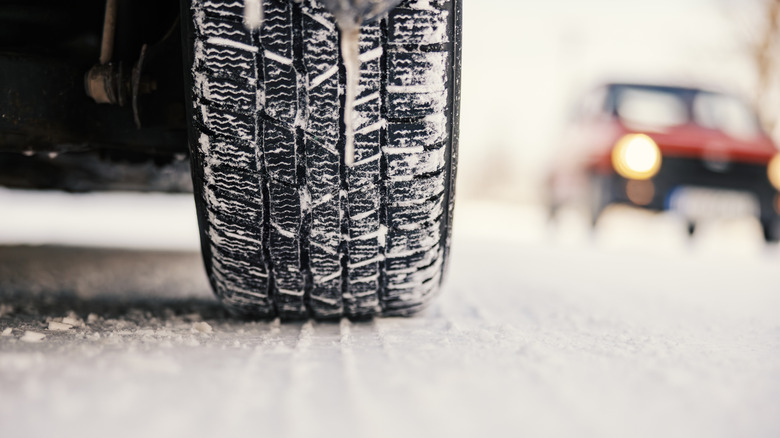
This starts to make a lot of sense when you think about winter driving from a safety standpoint. Yes, drivers want to have improved traction while accelerating in the snow so that they don't get stuck, but even worse than getting stuck is the scenario of a car's rear end losing grip and causing the vehicle to spin off the road or into another vehicle. With winter tires only on the front, the likelihood of that scenario increases.
In fact, in a situation where you only have two winter tires to put on your front-drive car, the Weather Network reported that if you have only two winter tires, they will provide more safety and stability on the rear axle than on the front. Again, this makes sense knowing that dangerous spin-outs and crashes are often caused by a lack of grip in the rear.
Today's tires are not cheap, and when you also factor in the hassle of swapping them back and forth, it's easy to see why some drivers might be tempted to save some money by just throwing winter tires on the front, but with the added risk of crashing, this is not a place to cheapen out. Now that you know why it's not a good idea to skimp out with two winter tires, you can take a look at some of the latest winter tire testing results to see which brands and models perform the best.
Want the latest in tech and auto trends? Subscribe to our free newsletter for the latest headlines, expert guides, and how-to tips, one email at a time. You can also add us as a preferred search source on Google.
Read the original article on SlashGear.