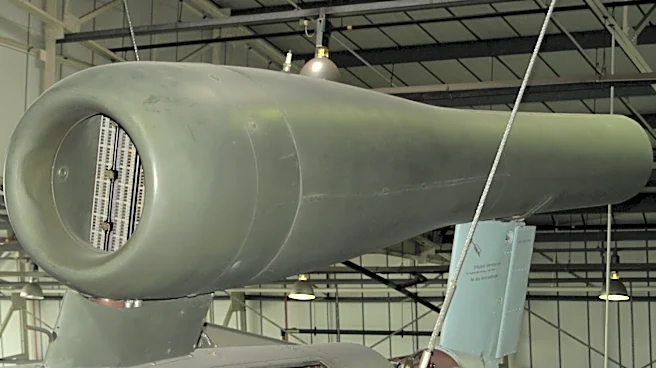










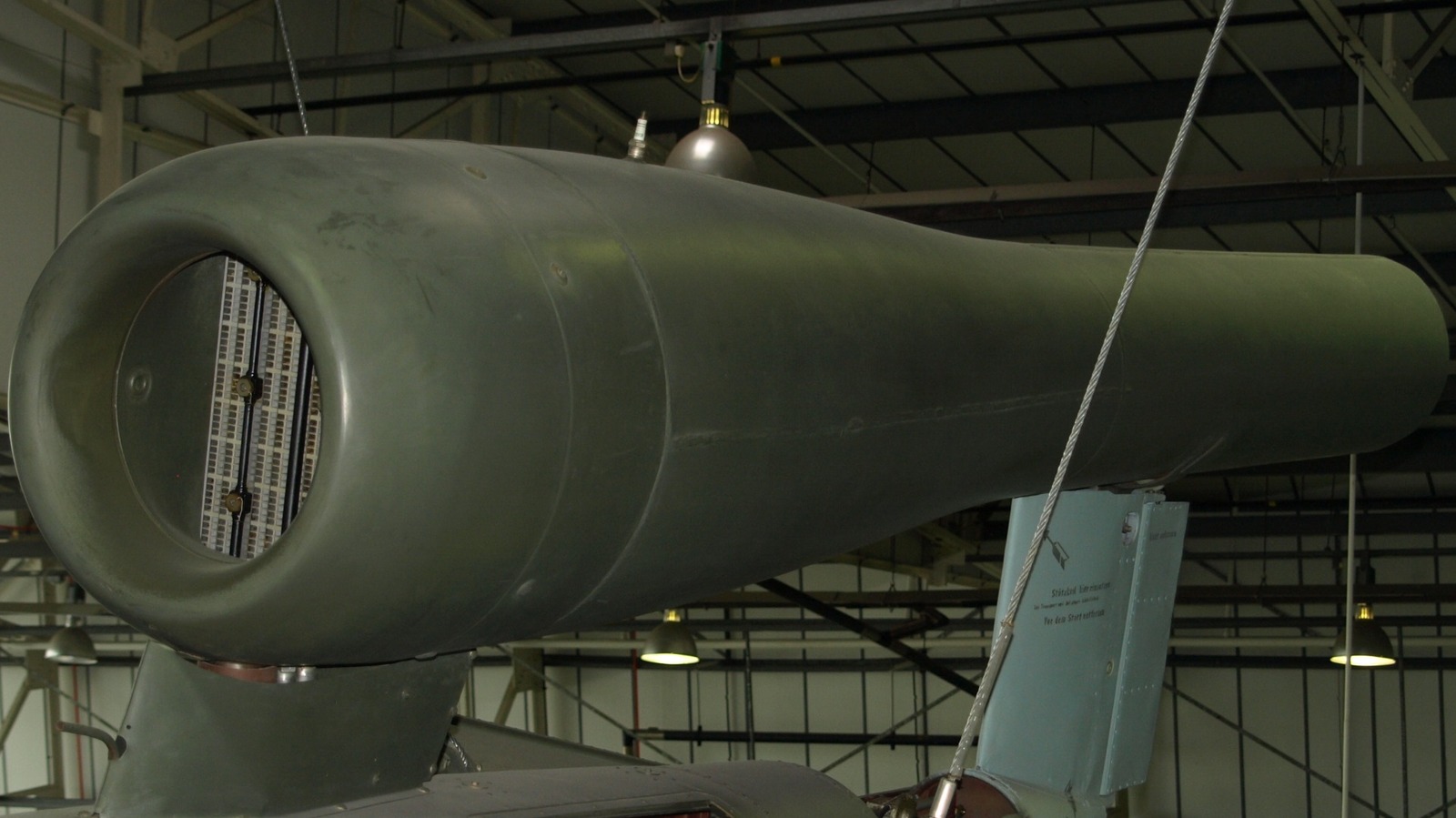
When Germany introduced the Messerschmitt Me 262 to the unfriendly skies during World War II, the Jet Age began. The first operational production jet fighter wasn't a huge success
, though that was less to do with its propulsion technology than it was with the Allies' overwhelming air superiority over Europe, as well as supply chain shortages and other wartime struggles. Still, the technology was sound, and modern jet engines function pretty much the same way.Of course, there are other means of propulsion,
including pulse jet engines, but you don't see those on any modern fighters. In fact, the technology was only ever put into practice once on an experimental fighter, also during WWII. The Messerschmitt Me 328 was a prototype pulse jet-powered fighter that arrived earlier than the Me 262, but it never went into production. The primary reason is efficiency, which isn't a word that describes pulse jets, especially when compared to a standard turbofan engine.
A pulse jet produces thrust intermittently, hence the name, and to put it simply, it has terrible gas mileage. A pulse jet engine consumes around 3-4 lbs. of fuel for every lb. of thrust it generates. Compare that to a modern turbofan engine, and it's clear why pulse jets aren't used in fighters. A standard turbofan engine consumes only .3 to .4 lbs. of fuel for every lb. of thrust generated. When you compare the two, just looking at those numbers alone, it's clear why modern fighter jets aren't powered by pulse engines.
Read more: 9 Celebrities Who Own A Boeing Business Jet
There have been several successful uses of pulse jet engines
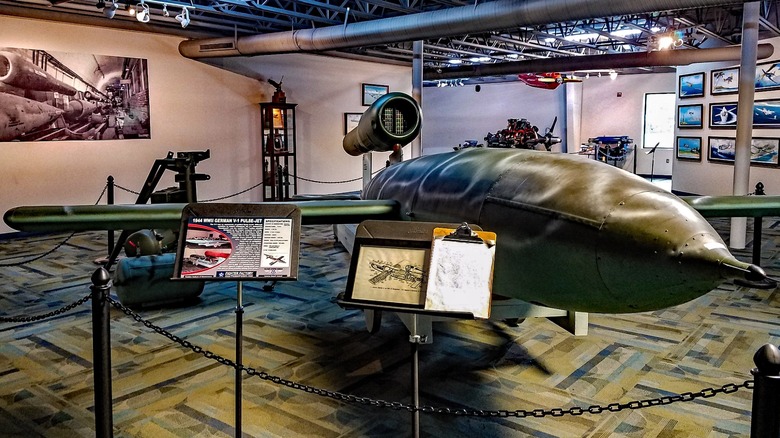
While the Messerschmitt Me 328 never made it out of the prototype stage, there was a successful use of a pulse jet during WWII. The pictured V-1 flying bomb (above) was outfitted with an Argus As 109-014 pulse jet engine. The V-1 was the world's first cruise missile, and while it was overshadowed by the V-2, which utilized a liquid-fueled rocket engine, the V-1 successfully utilized a pulse jet nearly a century ago. Granted, modern cruise missiles don't use pulse jet engines, so the practice wasn't continued after the V-1.
While the technology and theory are sound, pulse jets are far too inefficient to power a modern fighter jet. Drones, on the other hand, might find more usefulness from pulse jet engines. In 2024, Wave Engine Corp. tested out a prototype pulse jet engine, which would potentially be used to power one-way attack drones and other uncrewed aircraft. The test used a Scitor-D drone and an experimental engine that produced 50 lbs. of thrust. The Thrust-Specific Fuel Consumption (TSFC) was below 2 lbs./lbs-force per hour, which Wave Engine Corp. claimed was comparable to turbine-based engines.
Wave Engine Corp. and Kratos' Versatile Air-Launched Platform (VALP) could feasibly become a Miniature Air-Launched Decoy (MALD), which is powered by a turbojet engine. With the company's prototype pulse jet engine's stated efficiency, MALPs could become a relatively inexpensive and easy-to-operate platform capable of electronic warfare jamming, releasing chaff to defend nearby crewed aircraft, or employing other countermeasures. As of this writing, the company's pulse jet engines haven't found their way into full production, but that could change in the near future.
Want the latest in tech and auto trends? Subscribe to our free newsletter for the latest headlines, expert guides, and how-to tips, one email at a time. You can also add us as a preferred search source on Google.
Read the original article on SlashGear.