








The holidays are quickly approaching, and while you may be more concerned with cranberry sauce and Christmas cookies, snowy weather is on the horizon. Depending on where you live in the U.S., you may have already experienced your first snow of the season! Many of us love a white Christmas, but the truth is that snowstorms often disrupt our daily routine. Schools and businesses close, or worse, you're forced to bundle up and make your way into work through several inches of powdery misery.
Even if
you love strapping on a pair of skis or sledding with your kids, there's no denying that clearing your driveway and sidewalk can be a drag. If you don't have a place to store a snowblower or it's simply not in your budget, you may be stuck shoveling when winter weather hits. A battery-powered snow shovel can help ease that burden. They're likely available at your local hardware or big box store, and they typically cost between $100 and $300.
You can select either a corded or a cordless version powered by an onboard battery. A Consumer Reports guide to purchasing one found that the battery-powered models it tested performed better than their corded counterparts. The handheld shovel has a spinning rotor or auger that scoops up and then throws the snow. One of the benefits of an electric snowblower is that it can help you save time and your back. But before you invest, you should consider the few downsides to these snow removal tools.
Read more: 13 Cool Tractor Supply Gadgets You Might Not Realize Exist
You have less control over where the snow lands
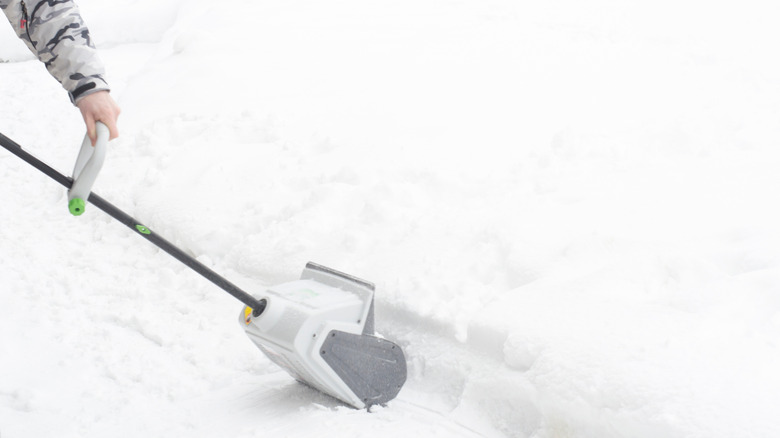
When you use a snow blower to clear snow, you can direct the chute so the snow lands on one side of your driveway or the other. You can even direct the snow wherever you want when you use an old-fashioned, manual shovel. It may be back-breaking work, but at least the snow goes where you want it. Much like a snow thrower, a power snow shovel has an auger that typically spins front to back. Consumer Reports evaluated several power shovels, and they all worked this way. Because of how that auger spins, many power snow shovels shoot snow directly in front of you, rather than to the side.
This will complicate how you clear your driveway or sidewalk — if you don't work at an angle and let the snow fall in front of you, you'll be shoveling that same snow over and over again. Instead, position yourself so that the snow lands exactly where you want it. Be sure to avoid directing the snow into your home, car, or, even more horrifying, your neighbors! Some newer models will let you adjust the direction in which the snow is thrown, so it's worth checking for this feature before you buy.
They can be heavy

A standard snow shovel typically weighs two or three pounds — there's simply not much to it, and you'll be adding weight when you shovel, so the lighter, the better. A snow blower weighs much more, of course, but you don't have to lift it to clear a path, and some models are self-propelled (though not all). A battery-powered snow shovel is at a disadvantage, typically weighing between 12 and 15 pounds, and that's before you factor in any snow.
You typically push a battery-powered snow shovel along the ground instead of lifting it like a traditional snow shovel, but that doesn't mean you won't feel the weight. You'll use your arms and shoulders as you work, and deeper snow may require more effort. The shovel may also feel unbalanced in your hands. If you find physical labor difficult, a battery-powered snow shovel may not be as useful as you think. In the r/Greenworks subreddit, some users recommend moving the handle further down the shaft or using a shoulder strap to help lighten the load and increase control.
Smaller size and shorter run times
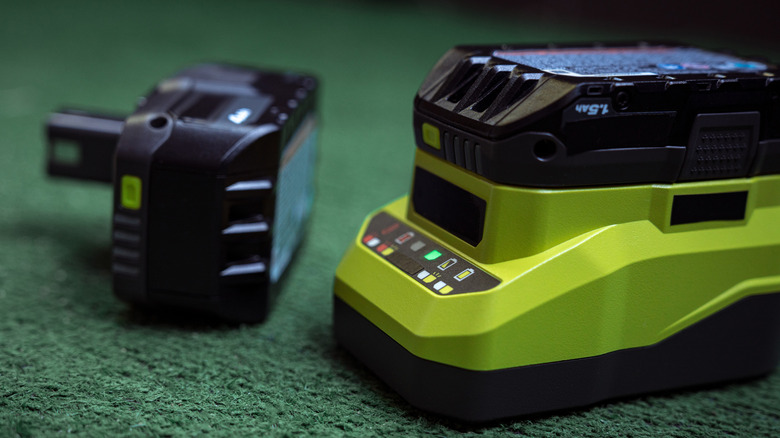
A gas-powered snow blower runs as long as you have fuel, and a manual snow shovel runs until your knees or your back give out! A battery-operated snow shovel, on the other hand, offers a finite run time. Consumer Reports found that many offer about 60 minutes on a charge, but that's without a snow load. Real-life use will diminish that run time, and unless you have a spare battery, your job may remain half-finished while you wait for the battery to recharge.
If you have a large driveway or parking lot to clear, a battery-powered snow shovel may not be the right choice for you. The job will also take longer due to the shovel's size. Power snow shovels are typically about 12 inches wide, meaning you can only clear a narrow path at a time — that's not very much. Snow blowers, on the other hand, are usually 21 to 30 inches wide, so you can clear a much wider path in one go.
Want the latest in tech and auto trends? Subscribe to our free newsletter for the latest headlines, expert guides, and how-to tips, one email at a time. You can also add us as a preferred search source on Google.
Read the original article on SlashGear.