
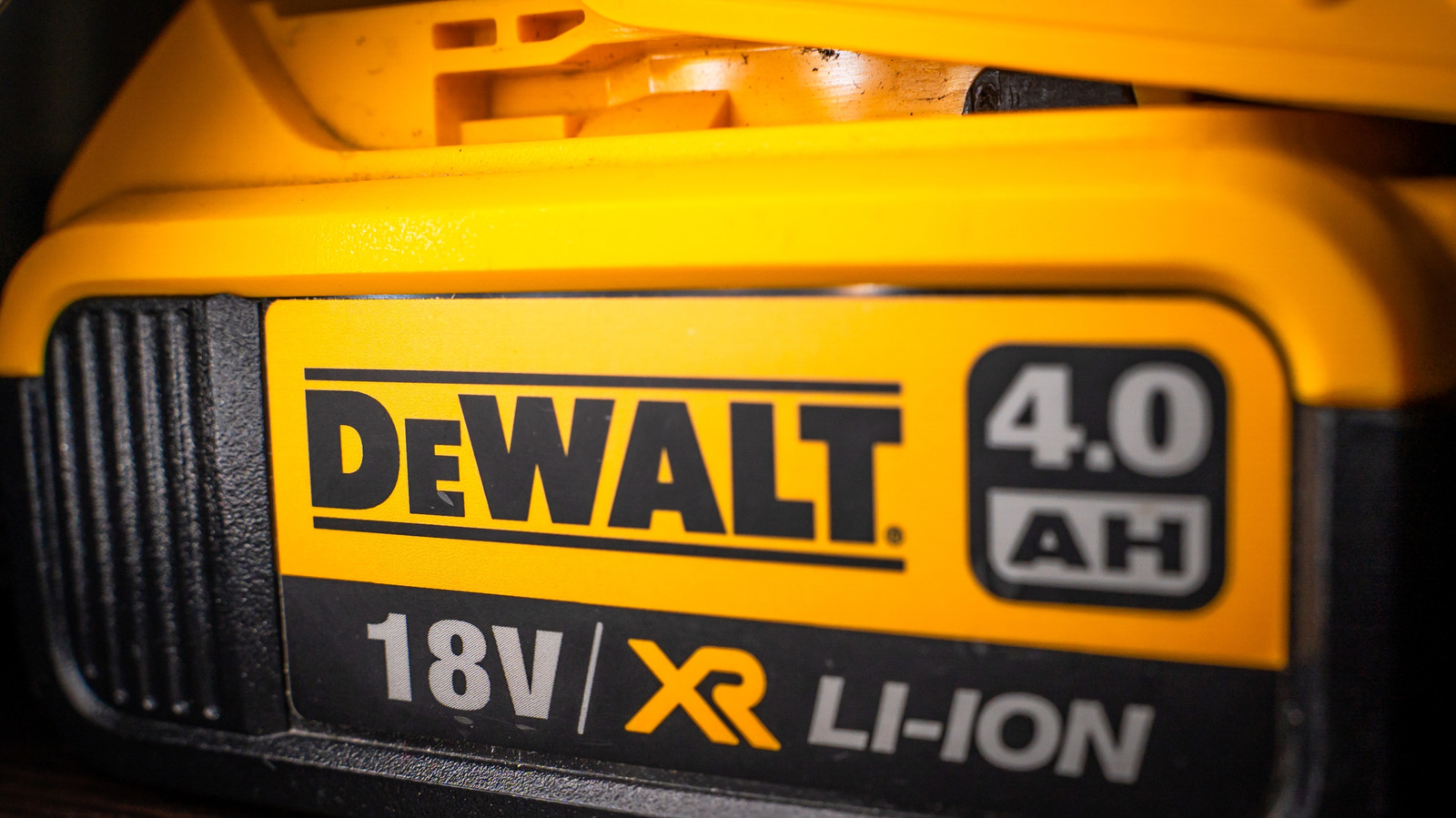
If you have ever had a battery for one of your power tools that felt dead because it wouldn't charge anymore, chances are that you can revive it in less than 20 minutes. It's a fairly straightforward process
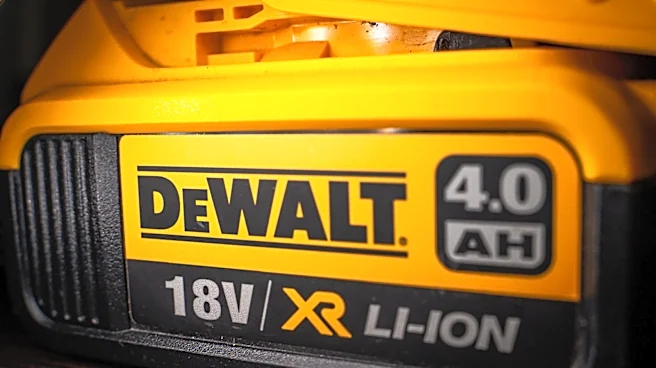
that anyone can follow at home with everyday tools, but since we are dealing with electrical components, there are some precautionary measures, too. But generally speaking, you can bring an old 18V battery, or even a 20V battery, to life, provided that the problem lies with its current state of charge.
When you connect the 18V or 20V battery to a charger, there's usually a charging indicator LED that lights up. And if that LED indicator doesn't start blinking after connecting the battery, people automatically assume that it's dead and start looking for replacement batteries. However, it could simply be that the battery's current charge level has dropped below the minimum threshold and is therefore not recognized by the charger. It's a common problem that arises when an 18V or 20V battery is completely drained.
There's another possible scenario where the battery's own charging level indicator flashes a single red light, and upon plugging it into the charger, the charger's LED instantly turns from red to green, and the battery does not charge at all. This is typically the case with Milwaukee batteries. In both cases, the underlying cause could be the same, and jump-starting your dead 18V battery with a working 18V battery should do the trick.
Read more: 13 Cool Tractor Supply Gadgets You Might Not Realize Exist
Reviving your dead 18V battery
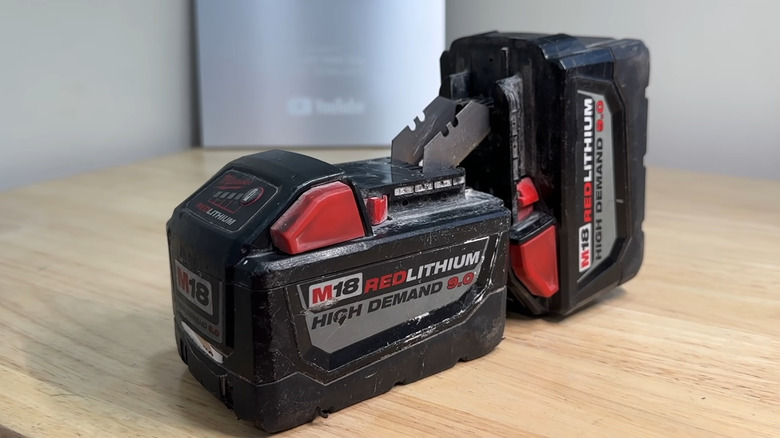
If you have ever jump-started your car's battery, you should have a basic idea of how it works. But even for those who haven't, it's simple, quick, and safe, provided you follow the necessary precautions. The general idea here is to provide enough energy to the dead battery so that it's recognized by the charger.
Before you start, you will need a pair of insulated wires or alligator clips, depending on the type of terminals the battery has. If those are not available, even something as simple as a pair of razor blades or scissors will work too. When you connect the two batteries for 10 to 15 minutes, the voltage of the seemingly dead battery increases enough to cross the minimum threshold required for charging. To do that, you will need to establish a connection between the positive and negative terminals on both batteries (positive to positive and negative to negative). If there are more than two contact points, look for any markings to identify the positive and negative terminals. Generally speaking, they are at the extreme ends.
Also, if the area where the wires (or whatever object you are using) make contact looks dirty, use a piece of sandpaper to clean the contact points. This isn't absolutely necessary, but cleaner contacts will make the entire experience more convenient and safer. After waiting for 10 to 15 minutes, disconnect the two batteries and try plugging the one that initially seemed dead into a charger. If the problem was due to low voltage levels, the battery should start charging again. All that's left is to leave it plugged in until the battery is fully charged.
You must exercise caution
As mentioned earlier, the process is fairly simple and straightforward, and you can easily revive a dead 18V battery at home. But since we are dealing with electrical components, there are also some risks involved, and any mistake here can prove costly. For example, if you leave the two batteries connected for a long time, it could start a fire. Similarly, improper or loose connections can lead to sparks, which again can result in a fire. Apart from that, accidentally reversing the polarity, i.e., connecting the positive terminal of one battery to the negative terminal of another, can lead to overheating or a short circuit. You will need to consider all these things before jump-starting your power tool's battery.
At the same time, it's important that both batteries are identical. A mismatched voltage rating can also cause problems. That's a major reason you should never jump-start a car's battery using one that's designed for power tools. So, as long as you have got all the bases covered and are taking the necessary precautions, it should be safe.
If this trick doesn't work, you should contact the battery's manufacturer or reach out to a professional. At this point, the battery is likely dead and not just completely discharged, and you may actually have to replace it.
Want the latest in tech and auto trends? Subscribe to our free newsletter for the latest headlines, expert guides, and how-to tips, one email at a time. You can also add us as a preferred search source on Google.
Read the original article on SlashGear.