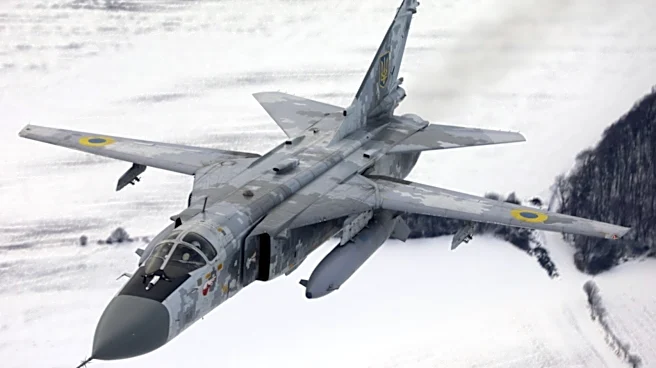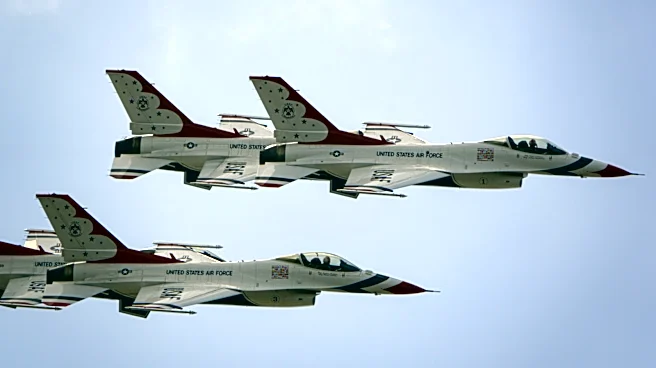








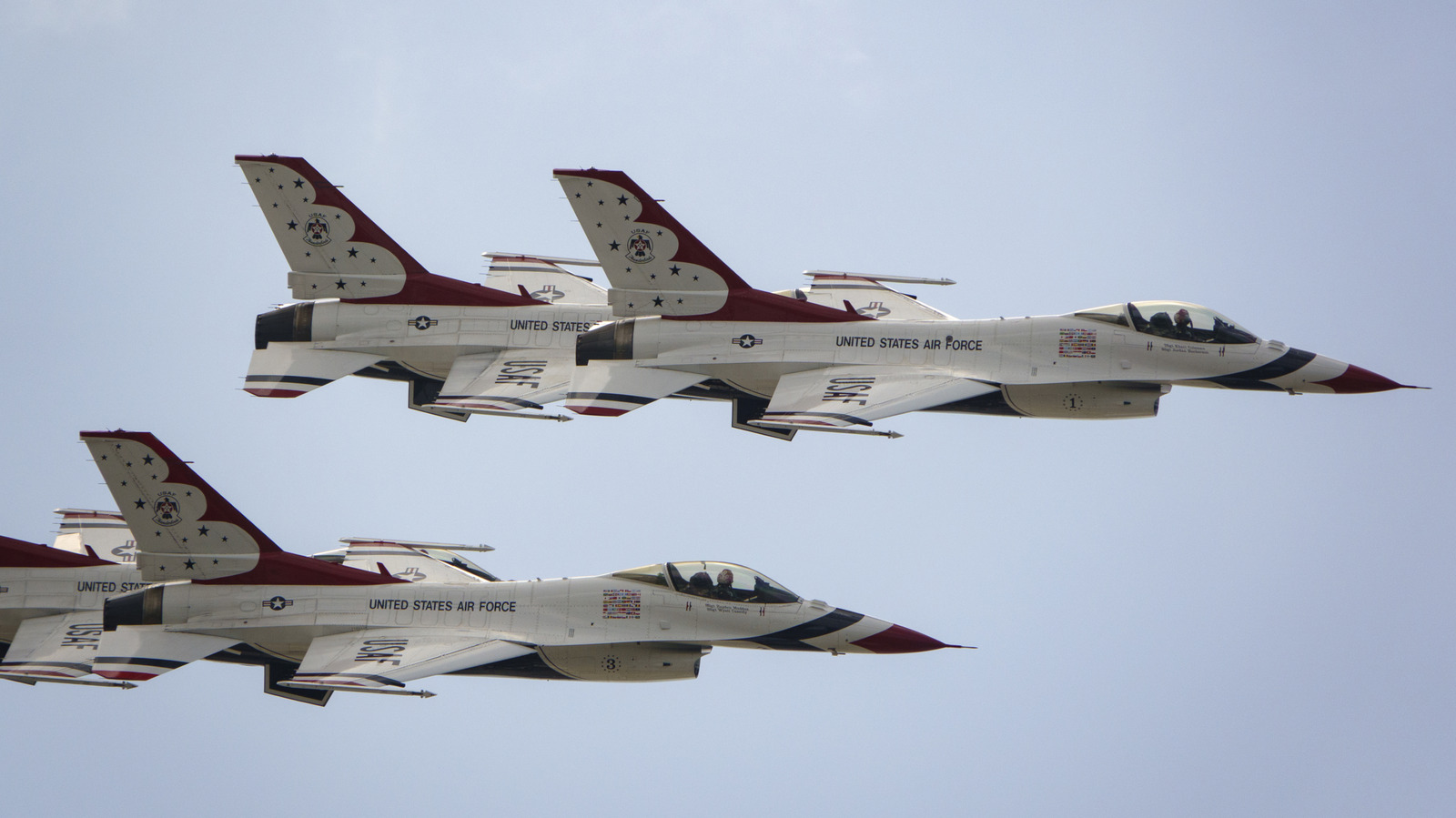
With price tags that can stretch into the hundreds of millions of dollars, planes tend to stay in service for a very long time, often reaching decades. Military planes have especially long lives. Bombers like the B-52 and Russian Tu-95 have been in continuous service since the 1950s and countries like North Korea are finding ways to keep 70-year-old MiG-derived fighter jets still in the air.
All of those old planes have ended production, and it's just a matter of keeping the airframes airworthy. But
what about planes that are still getting churned out? Obviously bleeding-edge fighters like the J-20 Mighty Dragon and F-35 Lightning II are still getting made. But what jets started service decades ago and and remain in production?
For any number of reasons, a country's air force or aerospace industry may want to continually produce a plane for decades on end. Sometimes, in the case of the F-16 and Eurofighter Typhoon, they're kept relevant through continuous updates.
Read more: 5 Fighter Jets That Are Quicker Than The F-22
F-16 Fighting Falcon: In production since the 1970s
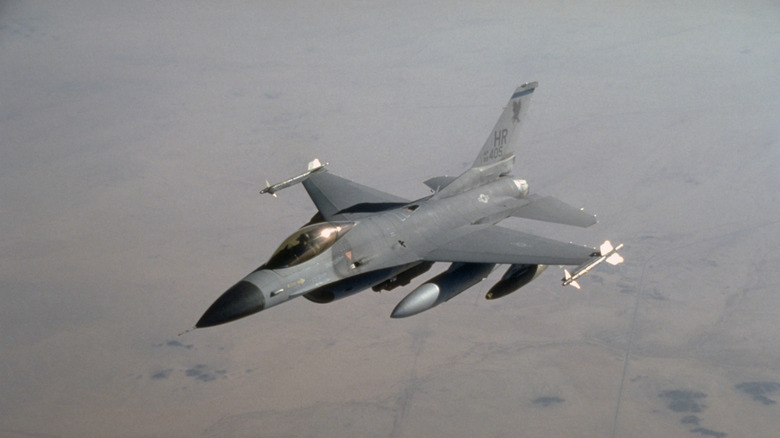
In some form or another, the F-16 has been in the sky since 1974. It most prominently serves with the United States, which has 826 in its Air Force inventory. It is still being produced at Lockheed Martin's factory in Greenville, South Carolina. Back in 2024, the defense contractor reported that 4,600 F-16s had left the assembly line in the 50 years since the jet first flew. Slovakia and Bahrain are recent buyers of the airframe.
The F-16 was too late for service in Vietnam but has served extensively in Desert Storm, NATO operations in the 1990s, and recent and current conflicts in the Middle East. It has also seen combat in the current war between Russia and Ukraine. F-16s have proved to be popular in air forces outside of the United States. As a result, the export market has been healthy in recent years. The F-16 is well poised to continue serving for at least a few more decades. Speed and flexibility, after all, never go out of style.
Eurofighter Typhoon: A 1980s design still being built
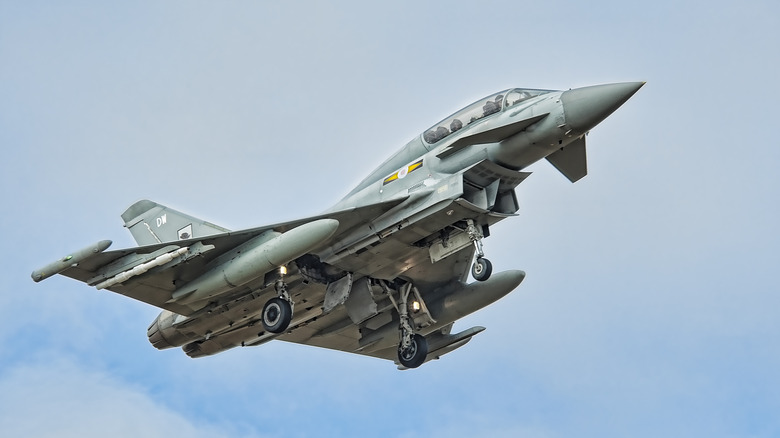
The Eurofighter Typhoon is a bit of an odd duck when it comes to service history (and not just because of its less-than-conventional looks). It entered service in 2003, so it is a relative newcomer, in terms of military aircraft. However, its prototype first flew in 1994, and the development of the aircraft goes back all the way to 1983. The first production contract was signed in 1998, making it almost 30 years old.
Although the Typhoon is old enough to remember when the Nintendo GameCube was cutting edge, it's a decidedly modern jet, thanks to continuous updates to its avionics, weapons systems, and communications suites.
As it was a joint project between several European countries, the Typhoon has four assembly lines currently working in Spain, Germany, Italy, and the United Kingdom. Six other countries are customers of the Typhoon: Austria, Saudi Arabia, Oman, Kuwait, Qatar, and Turkey.
Su-34 Fullback: The soviet-era bomber still in production
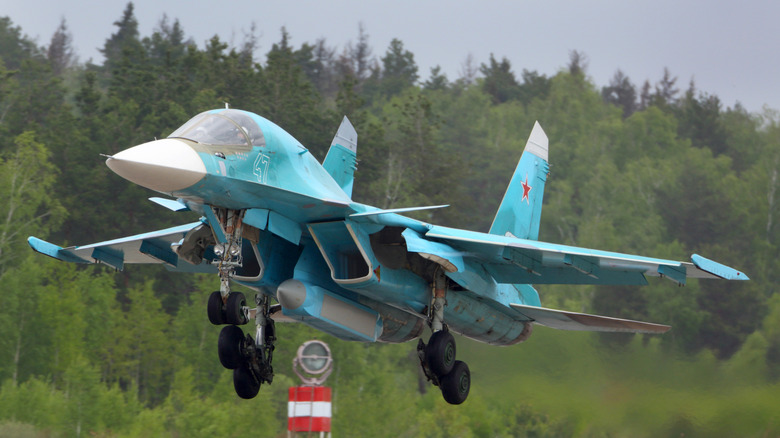
There's a long gap between when the Su-34 fighter-bomber first flew and when it was finally adopted for service. The Sukhoi Su-34 "Fullback" dates all the way back to 1990, when the first version hit the skies. It is itself a modification of the Sukhoi Su-27 "Flanker," which has been flying since the 1970s. Versions of the Flanker are so numerous that they could occupy this entire list.
1990 was leading up to the fall of the Soviet Union, so the country likely had more important things to worry about than getting a big goose-shaped fighter-bomber into prompt service. It took until 2014 for the Su-34 to be formally accepted into service. The Fullback is still produced in Russia. Sanctions, the war with Ukraine, and tactical decisions to keep supply lines outside the crosshairs of strategic bombing campaigns have kept Sukhoi's production geographically isolated and exports are limited.
Want the latest in tech and auto trends? Subscribe to our free newsletter for the latest headlines, expert guides, and how-to tips, one email at a time. You can also add us as a preferred search source on Google.
Read the original article on SlashGear.