

It wasn't all that long ago that many of Toyota's top-selling vehicles could be bought with a V6 engine. Both the Camry and the 4Runner only ditched their V6s when the latest generations arrived in 2025, while the Highlander lost its V6 in 2023. Even the RAV4 was available with a V6 under the hood at one point, although it was axed way back in 2013. In place of those trusty six-cylinders have come a family of four-cylinder engines, with many of them being paired with electric motors. As of the 2027
model year, there are only two holdouts, the Tundra pickup and the closely related Sequoia SUV, which retain a V6.
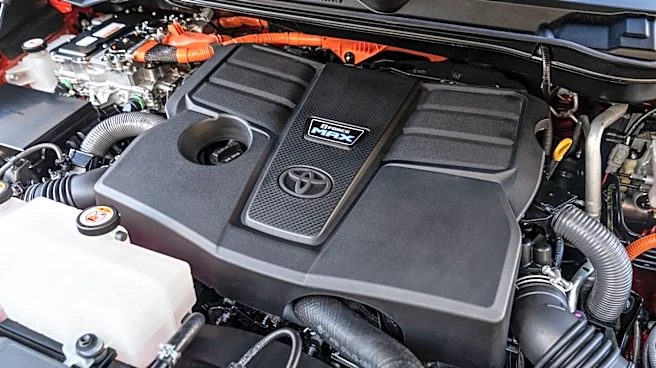
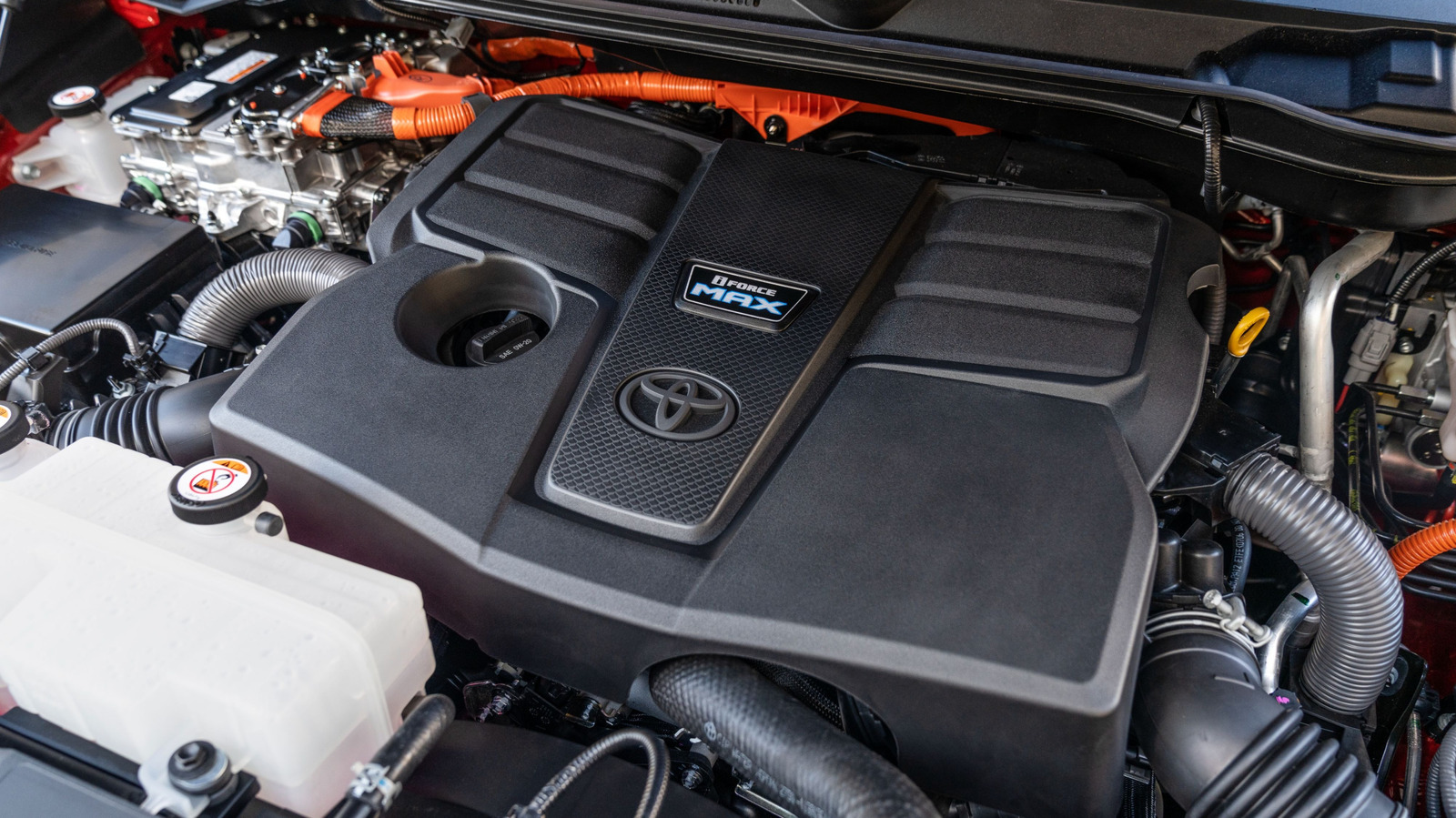
Even these remaining V6 models haven't escaped Toyota's electrification push, with the Tundra being available both in hybrid and non-hybrid guise and the Sequoia being offered exclusively as a hybrid. Both feature a 3.4-liter V6 engine, with the gas-only powertrain being known as the i-FORCE while the hybrid is called the i-FORCE Max.
While the words "Toyota hybrid" might still conjure up the mental image of a mid-'00s Prius for some drivers, the spec sheet of the latest Tundra proves that hybrids are no longer just about fuel-sipping efficiency. Its hybrid i-FORCE Max powertrain is significantly more powerful than its gas-only sibling, producing 437 horsepower and 583 lb-ft of torque. That's compared to 389 horsepower and 479 lb-ft for the i-FORCE variants of the truck.
Read more: 5 Drawbacks Of Using All-Weather Tires
The Tundra proves that power isn't tied to cylinder count
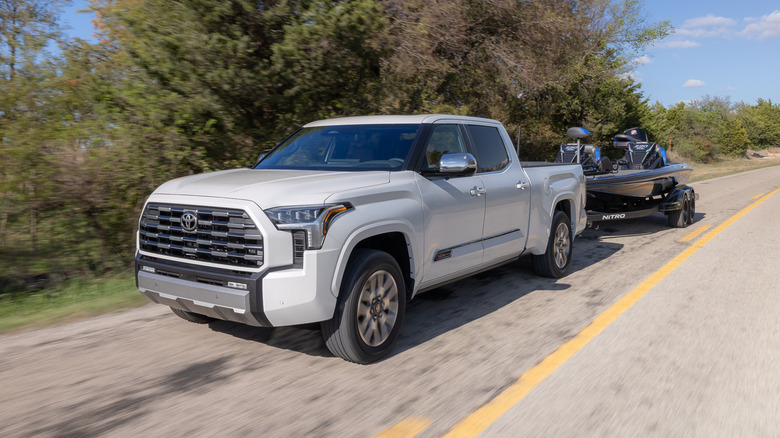
Despite being the two remaining V6 offerings in the Toyota lineup, neither the Tundra nor the Sequoia has had a V6 for very long. In fact, until relatively recently, both were available with a 5.7-liter V8 under the hood. The Tundra only launched its current V6 range for the 2022 model year, while the Sequoia made the switch the following year. It's easy to interpret that change as a downgrade of sorts, but compare the old V8 with the new V6 engines and it's clear that more cylinders doesn't always equate to more power.
The old V8 engine churned out 381 horsepower and 401 lb-ft of torque, making it less powerful than both the current non-hybrid and hybrid V6 powertrains. Part of the power boost achieved by the V6 can be attributed to its twin turbochargers, and part of the total output increase is down to the newly installed electric motors. Toyota says that the electric motor in the Sequoia i-FORCE Max can produce 184 lb-ft of torque on its own.
A similar story emerges when you compare Toyota's older V6-powered models with their current-generation hybrid four-cylinder successors. For example, despite the reduced cylinder count, the latest i-FORCE Max-powered 4Runner has gained 56 horsepower and 187 lb-ft of torque compared to the V6-powered previous-generation model. As you'd expect, it's more efficient too.
The fuel economy gains are clear
The switch from V6 engines to four-cylinder engines might not be entirely about fuel efficiency, but it is nonetheless still a key reason why Toyota is dropping cylinder counts across its range. Sticking with the 4Runner as an example, the V6-powered 2024 model hit 17 mpg combined in its most economical form, while the hybrid four-cylinder 2026 model should reach 23 mpg combined.
That might not sound like a big difference, but the EPA calculates that the 4WD hybrid 2026 4Runner should cost $4,750 less to fuel up than its 2WD 2024 V6 predecessor over the course of five years (assuming an annual mileage of 15,000 miles). The Camry, meanwhile, sees an even bigger drop in fuel costs. The hybrid four-pot 2027 Camry XSE should drink $5,250 less fuel than the 3.5-liter V6 engine in the 2024 Camry XSE over the same time period and mileage, according to EPA estimates.
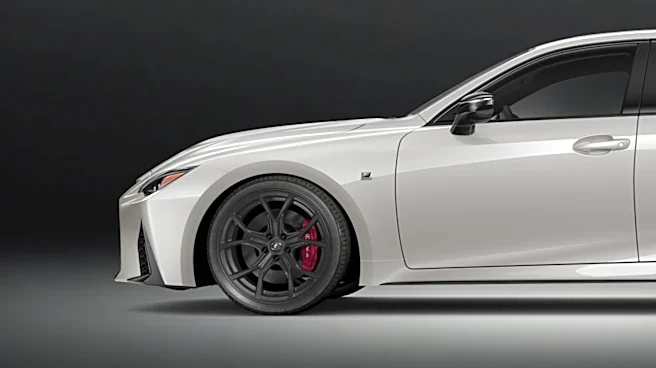
Some drivers understandably have concerns about the long-term reliability of a turbocharged four-cylinder engine compared to a naturally-aspirated V6, and it remains to be seen how well Toyota's latest four-cylinders hold up over the decades. For now, the automaker still scores relatively highly in dependability surveys from the likes of J.D. Power, albeit not quite as highly as its premium sister brand Lexus. In the latest J.D. Power survey, the Lexus IS was crowned the most dependable model overall. Tellingly, it's still powered by a tried-and-tested naturally aspirated 3.5-liter V6 engine.
Want the latest in tech and auto trends? Subscribe to our free newsletter for the latest headlines, expert guides, and how-to tips, one email at a time. You can also add us as a preferred search source on Google.
Read the original article on SlashGear.