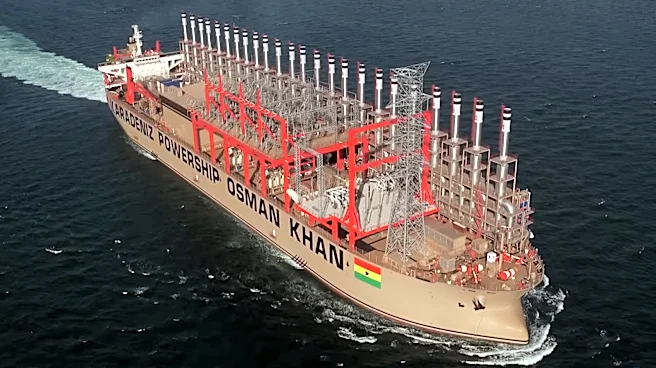








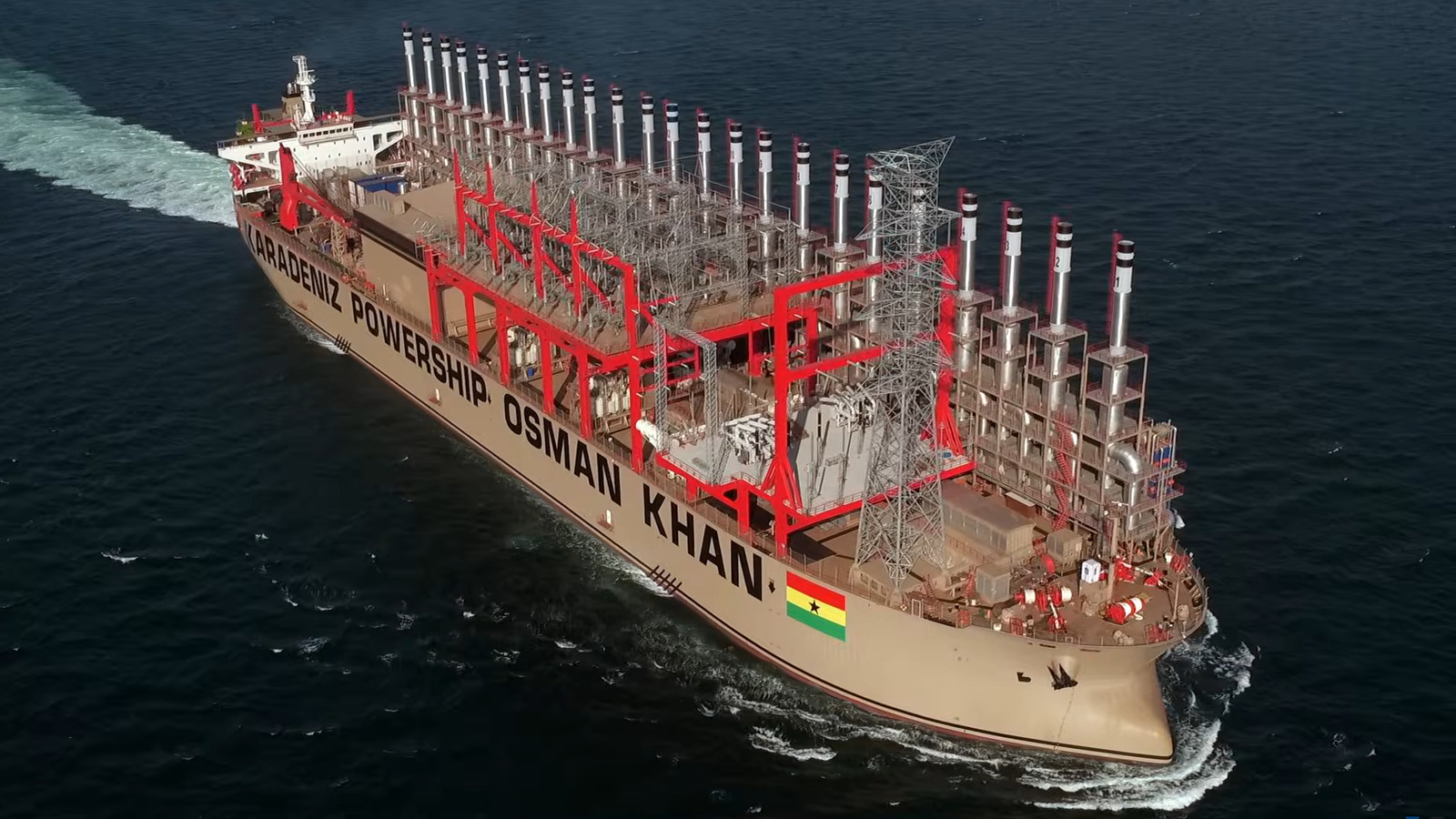
Adapting power grids to keep up with demand is a never-ending task, and sometimes, there's no way to build power stations on land fast enough to meet a surge in demand. A long-standing workaround for the problem is to use a powership, which is essentially a floating mobile power station that can be transported around the world and plugged into a country's power grid far more quickly than a traditional power station could be built.
The biggest powership provider is Karpowership, which recently signed
a contract with Singapore-based engineering company Seatrium to create a series of Whale Class powerships. Thеse will be Karpowership's highest capacity ships to date, with a maximum output of 600 MW. That's roughly the same output as a traditional coal power station. The difference is that while a traditional land-based thermal power station (such as a coal power station) takes around four years to be built on average, Karpowership's vessels can be hooked up to the grid only a month or so after they first arrive in port.
The Whale Class ships won't be constructed from scratch — instead, they'll be conversions that use existing Karpowership ships as their base. Seatrium expects the first of those ships to arrive in its Tuas Boulevard Yard shipyard in Singapore in December 2027, ready for the build process to begin. In total, five Whale Class powerships will be built.
Read more: Every Class Of Battleship The U.S. Navy Operated In WWI And WWII
Karpowership already operates multiple classes of ships
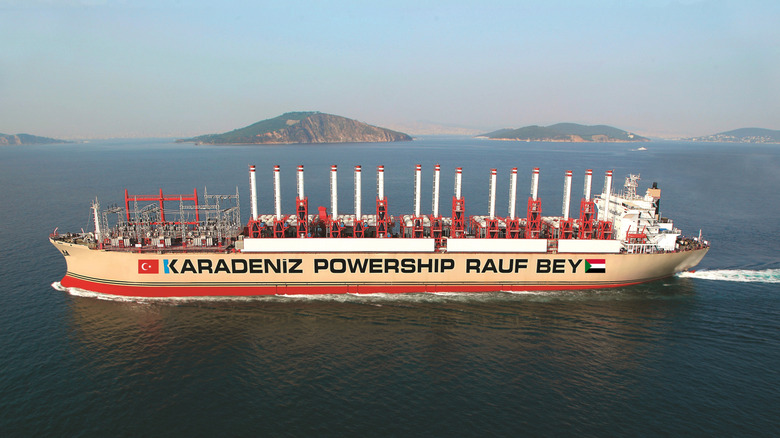
Karpowership's Whale Class ships will be able to power more homes than any of the company's existing ships, but not every situation requires such huge capacity. The smallest ships in the current Karpowership lineup are its Seal Class ships, which can generate around 34 to 40 MW of power. At the other end of its range, its Khan Class ships can generate up to 470 MW.
While the current generation ships can use either heavy fuel oil or natural gas to generate power, the new Whale Class ships will also be able to run on hydrogen fuel. Compared to traditional fossil fuels, hydrogen is generally regarded as a cleaner alternative, since it does not produce greenhouse gases when it's burned. It's the same reason that today's hydrogen-powered vehicles are seen as more climate-friendly than traditional ICE cars, but unlike those vehicles, the powership can also still be run on traditional fossil fuels if hydrogen supply isn't available.
As well as fueling floating power plants, hydrogen could also one day be used to power ships themselves. A startup called BeHydro received certification for its 100% hydrogen-powered marine engine earlier in 2026, bringing it one step closer to being ready for commercial use.
Want the latest in tech and auto trends? Subscribe to our free newsletter for the latest headlines, expert guides, and how-to tips, one email at a time. You can also add us as a preferred search source on Google.
Read the original article on SlashGear.