



We may receive a commission on purchases made from links.
Any DIY or professional electrical project is, by nature, serious. This is precisely why showing up with the right set of electrician tools and preventing electrical job mistakes is very much essential. One of those tools is a conduit bender, and as the name suggests, it allows you to bend electrical conduits in a way that conforms perfectly to an electrical layout. It's primary goal is to make shaping conduits (often housed in tubing) physically
less taxing, but the markings featured on the tool also make commonly needed bends easier to pull off.
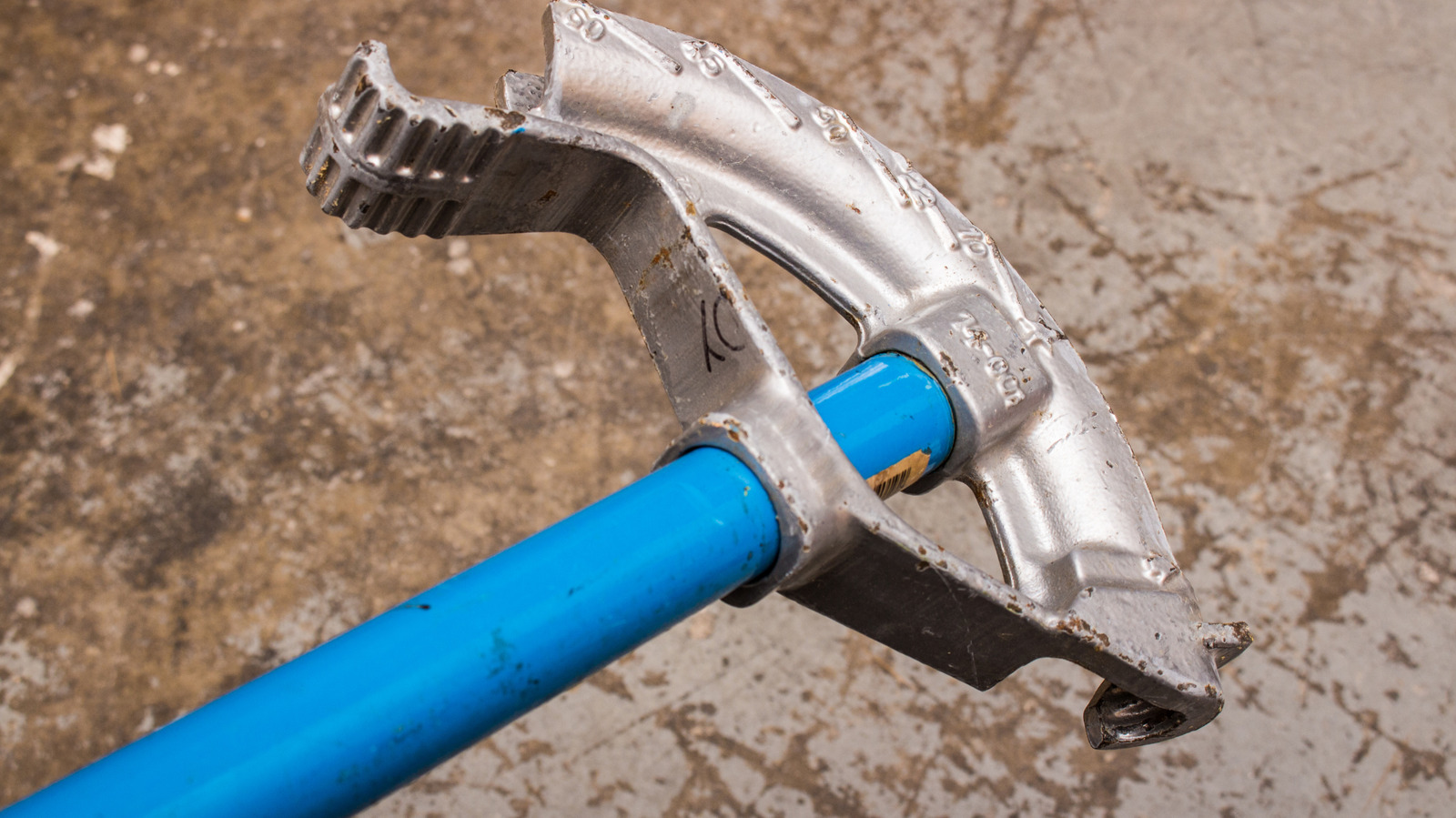
Take the teardrop or rim notch on a bender, which helps you find the center point on the classic three-point saddle bend that allows conduits to clear perpendicular obstacles. More precisely, you can align the center of the saddle with this particular notch to ensure the bend is correct.
Most conduit benders also sport multiplier values that eliminate the need to use bending charts for calculations, and additional markings like a star point. The latter will help you identify a 90-degree angle when making back-to-back bends. You may also find an arrow, a reference part for lining up and marking up a saddle bend, i.e., where the bend will start.
Read more: 13 Highly-Rated Harbor Freight Pittsburgh Tools With A Lifetime Warranty
Is it worth investing in a more robust conduit bender?
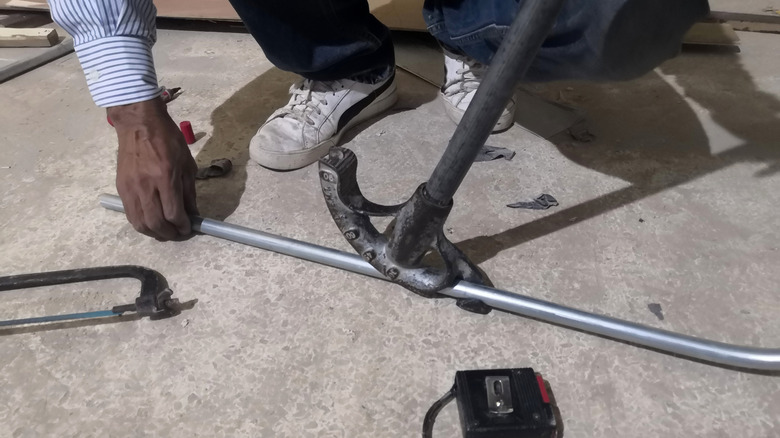
Both hand and electric tools have their place in the world. A power tool technically makes matters faster and more consistent, which is helpful when time is an issue in, say, large commercial projects. The same logic applies to conduit benders. A manual bender, for example, is fairly simple and can be successfully used for all sorts of conduit materials. That said, while this type of conduit bender is typically favored in tight spaces, it's somewhat limited to making basic bends.
If, however, you require more features, then an electric conduit bender may work better. In addition to making bending itself a breeze, the powered version allows for more precise, automatic angle adjustments, and may even have memory settings that allow you to replicate frequent bends. As such, in more complex electrical layouts where everything needs to be fast and consistent, this variation takes the cake.
Naturally, there is a large contrast in price. You can get a manual bender for under $100, and it will serve you well in a variety of small-scale DIY or professional electrical projects. Its powered older brother isn't that affordable, with some being over $7,000, and may only be worth it if you're doing a more complex project or will do so more frequently.
Want the latest in tech and auto trends? Subscribe to our free newsletter for the latest headlines, expert guides, and how-to tips, one email at a time. You can also add us as a preferred search source on Google.
Read the original article on SlashGear.