





Beginning in the late 1970s, a small catalog company started to gain some attention due to its unique and useful tech items, thanks to an entrepreneur named Richard Thalheimer. He managed to create the Sharper Image from his initial interest in selling paper and toner in the 1970s, which is how his company got its name. From there, he landed an exclusive deal to sell a runner's watch through mail order, establishing his business model from that day onward.
The Sharper Image grew from selling a single
watch to a massive company catering to anyone interested in buying quirky, useful items. At one point, there was a motorized surfboard, a bulletproof raincoat, a Spanish suit of armor, and other interesting items that catered to the public's desire for whatever was trendy at the time. Eventually, Thalheimer opened brick-and-mortar locations around the United States and abroad, with Sharper Image's flagship stores in downtown San Francisco and New York City.
Eventually, things died down, and the company had to restructure, returning to its mail-order roots via online sales, but throughout the 1990s and into the 2000s, The Sharper Image was the place to find excellent electronics and tech gifts. Each of these 12 classic Sharper Image electronics was once a major seller for the company, and today, they're pure nostalgia for anyone who visited a Sharper Image store or thumbed through a catalog.
Read more: Major Washing Machine Brands Ranked Worst To Best
Sound machines
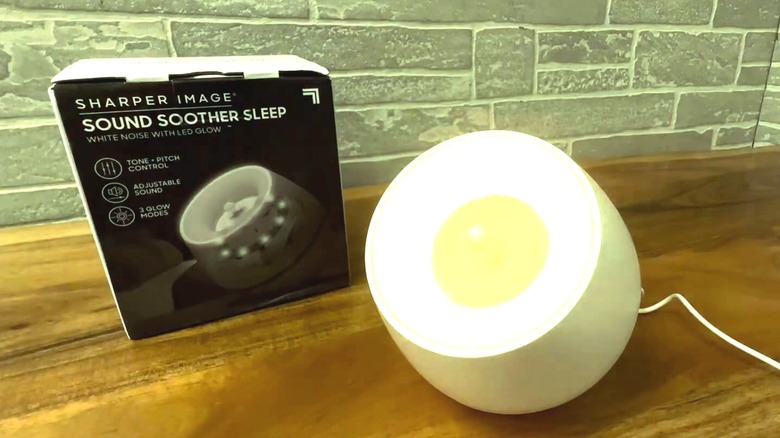
These days, if you want something like a white noise machine, there are plenty of options. In fact, you don't even need an additional piece of hardware because there are apps for that on your phone. Before they were as commonplace as they are today, sound machines were relatively high-end items sold through stores like Sharper Image, which featured several models throughout the 1990s and beyond. They produced white noise, ocean sounds, and many others.
Sharper Image sold a travel version called the Travel Soother, which played 20 different sounds, functioned as an alarm clock, and was considerably smaller than models meant to remain by your bed at home. In the 1990s, Sharper Image launched its own lab to design products that bore the "Sharper Image Design" label, and an early success was the "Sound Soother." Like the travel alarm clock version, it featured 20 different soothing sounds to help you sleep.
The company sold enough to keep the product going, and over the years, the overall shape and design changed, but not the basic functions. There are tons of variations on the Sound Soother, and the product is still available, though it's also found on other websites like Amazon, where it still sports the brand name on its face.
The Sharp Wizard Electronic Organizer
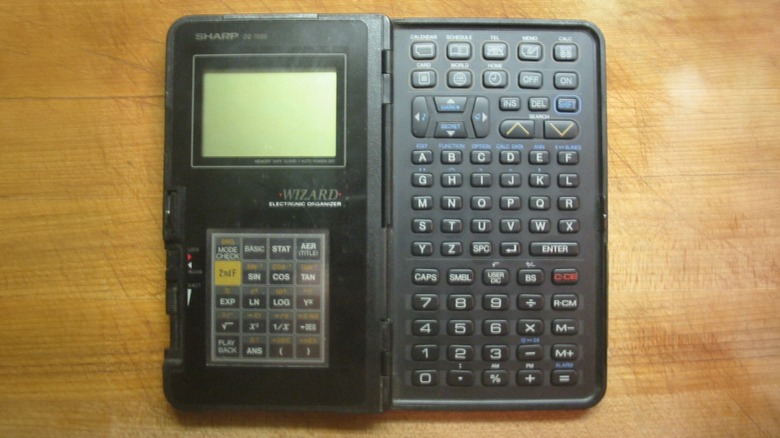
Today, we carry around cell phones with plenty of computing power, eliminating the need for old-fashioned items like address books, calculators, and similar products. In 1989, such things were a ways off, so Sharp Corporation developed the Sharp Wizard electronic organizer. While it looked like an overly complex calculator, it was innovative, featuring numerous functions, including the ability to load expansion cards that increased memory, added new features, and more.
Sharper Image began selling Wizards when the first model, the OZ-7000 (pictured), was released, and they were a luxury item costing $299 in 1989 ($815 in 2026). The cards only cost $2 ($5.45 in 2026), so expanding the Wizard wasn't nearly as expensive as buying the unit, and they became popular. There was even a 1998 episode of "Seinfeld" involving the Wizard, showing just how much it permeated popular culture when it appeared on one of the hottest TV shows of the '90s.
As the years passed, the Wizard increased in complexity, varying the design with clamshell cases, touchscreens, greater memory expansion, more software options, and additional functions. Eventually, they were replaced by more accessible items like the once-revolutionary but now obsolete personal digital assistants (PDAs), which in turn were replaced with cell phones. Still, throughout the '90s, the Wizard was one of the most popular items sold through Sharper Image, though it wasn't exclusive to the company.
Robot dogs
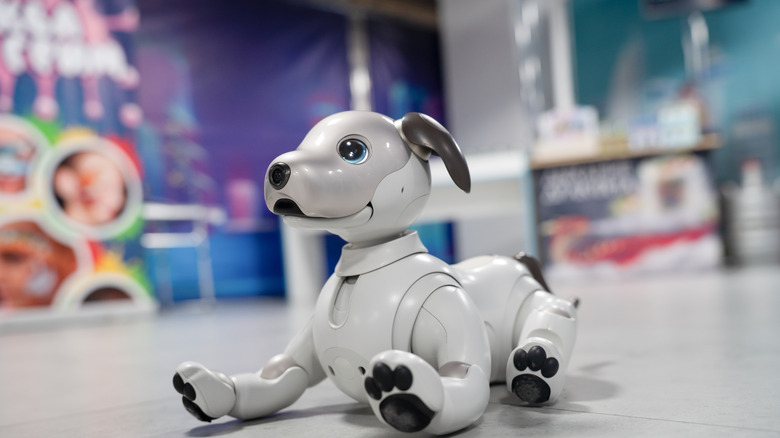
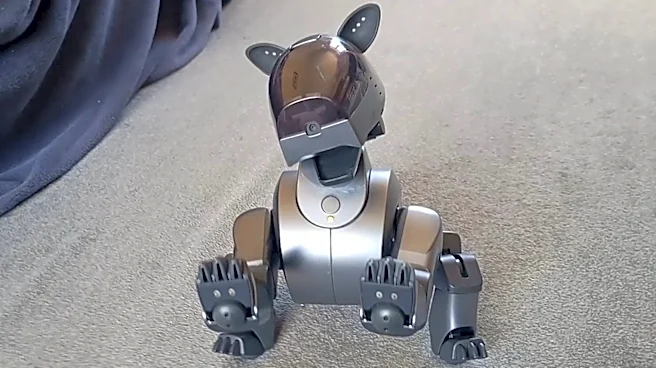
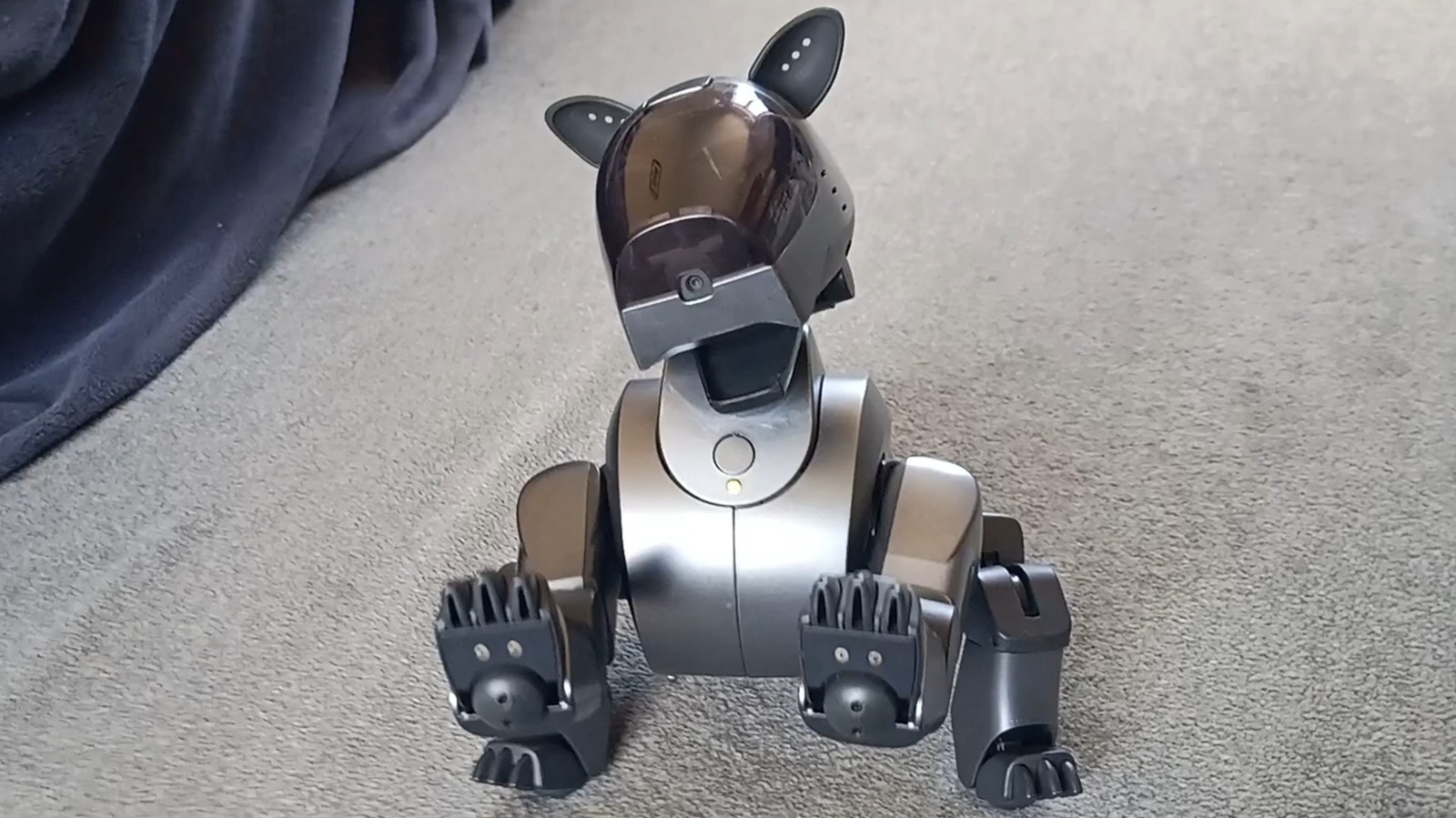
While it's pretty easy to go out and adopt a new puppy, bringing a real dog into the house isn't always an option. For those with the means, there was a robotic version sold through Sharper Image, but it was pretty pricey. Sony was a leading pioneer in the development of robot dogs, introducing the brand AIBO, which stood for Artificial Intelligence RoBOt, in 1999. Several models were released over subsequent generations before Sony discontinued the AIBO robotic dog in 2006.
These weren't merely toys either, as they boasted numerous capabilities that made them look and act like real dogs. While they didn't leave spent batteries around the house, they were programmable via an 8MB memory stick, and they boasted 18 degrees of freedom across the mouth, tail, head, and legs. It could walk, respond to various interactions, and was an impressive piece of technology, though it was considerably expensive.
A second-generation AIBO sold through the catalog in 2001 for $1,590 ($3,030 in 2026). That put it on the high end of electronic items sold by Sharper Image, but it was nonetheless popular. While Sony discontinued AIBO in 2005, it brought them back in 2018 and has continued to improve their look and performance capabilities, integrating artificial intelligence and more. Unfortunately, the newest AIBO is even more expensive than the OG model, retailing for $3,199.99 in 2026.
Astro Shooter Pinball
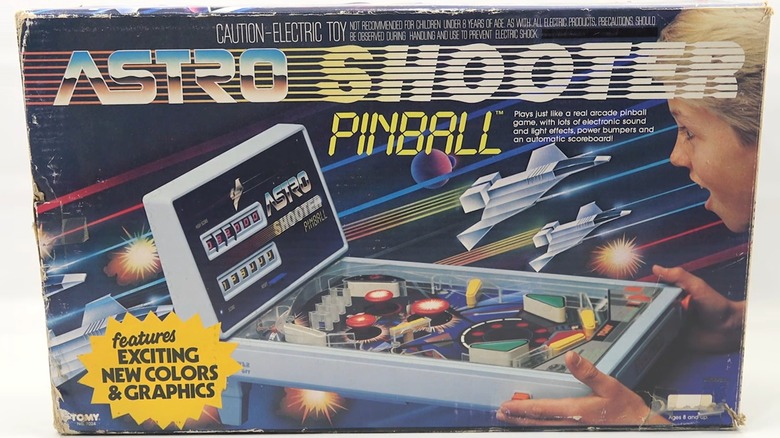
Pinball machines didn't enter homes in the same manner as video games did from arcades, but there were options. While you could buy something like a cool, auto-themed, full-size pinball table for your home, they were expensive and took up a lot of room. In the 1980s, you could go with a tabletop option. Sharper Image sold Tomy's Astro Shooter Pinball machine, which was a smaller-scale device that featured 9/16-inch steel balls, working flippers, lights, and bumpers.
Astro Shooter Pinball offered all of the gameplay you'd expect from a pinball machine in the mid-to-late 1980s, but at a fraction of the size and price. It could be used on a tabletop, and it came with small legs that snapped into place. Sharper Image sold Astro Shooter Pinball for $109 in its 1988 catalog, which comes to around $310 in 2026.
While it wasn't cheap, it wasn't too expensive compared to something like the Nintendo Entertainment System, which cost $89 around the same time. By today's standards, which include relatively inexpensive plastic pinball machines for kids, Astro Shooter Pinball isn't as good as something like a digital pinball machine from Arcade1Up. Granted, in the '80s, it was the type of toy that made your friends jealous, and it was ideal for challenging one another to see who could get the high score.
Transparent phones
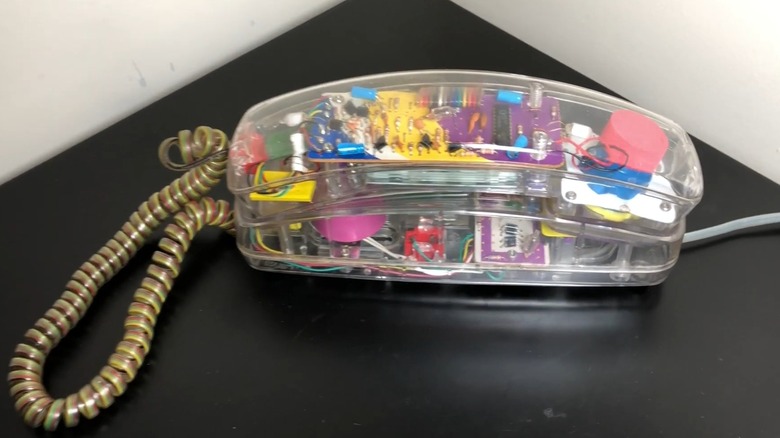
Just like in fashion, there are trends in the tech industry, and for some reason, one of the most ubiquitous trends throughout the latter half of the 1980s was transparency. You could find transparent items in all areas of consumer electronics, and there were even clear sodas, including Tab Clear and Crystal Pepsi, so just about everything had to be see-through. One of the more popular clear products sold by Sharper Image during this time was a transparent phone.
In 1985, Sharper Image ordered 5,000 to sell in its catalogs and stores. They cost $65 ($205 in 2026), and were exactly what they appeared to be: regular phones with see-through cases showing a bevy of colorful components made specifically to be seen, which wasn't typical of phone components at the time.
The phones came with a colorful cord supplied by AT&T, and they marketed them heavily. Sharper Image's large purchase helped draw media attention to the new phones, popularizing clear electronics with the masses, and they sold well into the 1990s. As time passed, transparent phones became cheaper to manufacture, but eventually the fad disappeared.
Bytey Bird
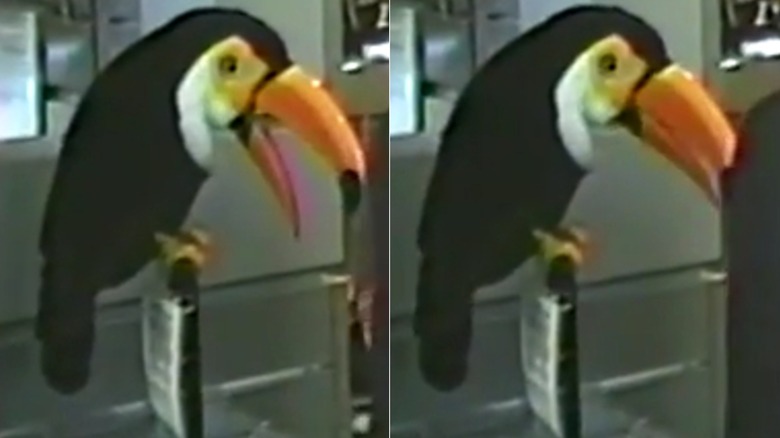
Sharper Image sold plenty of unusual tech items over the years, but it also sold a bunch of novelty toys. One of the most popular was the Bytey Bird, a small, robotic bird that sat atop a perch and interacted with you in various ways. Sharper Image marketed it as the "First parrot that can say 'antidisestablishmentarianism,'" and it wasn't inexpensive, costing around $99 in the late 1980s ($285 in 2026).
Bytey Bird featured a sound-recording microchip, so whatever you said to it, you'd hear back. It could also whistle, squawk, sing, and call out from across the room, and all you had to do was speak to it to get it going. In addition to opening and closing its beak, Bytey Bird could also flap its wings, move its head, and adjust its body, so it was a fairly advanced little robot for the time.
The so-called "Parrot of the Future" was sold in various designs, including a colorful red, yellow, and blue parrot, the pictured toucan, and others. Bytey Bird was an iconic novelty from the '80s that was reminiscent of the brand, but it disappeared after a few years. The company brought back a similar device that comes in the form of RC Flying Birds. While they aren't as interactive as the original Bytey Bird, they're cute little drones that fly and look much like real birds.
The Robomower
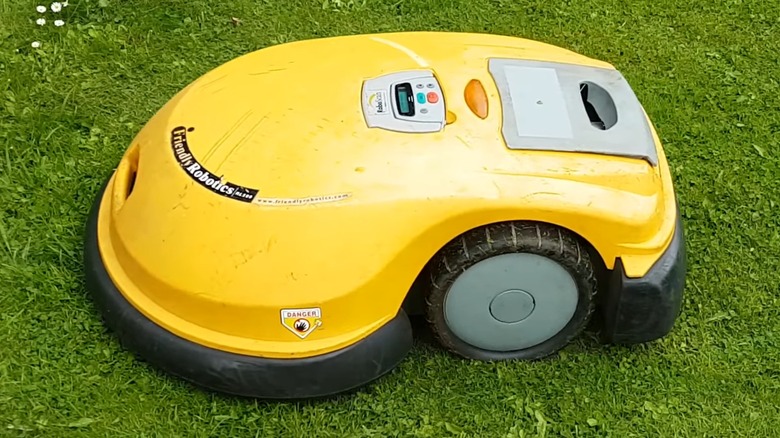
Thanks to the popularity of Roomba and other autonomous vacuum cleaners, a variety of similar devices are available, including robotic lawnmowers made by several brands. While they're relatively easy to find these days, that wasn't always the case, and in 2000, The Sharper Image started selling the first-generation robotic lawnmower, the RL500 Robomower. This was at a time when such things were futuristic, making it a luxury item.
Sharper Image sold the RL500 for $699.95 ($1,335 in 2026), but unlike many modern options, you had to place a wire to define its boundary. The wire could be buried a few inches deep, or it could be laid out on the lawn. It also featured a manual radio controller you could remove from the mower. This let you manually drive it around outside the boundary, or play with it like a slow-moving RC car. When you bought a Robomower, it came with a handy VHS tape explaining how to set it up.
One thing the Robomower had going for it was its quiet operation. It was far less noisy than a standard lawnmower, and Friendly Robotics, the company that made the Robomower, indicated that it could be used at night. This was because its noise never exceeded 85 decibels, which isn't much louder than a vacuum cleaner, which typically measures around 70 decibels.
Realtime Watches
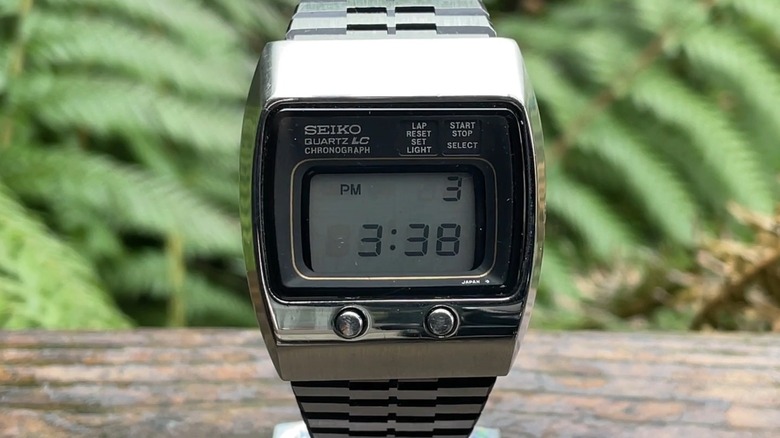
Richard Thalheimer launched his mail-order catalog company with a watch he acquired for $35 ($195 in 2026) wholesale. It's unclear how many he purchased, but the watches were almost identical to Seiko's fully digital watch (pictured), which retailed for $300 ($1,670 in 2026) at the time. He took out a full-page ad featuring his friend and legendary runner, Walt Stack, and began selling Realtime Watches for $69 ($385 in 2026) under the Sharper Image name in 1977.
His first such venture earned him $5,000 ($27,850 in 2026) profit, and he kept the practice going. By the age of 27, Thalheimer was a millionaire. Thalheimer's goal was to sell watches to runners, and he proved quite capable, as Realtime watches effectively solidified the brand. Over the years, Sharper Image has sold a variety of watches from different brands.
They're often expensive luxury items, but Realtime watches were far more affordable and introduced many to the name Sharper Image. That makes Realtime watches one of the most iconic products Sharper Image ever sold. Eventually, Realtime watches disappeared, having served their purpose in establishing Sharper Image. Today, they're collector's items, often selling for around $100 on sites like eBay, but they're somewhat difficult to find because they're pretty rare.
Razor Scooters
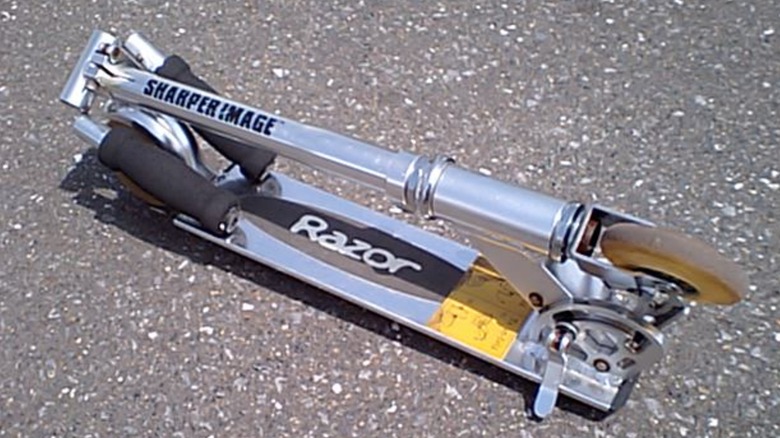
If you wanted to buy a Razor Scooter today, you can do so from a number of places, as they're popular and ubiquitous. Initially, Razor Scooters could only be found in one place: Sharper Image. In 2000, Richard Thalheimer found the product while hunting for interesting items at a toy fair in Hong Kong. He worked out a deal with the manufacturer to exclusively sell Razor Scooters for 24 months, and he ended up selling a million in the first year.
This was at a time when the company's popularity was beginning to wane, and scoring the Razor Scooter was, as Thalheimer put it, "A second lease on life" for Sharper Image (via Hustle). Razor Scooter sales reinvigorated the company, solidifying the popular devices' place in the brand for years. Sharper Image sold a variety of styles, constantly innovating the look and function of Razor Scooters to keep them popular and selling well.
After the 24-month exclusivity contract ended, Razor Scooters became easier to purchase, as they were no longer limited to the Sharper Image catalog or stores. This helped reduce the price, but the company never stopped selling them. You can still buy a variety of Razor Scooters from Sharper Image, including a high-end version filled with LED lights and an electric motor for $247.49. Less expensive options can be purchased directly from Razor or at big-box stores like Target and Walmart.
Massage recliners
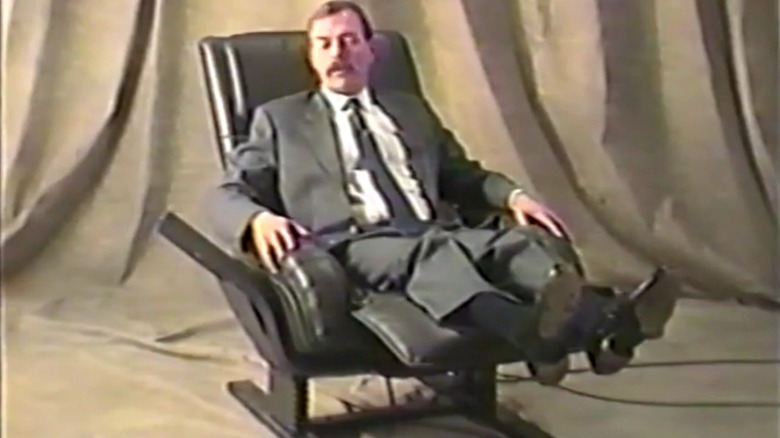
One of the more luxurious items sold by Sharper Image in the 1980s and '90s was a series of massage recliners. They were often featured at the front of Sharper Image stores, so one of the first things customers saw was a relaxing place to sit down and try out the chair's features. These were luxury recliners that had many of the features common today, including massage rollers and more.
A model from the 1988 catalog also featured a built-in cassette stereo and speakers, so you could relax on the chair while listening to your favorite tunes. That model cost $1,888 ($5,380 in 2026), so it was out of reach for many consumers. Still, by 2001, Sharper Image sold a slightly less expensive option for $1,499.95 ($2,860 in 2026). Despite the high cost, massage chairs and recliners were common in Sharper Image catalogs and stores throughout most of the company's life, and they've made a comeback.
In 2020, the company launched two premium products, the Revival Massage Chair and the Relieve 3D Massage Chair. These are significantly more robust than the models sold in the 1980s and '90s, offering features that didn't exist back then. The first retailed for $3,999, while the second cost $5,799, though the latter was discounted to $3,749 at one point.
Sony DiscJockey CD Changer
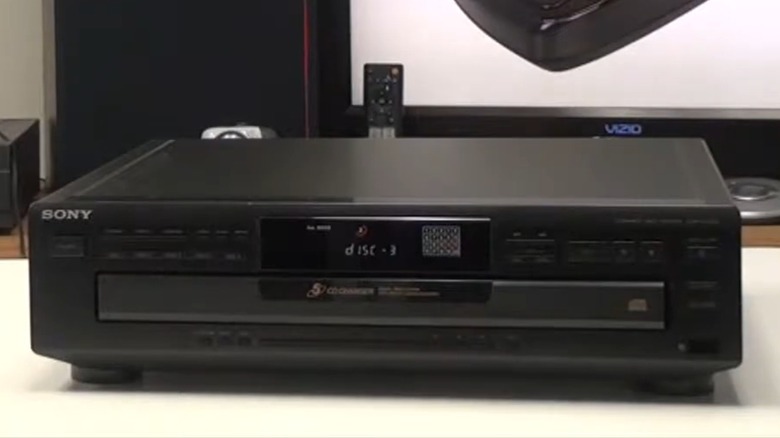
When CDs arrived and replaced cassette tapes, they offered more music in a compact size. Initially, CD players only let you play a single disc at a time, but that changed as carousels allowed for multiple CDs to be swapped, one after another, like an old-fashioned record-playing jukebox. The first of these was a smaller type of carousel capable of holding up to five CDs at a time, and Sharper Image sold these throughout the late 1980s and into the '90s.
A particularly popular product in the late 1980s was the Sony DiscJockey CD Changer. This was a CD changer that allowed for up to 6 hours of uninterrupted music via its five-disc platter. It incorporated a Shuffle Play feature that could play songs randomly from one disc to another, and it was quick, so you didn't have to wait a while for the next CD to load. In 1988, Sharper Image sold the Sony DiscJockey CD Changer for $329 ($940 in 2026).
That made it an expensive component for any home stereo system, but single-disc CD players were still relatively expensive at the time. In a way, getting a DiscJockey was an investment in keeping your stereo system relevant, but like any technology, it was ultimately replaced. Much larger-capacity CD changers hit the market, making the five-disc option seem archaic in comparison.
Ionic Breeze Comfort Air Purifier
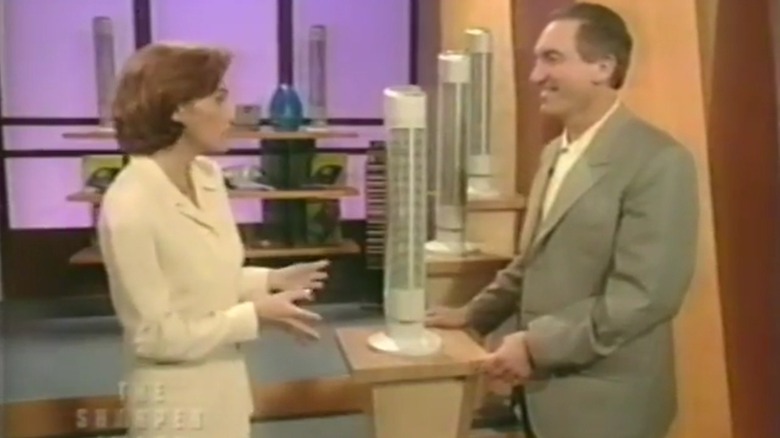
For most of its history, Sharper Image featured a wide variety of different products, but when it developed the Ionic Breeze Comfort Air Purifier in 1998, that changed. A company that sold numerous items became more of a one-product company, putting all its eggs in the air purifier basket. This ultimately became the company's downfall, resulting in the closure of its stores and its restructuring into the online presence it has today.
Still, when it was introduced, the Ionic Breeze was a game-changer. At least, that was the plan, and Richard Thalheimer heavily marketed the new item to consumers in ads, on television, and in Sharper Image stores. The Ionic Breeze was touted as an air purifier that didn't require any moving parts; it was noiseless, and Sharper Image claimed it was the next big thing in home air purification. It became incredibly popular, claiming up to 45% of Sharper Image's total sales by the turn of the century.
The Ionic Breeze initially sold for $229 ($475 in 2026), and many people bought it. Unfortunately, it later became clear that it couldn't do what Sharper Image claimed, and in 2002, Consumer Reports declared that it was ineffective. It was later found to leak ozone, and the bad press, reduced sales, and poor reception of the Ionic Breeze effectively tanked the company. Nowadays, there are plenty of better air purifiers that Consumer Reports ranks much higher than the Ionic Breeze.
Want the latest in tech and auto trends? Subscribe to our free newsletter for the latest headlines, expert guides, and how-to tips, one email at a time. You can also add us as a preferred search source on Google.
Read the original article on SlashGear.