







July 13 (Reuters) - The rough start for U.S. chip stocks in July likely points to further volatility as investors wrestle with high valuations and questions about the longevity of the AI capex boom.
The Philadelphia Semiconductor index has shed more than 11% since hitting a record high in June. The index is still up 83% this year, a fact that looms large in discussions of what comes next. These firms have enjoyed massive profit growth thanks to rising prices and supply-demand imbalances, but markets
are nothing if not forward looking.
"We've never seen this kind of extreme earnings growth. But the question then becomes, how long can we expect this to continue," Steve Sosnick, chief market analyst at Interactive Brokers, said.
Here's a look at some charts as traders weigh if the chip rally has more to go:
SUGAR RUSH FADES
Funds tracking U.S. semiconductor stocks clocked outflows of around $11 billion in the week ended June 24, the biggest weekly outflow this century, according to LSEG Lipper data.
Sentiment on the sector has been just as volatile as performance recently. The funds recorded inflows of around $12 billion in the previous two weeks.
Analysts generally expect hyperscaler capex spending will remain high, with much of the anxiety about these stocks driven by what-if scenarios involving stock declines and capex cuts.
Global cloud and AI infrastructure capital expenditure is expected to approach $1.5 trillion by 2027, a 40% to 50% jump year-over-year, according to a BofA Securities note this week.
BULLISH BROKER VIEWS
U.S. brokerages have bumped up their price targets, driven by expectations that insatiable AI demand will support earnings growth.
Among the S&P 500 chipmakers, Micron has the highest expected upside -- reflecting its current price vis-à-vis its consensus analyst target -- of more than 60%. Memory chipmaker Sandisk's shares are expected to rise over 30%, based on LSEG data.
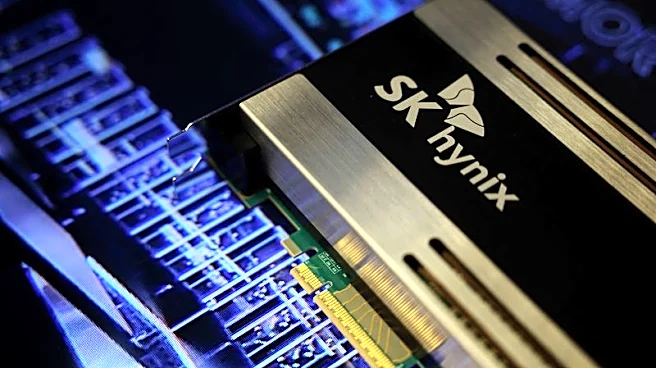
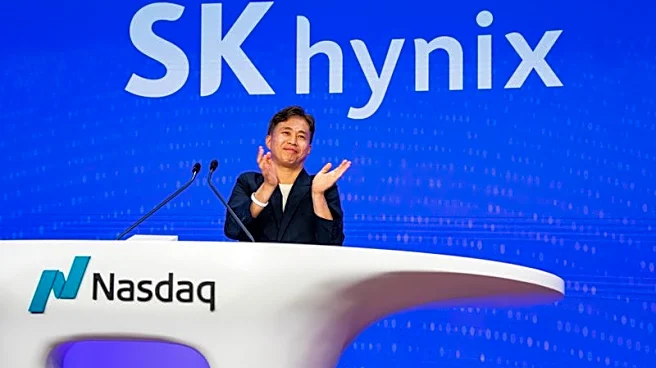
Soaring memory prices due to tight supplies have boosted memory chip companies across the globe including SK Hynix, which jumped more than 10% in its U.S. trading debut on Friday following a $26.5 billion share sale.
Nvidia's shares are expected to climb over 40%.
But other big semiconductor companies are trading around their median 12-month price target, indicating much of the upside may be priced in.
"I consider elevated price targets to be rather a consequence of the incredible momentum in semis rather than a reliable indicator of future performance," said Alexander Lis, chief investment officer at SD Ventures.
BEARS CREEP BACK
Data analytics company ORTEX said that bets against major semiconductor companies have been piling up over the past year and short interest now stands at a three-year high.
"This is caution and hedging creeping back into the sector after a huge run, not the kind of crowded, high-conviction shorting that leads to squeezes," said Peter Hillerberg, co-founder at ORTEX.
Short interest in the stocks has nearly doubled on average over the past three years, Hillerberg said, with that on Marvell, Qualcomm and Micron rising the most.
EARNINGS TEST
Earnings for companies on the S&P 1500 Semiconductors & Equipment Industry index are expected to more than double this year, LSEG-compiled data showed, driven largely by Micron and Nvidia.
However, the growth is seen moderating in 2027, with profits expected to rise 46.1%, the data showed.
Uncertainty about the U.S. interest rate path and the Middle East conflict could also cast a shadow on earnings estimates.
MIND THE VALUATION TRAP
Nvidia, which has been at the heart of the AI rally, trades at a forward-looking price-to-earnings ratio of about 19, its lowest in more than 10 years. Micron's forward P/E touched a nine-year low of 5.4 in May.
"The valuations have gotten cheaper over the last two years, and that's primarily a function of earnings growing faster than the price," said Chris Maxey, chief market strategist at Wealthspire Advisors.
But forward P/E ratios for Intel, Advanced Micro Devices and Marvell Technology stand way above their longer-term averages, implying earnings expectations aren't catching up fast enough -- and potentially turning investor focus back to the commodity nature of chipmakers, particularly memory chips.
"It's impossible to argue that the cyclicality of the sector will go away. I think the cycle will just get a lot longer," said Marija Veitmane, head of equity research at State Street Global Markets.
(Reporting by Johann M Cherian, Shashwat Chauhan, Sruthi Shankar and Medha Singh in Bengaluru, editing by Colin Barr and Mrigank Dhaniwala)