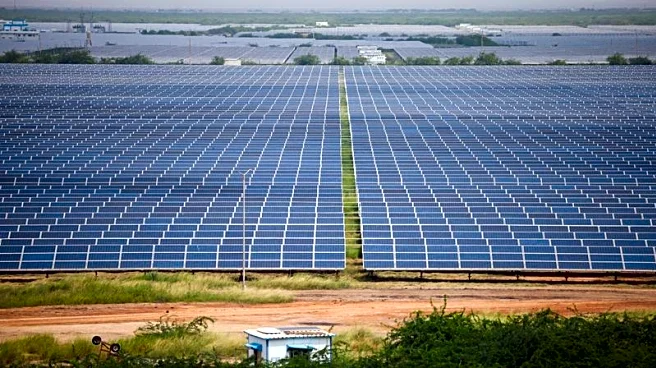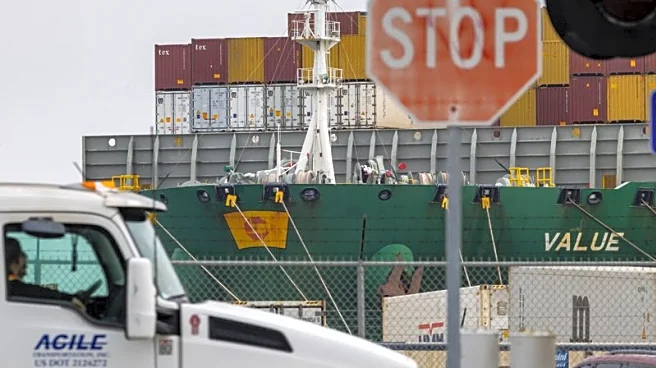


Feb 24 (Reuters) - Solar panels make up the vast majority of the value of shipments stopped at the U.S. border under a 2021 law banning goods made with Chinese forced labor, according to new data from the U.S. Customs and Border Protection (CBP).
The data provide the first detailed breakdown of the types of products stopped by CBP since the Uyghur Forced Labor Prevention Act (UFLPA) was signed into law by former President Joe Biden, confirming that the solar industry is the most affected sector.
In
recent years companies have furloughed workers and projects have been delayed due to stalled shipments of solar panels at a time when federal data shows the sector has become the top new U.S. electricity source.
Previous data released by CBP had included solar equipment in the broad category of electronics, making it impossible to determine how much had been blocked. Solar panels and cells are now listed in a much smaller category of semiconductor devices, and CBP, in its guide to the data, references solar goods interchangeably with the identifying code in question.
Shipments carrying the code for semiconductor devices account for $3.26 billion in stopped shipments, or 82% of the value of the $3.94 billion in shipments blocked since the law was implemented in 2022, according to data reviewed by Reuters on Tuesday.
CBP did not say when the new data was first published. Agency officials did not immediately respond to a request for comment.
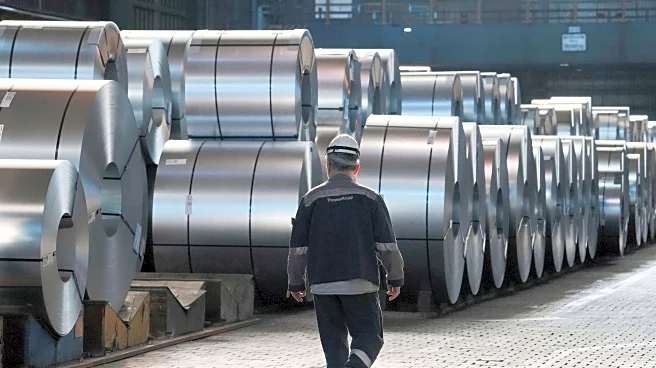
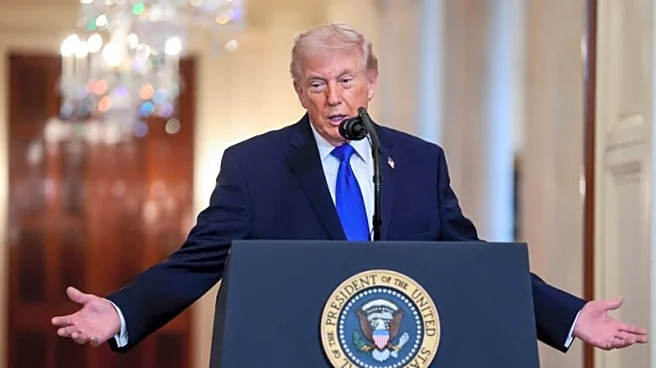
UFLPA enforcement has fallen since U.S. President Donald Trump took office last year. Stopped shipments totaled $187.7 million last year, down from $1.78 billion in 2024, though in August the U.S. Department of Homeland Security announced it would target additional goods, like steel and copper, said to be produced with Chinese forced labor.
Most of the stopped solar shipments were from Malaysia, Vietnam and Thailand, which in recent years have been the top solar panel suppliers to the United States.
More than 79% of the value of the halted solar and other semiconductor shipments, or about $2.5 billion in products, have since been released to U.S. importers.
The UFLPA bans goods made in China's Xinjiang region where Chinese authorities are reported to have established labor camps for ethnic Uyghur and other Muslim groups. China's government denies allegations of abuse.
Solar's raw material, polysilicon, was identified as a high-priority sector under the UFLPA.
(Reporting by Nichola Groom)