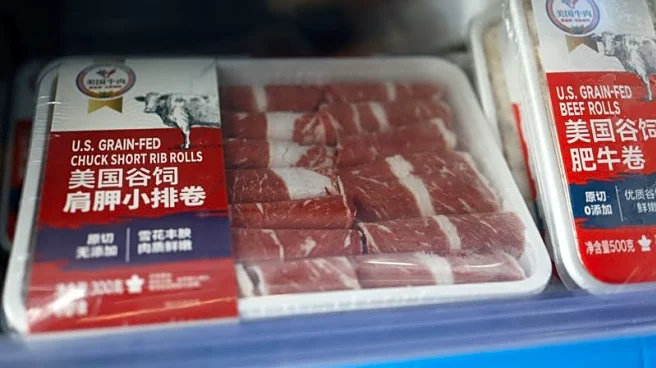




BEIJING, Dec 31 (Reuters) - China will impose additional 55% tariffs on beef imports from countries including Brazil, Australia and the U.S. when shipments exceed certain quotas, a major blow to key global suppliers as the domestic industry grapples with a supply glut.
China's commerce ministry said on Wednesday the total quota for 2026 is 2.7 million metric tons, with Brazil assigned the highest portion of 41.1%, followed by Argentina with 19.0% and 12.1% for Uruguay.
The ministry allocated a quota
of 205,000 metric tons for Australia and 164,000 metric tons for the U.S.
In 2024, China imported 1.34 million tons of beef from Brazil, 594,567 tons from Argentina, 216,050 tons from Australia, 243,662 tons from Uruguay, 150,514 tons from New Zealand, and 138,112 tons from the United States.
China's measures will take effect on January 1 for three years, with the total quota increasing every year, reaching 2.8 million metric tons in 2028.
Quota Volumes and Additional Tariff Rates
Year 2026 2027 2028
Quota Volume (1,000 tons)
Brazil 1,106 1,128 1,151
Argentina 511 521 532
Uruguay 324 331 337
New Zealand 206 210 214
Australia 205 209 213
United 164 168 171
States
Other 172 175 179
countries/re
gions
Total 2,688 2,742 2,797
Additional 55% 55% 55%
Tariff Rate
China made the announcement on Wednesday following two extensions of its beef import probe initiated last December, which officials say does not target any particular country.
Last week, Chinese beef industry associations pressured the government to impose immediate safeguard measures by the year-end to stabilize market expectations and domestic breeders' livelihoods, state media Global Times reported.
Since 2023, China's beef breeding sector has incurred heavy losses due to various factors, including imports, prompting many breeders to slaughter breeding cattle to reduce expenses, Global Times quoted an industry official as saying.
China imported a record 2.87 million metric tons of beef last year. Imports in the January to November period dropped 0.3% year-on-year to 2.59 million tons.
(Reporting by Shi Bu, Daphne Zhang, Ella Cao, Liz Lee; Editing by Tom Hogue and Jan Harvey)