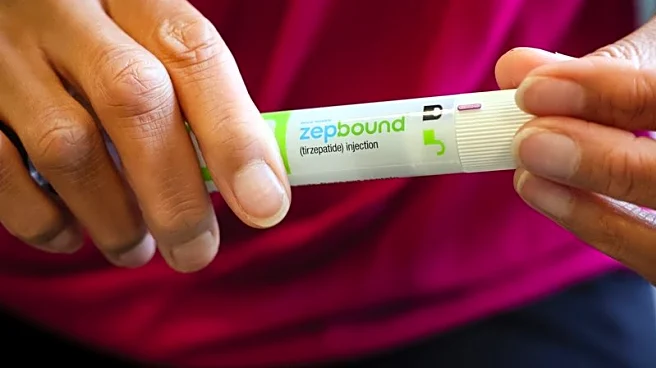




Dec 23 (Reuters) - The market for weight-loss drug is expected to expand to more than $150 billion in revenue by the early 2030s, thanks to the ever-growing popularity of Eli Lilly's Zepbound and Novo Nordisk's Wegovy.
Novo Nordisk became the first company to receive approval from the U.S. Food and Drug Administration for a GLP-1 pill for obesity, giving the Danish drugmaker a competitive edge in the fast-evolving obesity treatment market.
Several drugmakers are racing to develop an oral medicine or pill
that might prove to be as effective as the injectables.
Pills are easier to manufacture and could also avoid some of the supply issues that were initially seen with Novo and Lilly's injectable drugs.
Here are some companies developing oral obesity drugs in the hopes of making their mark in a lucrative market:
ELI LILLY
Orforglipron, the company's once-daily oral non-peptide GLP-1 agonist, helped overweight adults without diabetes lose 12.4% of their body weight over 72 weeks at the highest dose in a late-stage trial.
In another study, orforglipron helped maintain weight loss in patients switching from its GLP-1 injection, Zepbound, and rival Novo Nordisk's Wegovy.
According to a Reuters report, the FDA leadership is pressing reviewers to speed up their evaluation of orforglipron, after the company pushed for a faster timeline.
The agency could decide on Lilly's pill as early as March if the new timeline is adopted.
NOVO NORDISK
The Danish drugmaker's weight-loss pill, also branded as Wegovy, is a 25-mg oral formulation of semaglutide, the active ingredient in the blockbuster injectable Wegovy.
Novo said the 1.5-milligram starting dose of the Wegovy pill will be available in early January.
It is approved for chronic weight management in adults with obesity or who are overweight and have at least one related health condition.
A 64-week, late-stage study showed participants who took 25 mg of oral semaglutide once daily lost an average of 16.6% of their body weight, compared with 2.7% for those on a placebo.
STRUCTURE THERAPEUTICS
Structure Therapeutics is developing GSBR-1290, a non-peptide oral GLP-1 agonist.
Its obesity pill showed weight loss of up to 11.3% after 36 weeks of treatment in a mid-stage study, in a 230-person trial.
Structure plans to start late-stage development of the pill by mid-2026 following a meeting with the Food and Drug Administration in the first half of next year.
MERCK
The company, in partnership with Hansoh Pharma, is preparing to test HS-10535, an oral small-molecule GLP-1 agonist, in early-stage trials. The drug is currently being tested in lab studies.
ASTRAZENECA
AstraZeneca and Eccogene are advancing ECC5004, a once-daily GLP-1 receptor agonist pill. Early-stage trial showed a promising weight-loss signal and a favorable safety profile, with mid-stage trials planned under AstraZeneca's lead.
ROCHE
Roche, following its acquisition of Carmot Therapeutics, is working on CT-966, an oral GLP-1 agonist. CT-966 resulted in a placebo-adjusted average weight loss of 6.1% within four weeks in obese patients without diabetes in an early-stage trial last year.
VIKING THERAPEUTICS
The company is developing an oral formulation of VK2735, which targets both GLP-1 and GIP hormones that regulate the body's metabolism.
In a mid-stage study, the experimental weight-loss pill helped patients lose 12.2% of their body weight, missing Wall Street's top-end expectations of 15%.
PFIZER
Pfizer was developing danuglipron, initially as a twice-daily oral GLP-1 agonist, but scrapped development after data from a mid-stage trial showed poor tolerability. A once-daily extended-release version was later tested in about 1,400 patients but liver safety concerns remained, dampening the company's plans to enter the obesity drug market.
(Reporting by Bhanvi Satija, Mrinalika Roy , Padmanabhan Ananthan, Mariam Sunny and Sneha S K in Bengaluru; Editing by Anil D'Silva)