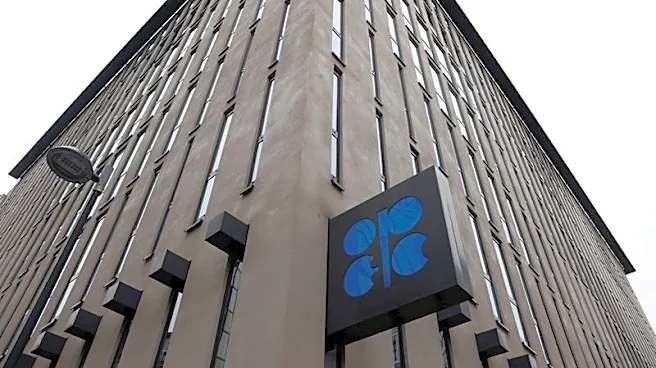

April 29 (Reuters) - Goldman Sachs on Wednesday said the United Arab Emirates exit from OPEC poses a greater upside risk to oil supply over the medium term than in the short term.
The UAE said on Tuesday
it would leave OPEC and the wider OPEC+ alliance from May 1, a move that weakens the producer group's control over global oil supplies and could eventually give Abu Dhabi more room to raise output once Gulf export routes reopen.
• The bank said the exit followed years of discussions over the UAE's production quota and came in the current geopolitical and oil market context, with the UAE having faced significant attacks from Iran, an OPEC member exempt from production quotas.
• Oil prices surged over 6% on Wednesday as deadlocked U.S.-Iran negotiations made investors more concerned about prolonged disruptions to Middle Eastern supply. [O/R]
• Goldman said the effective closure of the Strait currently limits UAE output. However, the exit implies upside risk to the bank's base case that UAE crude production recovers to 3.8 million barrels per day by October 2026, compared with 3.6 million bpd before the war. Goldman estimated the UAE's potential crude production at just over 4.5 million bpd by February 2026.
• The bank said its base case assumes cumulative Gulf crude production losses of 1.83 billion barrels by December 2026, with global oil inventories needing to be replenished once the Strait reopens.
• ADNOC, the UAE's national oil producer, aims to raise production capacity to 5 million bpd by 2027, the bank added.
(Reporting by Anushree Mukherjee in BengaluruEditing by Nick Zieminski)