





By Akash Sriram and Abhirup Roy
April 30 (Reuters) - Rivian said on Thursday it will get up to a $4.5 billion loan from the U.S. Department of Energy, about $2 billion lower than previously approved, to build its plant in Georgia and will draw the funds earlier than planned in 2027.
The electric vehicle maker also said it would expand the annual initial capacity at the plant to 300,000 units from 200,000 units for now, but lower than the 400,000 unit capacity it had planned across two phases earlier.
Under a previous agreement late in 2024, Rivian was set to receive $6.6 billion to build the Georgia plant as part of U.S. efforts to boost domestic EV manufacturing and battery supply chains.
"Whereas before the loan was across two phases, it's now the $4.5 billion loan across a single phase," Rivian CEO RJ Scaringe said in an interview with Reuters. "I look at it as it reflects the level of confidence we have on our midsize platform."
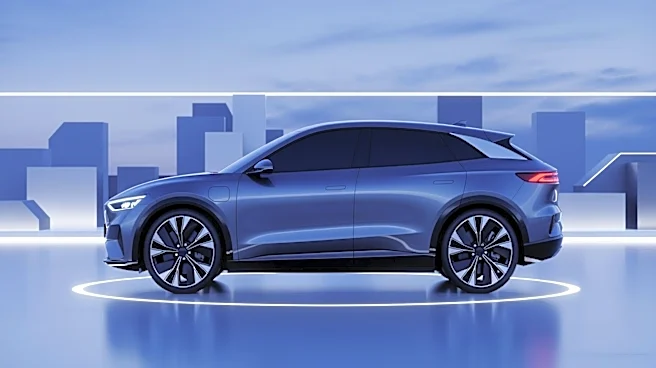
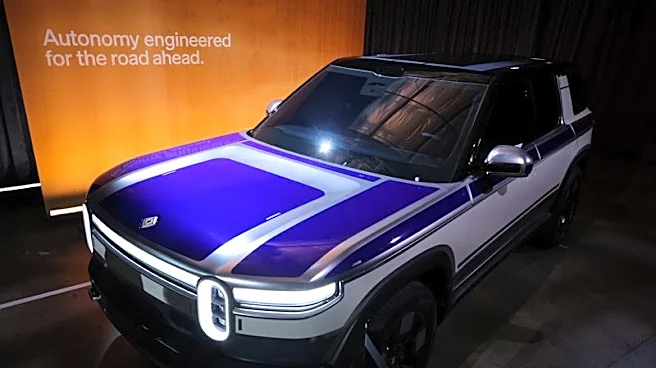
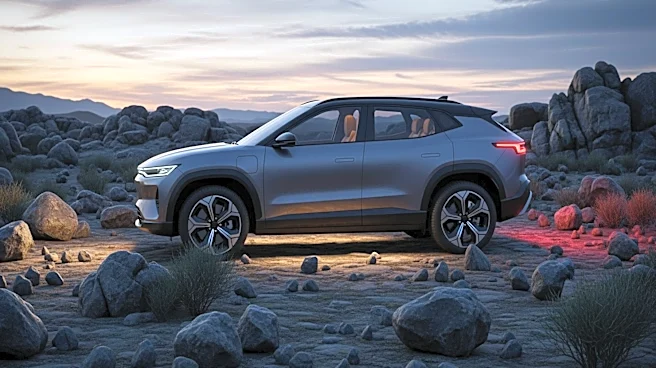
The plant will produce Rivian's smaller and more affordable R2 SUVs that are seen as critical for the automaker's success. The company began producing R2 vehicles for customers last week, with deliveries expected later this spring. It also plans to produce an R3 crossover eventually.
Rivian, known for its high-end R1 SUVs and pickup trucks, also beat Wall Street estimates for first-quarter revenue, as growth in higher-margin software and services partly offset pressure on its core automotive business.
Revenue rose about 11% to $1.38 billion in the quarter, topping analysts' estimates of $1.36 billion, while adjusted core loss of $472 million was narrower than expectations.
The company delivered 10,365 vehicles in the first three months of the year, beating estimates, and reaffirmed its full-year delivery outlook of 62,000 to 67,000 vehicles, driven in part by the R2 launch.
Rivian priced the R2 launch variant at $57,990, with cheaper trims planned for next year, including a widely anticipated $45,000 version expected by late 2027 that could significantly broaden its customer base.
The EV maker is betting the R2 will help offset demand pressure following the expiry of a $7,500 U.S. federal tax credit last year, while analysts expect its higher-priced R1T and R1S models to remain the bulk of deliveries in the near term.
Rivian is also deepening partnerships to support growth, including a deal with Uber to deploy up to 50,000 autonomous R2 robotaxis and continued collaboration with Volkswagen, which recently unlocked a $1 billion investment tied to joint software development milestones.
(Reporting by Akash Sriram in Bengaluru and Abhirup Roy in San Francisco; Editing by Sriraj Kalluvila)