







By Anton Bridge and Miho Uranaka
TOKYO, April 22 (Reuters) - Japan's largest lender, MUFG Bank, is seeking partners such as life and non-life insurers to share risk as it increases financing beyond traditional loans for large corporate deals including leveraged buyouts, its chief executive said.
The bank is aiming to limit funding just through its own balance sheet so as not to bear the risk of financing deals, increasingly in the trillions of yen, alone, as a wave of leveraged buyouts sweeps Japanese
firms.
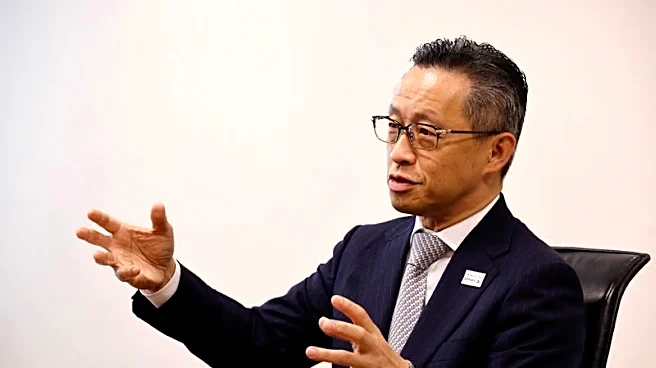
"The more diversified the sources of funding the better," MUFG Bank CEO, Masakazu Osawa, said in an interview with Reuters. MUFG Bank is the banking arm of Mitsubishi UFJ Financial Group.
Osawa's comments indicate that appetite for major M&A activity remains strong among Japanese firms even as conflict in the Middle East has upended global trade and energy markets.
"To finance leveraged buyouts, we're in a world where we have to structure the whole deal, including equity finance, to jointly take on risk, otherwise we won't be chosen by clients," Osawa said. Leveraged buyouts involve funding an acquisition with a large amount of borrowed money backed by the target company's assets and future cash flow as collateral.
Life and non-life insurers, who hold long-term capital, are potential partners, as are government entities and private credit funds, Osawa said.
Japanese Prime Minister Sanae Takaichi has highlighted 17 sectors critical to economic security, such as semiconductors and shipbuilding, in which to focus public-private investment efforts.
M&A activity involving Japanese companies last year more than doubled from the previous year to a record 53 trillion yen ($333 billion), LSEG data showed.
While redemption requests at global private credit funds have raised concerns about banks' exposure to potential downside, the financial regulator views it as a key pillar of its new strategy to meet rising demand for funding among Japanese corporates.
Japan's market "remains underdeveloped and needs cultivation," Michinori Haba, the Financial Services Agency's deputy director-general in charge of financial markets, told Reuters last week.
MUFG Bank's base case is that the global economy remains relatively strong.
"The key question is how much of a setback we see from factors including the situation in the Middle East. At the moment, nothing too negative has surfaced but things may gradually emerge from here," Osawa said.
($1 = 159.1800 yen)
(Reporting by Anton Bridge and Miho Uranaka; Editing by Jacqueline Wong)