
By Wayne Cole
SYDNEY, Jan 19 (Reuters) - U.S. stock futures slid on Monday after President Donald Trump threatened to slap extra tariffs on eight European nations until the U.S. is allowed to buy Greenland, pushing the dollar down on the safe-haven yen and Swiss franc.
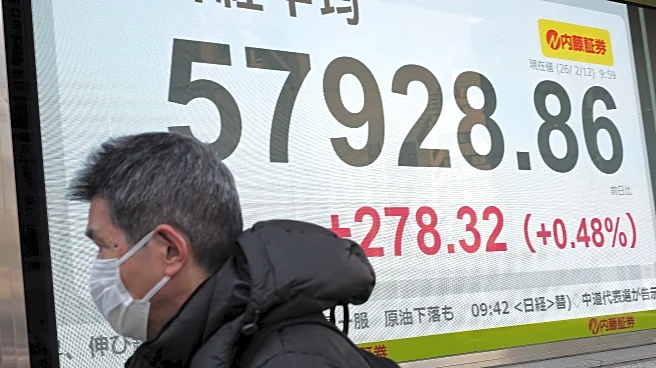
A holiday in U.S. equity and bond markets made for thin trading and likely contributed to a 0.9% drop in S&P 500 futures and a 1.1% fall in Nasdaq futures. Nikkei futures pointed to a soft start for Asian stocks as well.
Trump said he
would impose additional 10% import levies from February 1 on goods from Denmark, Norway, Sweden, France, Germany, the Netherlands, Finland and Britain, rising to 25% on June 1 if no deal is reached.
Major European Union states decried the tariff threats over Greenland as blackmail, and France proposed responding with a range of previously untested economic countermeasures.
The EU's options include a package of its own tariffs on 93 billion euros of U.S. imports that was suspended for six months in early August and measures under an Anti-Coercion Instrument that could hit U.S. services trade or investments.
Analysts at Deutsche Bank noted European countries owned $8 trillion of U.S. bonds and equities, almost twice as much as the rest of the world combined, and might consider bringing some of that money back home.
"With the U.S. net international investment position at record negative extremes, the mutual interdependence of European-U.S. financial markets has never been higher," said George Saravelos, Deutsche's global head of FX research.
"It is a weaponization of capital rather than trade flows that would by far be the most disruptive to markets."
It should also make for a fraught few days at Davos as leaders from around the world gather at the World Economic Forum, including a large U.S. group led by Trump himself.
DOLLAR NO SAFE HAVEN
China on Monday is expected to report its economy grew 4.4% in the year to December, slowing from 4.8% the previous quarter, as strength in exports and manufacturing is offset by weakness in domestic demand.
The Bank of Japan meets on Friday and, while no rate hike is expected this time, policymakers could flag a tightening as soon as April.
One added wrinkle is domestic politics given Japanese Prime Minister Sanae Takaichi is expected to soon dissolve parliament to allow for an election in February.
Delayed data on U.S. core inflation and consumption for November are due on Thursday and will refine investor expectations for when the Federal Reserve might cut again.
A run of solid economic news at home has seen markets largely give up on an easing before June, with April priced at 65% for no change.
Earnings season continues as banks are joined by a more diverse set of companies, including Netflix, Johnson & Johnson, General Electric and Intel.
In currency markets, the euro recovered from an early dip to stand steady at $1.1605, while sterling clawed its way back up to $1.3381.
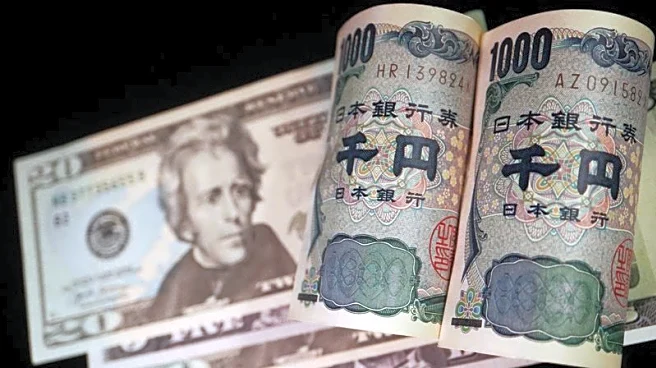
The dollar eased 0.4% on the Swiss franc to 0.7985 francs, and 0.3% on the yen to 157.71.
The cash Treasury market was shut, but 10-year futures firmed 3 ticks amid the general search for safety.
Likewise, gold gained 1.7% to $4,671 an ounce. [GOL/]
Oil prices eased on worries about global demand should a full trade war break out between the U.S. and Europe. There were lingering concerns about a potential U.S. strike on Iran as a U.S. Navy aircraft carrier group was expected to arrive in the Persian Gulf this week. [O/R]
Brent edged down 0.3% to $63.95 a barrel, while U.S. crude fell 0.5% to $59.16 per barrel.
(Reporting by Wayne ColeEditing by Shri Navaratnam)