






By Samuel Indyk and Sophie Kiderlin
LONDON, April 20 (Reuters) - Investors have cooled on European defence stocks as profit taking and stretched valuations collide with growing uncertainty over the future of warfare, with the Iran conflict again highlighting the effectiveness of low-cost drones.
MSCI's Europe Aerospace and Defence Index dropped 9.2% in March, its biggest monthly fall in five years, as a previously stellar trade began to unwind.
Defence stocks typically rally at the outbreak of war -
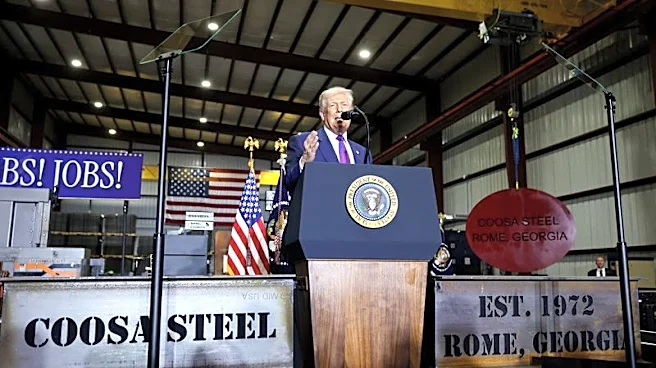
such as after Russia's full-scale invasion of Ukraine in 2022 - or when U.S. President Donald Trump pressures NATO allies to raise military spending.
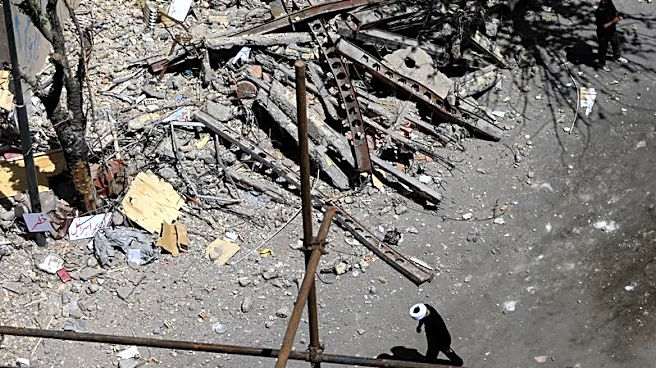
But that has not been the case since the Iran conflict erupted on February 28, despite Trump repeatedly berating NATO for not assisting with U.S. military action.
"There has been quite a lot of de-grossing (trimming positions) as financial institutions and retail investors have looked to reduce exposure amid increased uncertainty," said Martin Frandsen, portfolio manager at Principal Asset Management.
Shares in Czech arms maker CSG have dropped almost a third since the conflict began, while Germany's Rheinmetall and Renk are down about 10% and Sweden's Saab is about 12% lower.
POSITIONS UNWIND
European defence stocks have been among the market's strongest performers since Russia's full-scale invasion of Ukraine in February 2022, rising more than 450%, compared with a roughly 40% gain for the MSCI Europe index.
The rally was fuelled by pledges from European governments to boost defence spending and Germany loosening fiscal rules last year to turbo-charge its rearmament drive.
But order intake has been slower than some investors expected, with contracts delayed or phased due to fiscal pressures in countries such as France and Britain, according to Morgan Stanley analysts.
Rheinmetall, which manufactures tanks, ammunition and air-defence systems, said it was "inevitable" that countries would spend more on air defence as the Iran war continues, but that has failed to halt the sector's retreat.
While investors remain broadly positive, enthusiasm has cooled and crowded bullish positions have been trimmed, according to a recent note from Citigroup. Crowded positioning can amplify price moves when sentiment turns.
"The start of the Iran war, the consequent sharp rise in energy prices and supply chain dislocations, seem to have shaken off all sorts of crowded trades," said Louis-Vincent Gave, CEO at Gavekal Research.
"So just as gold, silver, copper and other metals pulled back aggressively, so did defence stocks."
Valuations were also a factor. At the outbreak of the war, Europe's aerospace and defence index was trading at about 29 times earnings forecasts, close to a record hit late last year.
"A rise in defence budgets over the coming years was already priced into global defence stock prices," said Hargreaves Lansdown equity analyst Aarin Chiekrie.
"As a result, the recent pullback is partly due to growth expectations in the sector getting ahead of themselves."
FUTURE OF WARFARE
The Iran conflict has underscored both the cost and intensity of modern warfare, with Gulf states firing hundreds of U.S.-made Patriot anti-missile interceptors priced at about $4 million each.
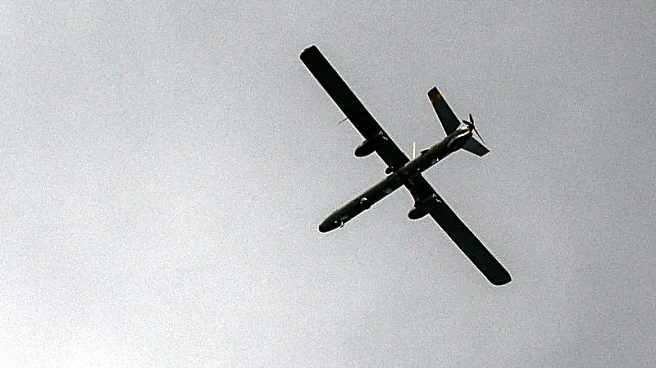
At the same time, the war has renewed focus on cheaper military solutions that have also gained prominence in the Ukraine war, such as attack drones and drone interceptors like the Ukrainian-designed interceptor from Japan's Terra Drone.
"There is a shift in the 'future of warfare' question since the outbreak of the Iran conflict, with the growing role of new technologies like much cheaper drones bringing into question the demand for legacy more expensive platforms," said Ciaran Callaghan, Amundi's head of European equity research.
Some European defence groups are investing heavily in drones, as well as surveillance and counter-drone systems.
Rheinmetall, for example, struck a deal with U.S.-based Anduril last year to jointly develop European variants of Anduril's Barracuda and Fury drones.
LONG-TERM OUTLOOK UNCHANGED
Despite the correction, analysts say the long-term case for European defence stocks remains solid, with government spending commitments still rising and fund flows suggesting selective buying on weakness.
LSEG data shows net inflows of $1.32 billion into the WisdomTree Europe Defence exchange-traded fund so far in 2026, including a net $377 million since the start of the Iran war.
Two smaller defence ETFs, the iShares Europe Defence ETF and the HANetf Future of Defence ETFs, have attracted a combined $355 million this year, with $124 million since the conflict began.
"The longer-term growth picture remains intact ... driven by a need for countries around the globe to rebuild their capabilities after decades of underinvestment," Hargreaves Lansdown's Chiekrie said.
(Reporting by Samuel Indyk and Sophie Kiderlin. Editing by Mark Potter)