




By Tim Hepher, Rajesh Kumar Singh and Allison Lampert
PARIS/CHICAGO, Sept 9 (Reuters) - GE Aerospace has acted to contain shortages of precision jet engine parts while securing valuable technology by breaking into the inner circle of castings manufacturers with a $12 billion purchase of Consolidated Precision Products.
Buying CPP, the world's third-largest maker of the metallic components needed for engine turbine blades, is the latest step in a years-long effort to strengthen aerospace supply chains.
GE Aerospace CEO Larry Culp, announcing his largest acquisition since turning round and splitting industrial giant General Electric, called the capacity "mission-critical".
The deal illustrates a shift from winning new orders to production strategy in the overstretched aerospace industry, whose biggest challenge is delivering on seven- to 10-year order books.
INDUSTRIAL CHOKEPOINT
Castings — parts made from liquid metal that are difficult to mass-produce — and forgings, which are made from solid metal and just as hard to make, have been one of the industry's most intractable chokepoints since the COVID-19 pandemic.
GE's competitors are also seeking to address the issue. Pratt & Whitney said last year it was adding an in-house casting foundry in North Carolina, while Rolls-Royce is expanding an existing plant in Britain.
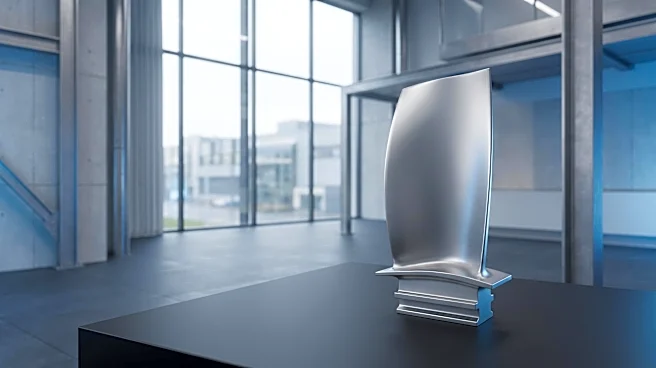
Based on age-old techniques involving wax replicas — and relying on avant-garde technology to withstand temperatures above their melting point — turbine blades stand at the pinnacle of costly aerospace manufacturing, according to analysts.
They have also been at the centre of wider production snags, fuelling tensions between the engine industry and airlines.
Decades of investment and specialist knowledge have made the handful of players difficult to imitate and kept prices high.
"It's the black art of manufacturing, which has always been a huge barrier," said AeroDynamic Advisory Managing Director Kevin Michaels.
"It is the hardest thing to do ... You might have to throw away half or more of what you make (for new designs)," he added.
CPP is one of four major global suppliers for such castings and supplies a quarter of GE's needs, according to Jefferies.
GE has courted the Ohio-based firm for years as it sought an insurance policy against any disruption from larger suppliers Howmet or Precision Castparts Corp, industry sources said.
DEAL WILL FACE ANTITRUST SCRUTINY
Expansion is not solely driven by bottlenecks.
GE plans to use its LEAN production system to improve efficiency and unlock greater rewards. Analysts say a tone was set by the turnaround and IPO of UK peer Doncasters.
Castings and forgings are also at the centre of a strategic contest between developers of the next generation of engines. China is also pursuing a place in the market, Michaels said.
"They (GE) are expecting a return that allows them to make this work financially, but it also allows them to own a piece of the supply chain that is critical to the future of engine performance," Jerrold Lundquist, managing director of advisory firm The Lundquist Group, said.
Broader competition for advanced metal parts was highlighted last week by Elon Musk who posted that plans by SpaceX to handle separate castings in-house would be a "profound game-changer".
Deals like GE's are not without risk. They include scaring away rivals who also buy from CPP, or losing favour with large suppliers such as Howmet with which GE does business. Howmet CEO John Plant said on Wednesday he was "fine" with the deal.
The deal will in addition face antitrust scrutiny. GE is expected to point to its existing ownership of Italian gear maker Avio Aero — a major supplier to Pratt & Whitney, which declined to comment.
"I would expect GE to be required to divest certain facilities, making the integration process and any related carve-outs quite complex," said Matteo Peraldo, aerospace and defence partner at U.S.-based AlixPartners.
(Reporting by Tim Hepher, Rajesh Kumar Singh and Allison Lampert; editing by Barbara Lewis)