







By Nicole Jao
NEW YORK, Aug 12 (Reuters) - Oil prices rose slightly on Wednesday as attacks on ships in the Middle East continued and talks to end the Iran war hit an impasse. However, the gains were limited after forecasters cut global oil demand projections for 2026.
Brent futures settled up 7 cents at $88.98 a barrel, while U.S. West Texas Intermediate crude rose 7 cents to $83.27.
Prices rose after a senior Iranian source told Reuters there were no discussions between Iran and the U.S. to extend
their ceasefire because, from Tehran's perspective, the deal had no start date and so there was nothing to extend.
"The continued strength in oil prices comes as markets grow increasingly doubtful that an agreement can soon be reached to ease disruptions to crude flows from the region or prevent another escalation of the conflict," said Simon-Peter Massabni, head of business development at brokerage XS.com.
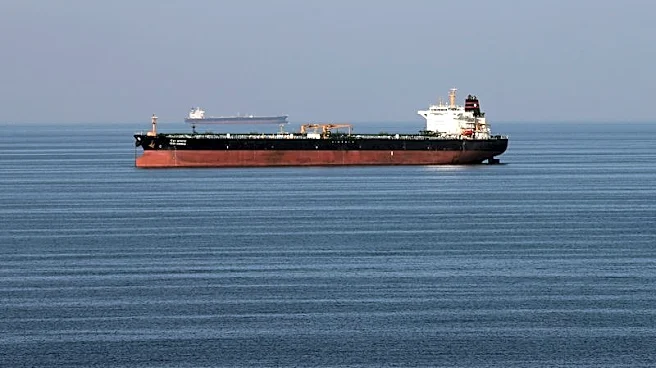
The U.S. and Yemen's Iran-aligned Houthis reported separate attacks on shipping in the Strait of Hormuz and the Bab el-Mandeb Strait on Tuesday, two crucial export routes for Middle Eastern oil and gas in addition to the Suez Canal.
Shipping data showed the number of vessels transiting the Strait of Hormuz fell to a one-week low of eight on Tuesday. Before the war, 125 to 140 vessels passed through the crucial waterway each day.
OPEC, IEA CUT OIL DEMAND OUTLOOK
Futures were under pressure after forecasters revised down their oil demand outlooks as U.S.-Iran talks stall.
The Organisation of the Petroleum Exporting Countries lowered its world oil demand growth forecast for 2026 to 580,000 barrels per day, it said in its monthly oil market report.
The International Energy Agency cut its 2026 demand projections and now expects a 1.6 million bpd contraction this year. However, the Paris-based agency is also predicting a 4.3 million bpd drop in supply this year, and an overall 2026 deficit of around 1.27 million bpd.
Simon Wong, portfolio manager at Gabelli, said the demand cut was not surprising, given that refiners, particularly those in Asia, have been unable to secure enough crude supplies due to the closure of the Strait of Hormuz and have therefore reduced refinery runs. The key question, he said, is the extent of the decline and how much reflects temporary demand management versus permanent demand destruction.
"The question is, after the war, how much of that demand will actually come back? I don't think all of it will," Wong said.
U.S. crude stocks posted a surprise build and made their largest weekly gain since January 2023 last week as exports slumped, the Energy Information Administration said on Wednesday. [EIA/S]
Analysts said the inventory build last week was mainly driven by unusually weak crude exports and a surge in imports.
(Additional reporting by Shadia Nasralla, Robert Harvey, Sam Li and Colleen Howe. Editing by Jan Harvey, Mark Potter, Chris Reese, Rod Nickel)