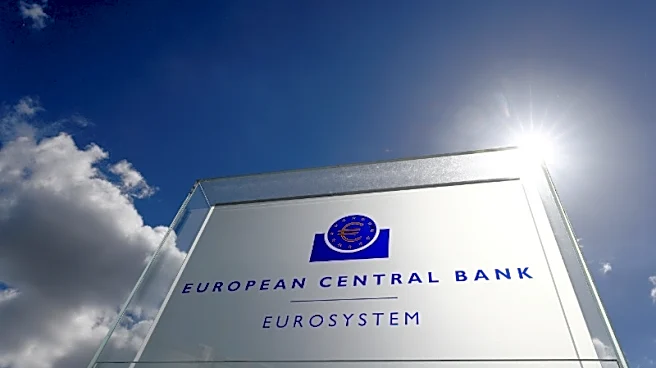







FRANKFURT, Sept 10 (Reuters) - The European Central Bank raised interest rates for the second time this year in a widely flagged move on Thursday, hoping to tame an inflation rise driven entirely by higher energy costs from the Iran war.
Surging oil and natural gas prices pushed inflation well past 3% across the 21-country euro zone last month, far exceeding the ECB's 2% target, and a recent escalation of the conflict points to further price pressures that could eventually seep into wage-setting.
"The outlook remains highly uncertain, with risks to the upside for inflation and to the downside for economic growth," the ECB said in a statement after meeting in Berlin, continuing its long tradition of holding one policy meeting a year in a different euro zone city.
The ECB also lifted its 2026 economic growth projection to 0.9% from 0.8% seen in June and now sees inflation averaging 3.0% this year and 2.5% in 2027.
Thursday's hike raises the ECB's benchmark deposit rate to 2.5%, the upper end of the "neutral" range considered by policymakers to neither restrict nor stimulate economic growth.
While financial investors are betting on further hikes later this year and in 2027, the ECB is likely to take its time with any follow-up move given a mixed outlook.
High energy costs suggest persistent inflation, and all hopes are gone for a quick end to the U.S.-Israeli war on Iran, which began in late February. High natural gas prices are a growing worry, too, with gas storage levels below historic norms as the winter heating season approaches.
Economic growth is meanwhile holding up much better than feared, indicating a resilience that could also put upward pressure on prices.
High energy costs have yet to filter down into the price of other goods and services, however, confounding fears that second round effects would be quickly visible.
Underlying inflation, which filters out volatile food and fuel prices, even slowed last month on moderating services inflation, while growth in wages, a crucial indicator to gauge price pressures, keeps slowing.
Bond yields have also increased sharply, mostly reflecting similar rises for U.S. Treasuries, tightening financing conditions and doing some of the central bank's work for it.
These factors suggest that even if price pressures persist, they are far less than in 2022, when inflation shot past 10% as energy prices spiked following Russia's invasion of Ukraine.
Attention now turns to ECB President Christine Lagarde's 1245 GMT press conference.
(Reporting by Balazs Koranyi; Editing by Catherine Evans)