



By Max A. Cherney
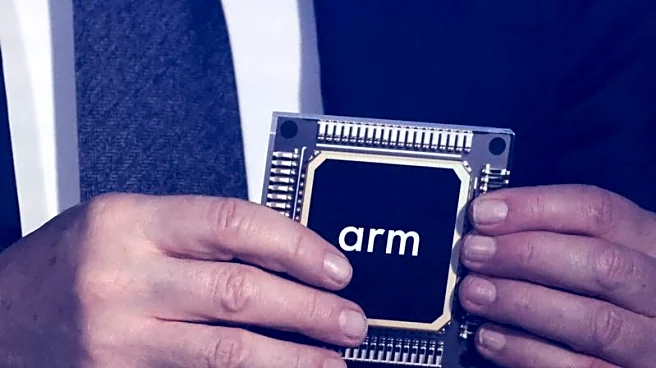
Jan 7 (Reuters) - Chip technology company Arm Holdings has reorganized the company and formed a Physical AI unit to expand its presence in the robotics market, company executives told Reuters at CES.
The decision to create a unit that specializes in robotics arrives amid a flurry of announcements and activity at CES around humanoid robots. At the sprawling Las Vegas trade show, large and small companies demonstrated robots that could help build cars, clean toilets and deal games of poker
- at a glacial pace.
Reuters is reporting the creation of the Physical AI unit and reorganization for the first time. Overall, Arm will now operate three main lines of business: its Cloud and AI, Edge - which includes its mobile devices and PC products - and Physical AI, which also folds in its automotive business.
The UK-based company does not make chips itself but supplies the underlying technology that powers most of the world's smartphones and a growing number of other devices such as laptops and data center chips. The company makes money by charging licensing fees and collecting royalties when its designs are used.
The company's expanded focus on Physical AI is part of a larger effort to increase the business. Since CEO Rene Haas took over the company roughly four years ago, Arm has developed ways to hike prices for its latest technology and is considering its own full chip design.
Arm executives see robotics as a market with immense potential for growth in the long run. The head of the newly formed unit, Drew Henry, told Reuters that physical AI solutions could "fundamentally enhance labor, free up extra time" and may have a considerable impact on gross domestic product as a result.
The potential for growth in robotics spurred discussions inside Arm for months about how best to tackle the market. The company formally reorganized recently and created the Physical AI division. That division plans to add staff dedicated to robotics, Arm Chief Marketing Officer Ami Badani said.
The company combined automotive and robotics into a single unit because the customer requirements for things such as power constraints, safety and reliability are similar, Badani said. Several automakers are moving into humanoid robotics, as well.
When asked about customers, Henry said, "We work with everyone." Arm-based chips are used by dozens of automakers around the world, and by robotics companies such as Boston Dynamics, which showed off several robots at CES.
"We're already demonstrating that we could put thousands of quadruped robots out in the market and actually make money," Boston Dynamics CEO Robert Playter told Reuters. He acknowledged there was "a bit of a hype cycle around (robotic) humanoids at this point in time."
(Reporting by Max A. Cherney; additional reporting by Abhirup Roy in Las VegasEditing by Matthew Lewis)