
By Matt Tracy
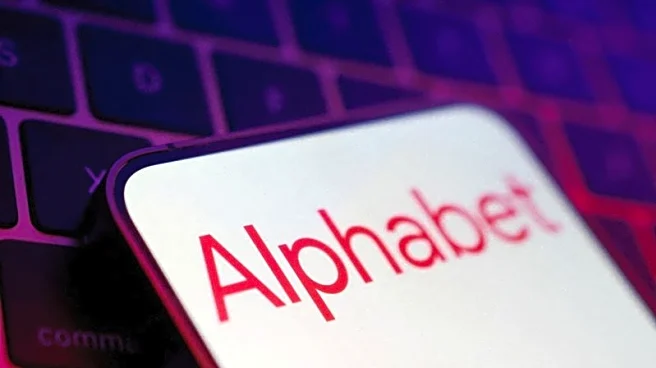
Feb 13 (Reuters) - Alphabet Inc's global bond sale this week underscored the high level of investor demand for the major AI hyperscalers, but raised concerns about the debt's lack of protections
for existing and future bondholders.
Google parent Alphabet raised $31.51 billion across U.S. dollar, sterling and Swiss franc bond markets in a global bond raise on Monday and Tuesday, as artificial intelligence-driven spending sparks a surge in borrowing at U.S. tech giants.
Alphabet's bond sale stood out in several ways, including its use of a so-called 100-year "century" bond in the sterling market.
These and other hyperscalers' recent bond sales have garnered strong reception with Alphabet's $20 billion U.S. bond sale drawing over $100 billion in demand. But the growing hyperscaler debt pile has raised concerns about their lack of investor protections compared to other bonds.
"What stands out is what’s missing," said Julia Khandoshko, the CEO of Cyprus-based broker Mind Money. "Once a big name gets covenant-light terms through, others will try the same."
"Naturally, that creates a second-market problem, where the next buyer has fewer 'rules' to rely on, while prices will swing more on rates, mood, and liquidity," she added.
Investment-grade borrowers with strong credit profiles typically include fewer covenants in debt agreements than their junk-rated counterparts.
Yet most include basic investor guardrails, especially a standard change-in-control covenant protecting investors in the event of M&A or another change in ownership. Alphabet's bonds do not carry these protections, noted Anthony Canales, head of global research at New York-based Covenant Review.
The five major AI hyperscalers - Amazon, Alphabet, Meta, Microsoft, and Oracle - issued $121 billion in U.S. corporate bonds last year, according to a January report by BofA Securities.
Alphabet and Amazon did not respond to requests for comment, while Oracle, Meta and Microsoft declined to comment.
Oracle's $25 billion note offering on February 2, and Meta's $30 billion bond offering in October, similarly lacked change-in-control and other basic covenants, Canales noted.
"In most IG covenant packages you would expect to see a change-in-control covenant," Canales said. "But these are huge companies where the investors don't believe there's great risk they'll need these protections."
Future tech issuers, especially smaller and lower-rated companies, could run into obstacles if they attempt to model their covenants after Alphabet, he added.
New debt issuance in 2026 from the five major hyperscalers could reach more than $300 billion as their spending needs around AI buildout increase, BofA Securities analyst Tom Curcurro wrote in a January 12 report.
"This massive AI infrastructure buildout requires so much capex from the hyperscalers that they want to reduce the technical impact on their bonds," said Jordan Chalfin, senior analyst at the New York-based research firm CreditSights, noting the benefits to issuers from flexible covenant structures.
"I wouldn’t expect there to be any real covenant protections."
(Reporting by Matt Tracy in WashingtonEditing by Nick Zieminski)