



By Lewis Krauskopf, Laura Matthews and Suzanne McGee
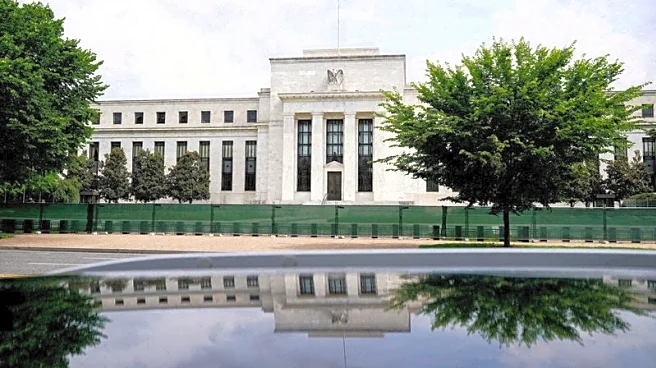
NEW YORK, Jan 29 (Reuters) - Wall Street is anticipating a pause in the Federal Reserve's monetary easing cycle to last through the remainder of Chair Jerome Powell's term that ends in May, forcing investors to bank on further rate cuts later in the year to support bullish positioning.
The Fed held rates steady on Wednesday at the end of its two-day policy meeting, pausing an easing cycle which has supported U.S. stocks. Interest rate futures priced
in the next rate cut at the June meeting, which would be under the next Fed chair. Trump has repeatedly said he expects to announce his pick soon.
"Our two cents is that the economy is doing okay, but inflation is a bit sticky, and the Fed was right to stand pat," said Tim Holland, chief investment officer at wealth management service provider Orion in Omaha, Nebraska. "We would be very surprised if we get another rate cut with Mr. Powell at the helm.”
While investors anticipated the Fed to pause its easing cycle at the meeting, they are banking on the central bank maintaining a dovish posture with more cuts later in the year that can support equities and the economy. Markets are pricing in the next likely cut in June, but some investors say further easing could come sooner, while others say that inflation worries could prevent more cuts entirely this year.
Investors noted the calm market reaction to Wednesday's decision, given that Fed meetings often result in wild swings for assets. The benchmark S&P 500 ended little changed on the day, after breaching the 7,000 level for the first time during the session.
The U.S. dollar index largely held its daily gain following the meeting, as it rebounded from a four-year low. The benchmark 10-year Treasury yield moved modestly higher on the day to about 4.25%.
"The market didn’t react much to this, largely because Powell has two more meetings," said David Seif, chief economist for developed markets at Nomura. "To the extent that Powell wants to give forward guidance, there's a clear expiration."
MORE CUTS IN 2026?
A weakening jobs picture had prompted the Fed -- which seeks to maintain stability in employment and inflation -- to lower rates last year to its current level of 3.50%-3.75%. The committee cut that rate by a quarter of a percentage point at its meetings in September, October, and December following a nine-month pause.
On Wednesday, Powell said the job market has shown "some signs of stabilization," while inflation "remains somewhat elevated."
"You would need for those dynamics to change in order for the Fed to cut rates again during Chairman Powell's term," said Michael Arone, chief investment strategist at State Street Investment Management.
Fed funds futures suggested a less than 30% chance of a cut at either of the next two meetings in March and April, but a 65% chance of one in June, according to LSEG data late on Wednesday. Markets were still pricing in nearly two more quarter-point cuts by December.
Still, Drew Matus, chief market strategist at MetLife Investment Management, said a cut could come in March, adding that "people are being maybe a little overly optimistic that the outlook is very clear."
Matus said the current environment is a "good opportunity to be moving up in quality for assets," including shifting away from high-yield fixed income and other riskier strategies.
NEXT CHAIR, NEXT CUT?
Investors are trying to anticipate policy once Powell hands over the baton, including the extent to which the next leader will lean more dovish. Concerns over the Fed's ability to operate free of political interference ratcheted up after the revelation earlier this month that Powell faced a threatened criminal probe, with the Fed chief at the time calling it part of a push by Trump to pressure the central bank for rate cuts.
Candidates to take the role include Fed Governor Christopher Waller, former Fed Governor Kevin Warsh and BlackRock's chief bond investment manager, Rick Rieder, and Trump economic adviser Kevin Hassett, although Trump has also said he preferred to keep Hassett in his current post.
"We're starting to think about what Fed policy looks like under a new chair, especially now that I think we're really coalescing around a couple key candidates," said Michael Reynolds, vice president of investment strategy at Glenmede.
Glenmede is overweight small-cap stocks, with the potential for one or two more rate cuts this year helping to "reinforce that thesis," Reynolds said.
Trump on Tuesday said he will soon announce his Fed chair pick, and predicted interest rates would decline after the new chair takes over.
Matthew Vegari, head of research at Clearwater Analytics, said he does not think that a rate cut decision would be solely at the new leader's discretion.
"Would a more dovish Fed chair sway the other voting members? I'm not sure," Vegari said. "The chair can exert a lot of influence, but these are seasoned professionals at the top of their game."
(Reporting by Lewis Krauskopf, Laura Matthews and Suzanne McGee; editing by Megan Davies and Shri Navaratnam)