


By Leila Miller
BUENOS AIRES, Sept 7 (Reuters) - Argentina's rugged Patagonia is drawing increasing interest from investors searching for sites for mega data centers who are enticed by the region's cool temperatures, renewable energy, shale gas and empty stretches of land.
As tech giants known as hyperscalers race worldwide to build server farms and run into roadblocks amid anti-data-center campaigns, projects in initial stages in Argentina are developing without much public attention. Since Argentines
have yet to be impacted by large data centers, the country lacks a backlash against the server farms as in the U.S., where critics say they strain local power grids, harm the environment and increase utility bills. Supporters say the facilities are essential for the AI boom, generate significant local tax revenue, and can be made more sustainable.
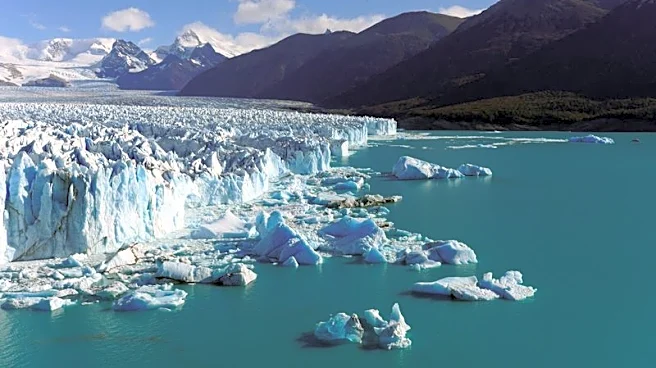
The Patagonia region is at South America's southern tip, known for its jagged mountain peaks, desert landscapes and massive glaciers. In Argentina's province of Neuquen, located in Patagonia, major electricity generator Pampa Energia is pushing for a data center that would be located by the company's Loma de la Lata thermal power plant. It would consume up to 500 megawatts of energy from nearby Vaca Muerta, one of the world’s largest shale gas formations, said Ruben Turienzo, the company's commercial director for electricity.
Mapuche Indigenous families live in the rural area, and have historically clashed with energy companies. Pampa began studying the project, which was previously unreported, after receiving inquiries at the beginning of this year about potential data center projects.
“We started to detect there was interest that was a bit firmer," said Turienzo.
MILEI'S REFORMS ATTRACT INVESTORS
The attention on Argentina comes amid a steadier macroeconomy in a country historically plagued by high inflation. Under President Javier Milei, who took office in December 2023, Argentina has attracted major oil and mining investments through the RIGI incentive regime, which provides tax breaks and regulatory stability, while strengthening ties with Washington.
“Two years ago, nobody would talk about Argentina,” said Steve Sasse, vice president for Latin America at datacenterHawk, a Texas-based market intelligence group.
OpenAI announced last October that it would partner with local company Sur Energy on a data center powered by clean energy costing up to $25 billion, with a capacity of up to 500 MW. In July, Argentina's communications agency said it intends to create a second fiber-optic cable landing station to make Patagonia friendlier to data centers.
Argentina now has only small data centers, concentrated in Buenos Aires. It lags behind its neighbors. Amazon.com is moving ahead on a mega data center in Chile, while Alphabet's Google constructs one in Uruguay. In May, Paraguay shared plans for a data center with backing from Taiwan.
“Everyone is looking for power, that’s why international developers are looking at Argentina,” said Hadassa Lutz, co-founder of Cloud2Ground, a U.S. advisory firm for data centers. “But saying you have power is not enough.”
Some investors may wait for Argentina's 2027 presidential election and are watching Milei's proposed Super RIGI, another legislative framework with larger tax cuts.
“If that uncertainty clarifies and we now have a bankable option in Argentina, investors will take the risk," said Lutz.
PATAGONIA LURE
Pampa Energia is quoting energy prices to interested parties and aims to reach initial agreements by the end of 2026, said Turienzo. Investors first want a smaller pilot, 20 MW to 40 MW, before expanding. The electric infrastructure for 500 MW would cost almost $900 million, he said.
Neuquen offers a cold climate that lowers cooling costs and access to both hydroelectric power and Vaca Muerta gas, said Ruben Etcheverry, secretary of the province's development council.
“What we envision is a data center cluster or ecosystem, where once the first facility is established it'll dispel preconceptions and risks," he said.
Etcheverry has fielded inquiries from parties including FlexDomes, a U.S.-based green data center company looking for investors for a Neuquen data center. The first stage for 120 MW of IT load would cost $1.4 billion and use Vaca Muerta energy, said Gabriel Obrador, who represents the company in Argentina.
Meanwhile, in the southern province of Chubut, Poland's Green Capital said in July it is planning a data center that in the first stage would reach 300 MW, costing $3 billion, but could ultimately reach 3,000 MW, according to Marta Złotkowska, its head of international development and data centers. It is currently leasing about 501 square miles (1,298 square km) of land south of the city of Trelew to build wind and solar farms — the project aims to avoid using the national grid — but needs investors and plans to apply for an investment regime in 2027.
In Buenos Aires province, companies are also scouring sites. Pampa Energia has agreed to provide 30 MW for the first stage of a data center in a free trade zone in the city of Bahia Blanca, known for its wind power. Pablo Amarelle, general manager of the zone's concessionaire, said the company has begun constructing an IT park and expects final investment agreements by late 2026.
Hyperscalers leasing space are weighing expansion, exploring "possibilities that were previously unfeasible," said Ariel Graizer, president of the Argentina Internet Chamber.
INFRASTRUCTURE CHALLENGES
While Patagonia has energy resources and a favorable climate, infrastructure and connectivity remain hurdles.
"It’s not a product looking for a buyer — someone has to build it," said Lutz, the consultant.
Experts caution against conflating announcements with firm projects.
“There is interest, and there are plenty of players, but the project has to get started," said Gustavo Castagnino, director of corporate affairs at Genneia, Argentina’s leading renewable energy company.
Luis Schilling, Latin America co-chair for iMasons, a U.S. nonprofit that connects digital infrastructure professionals, has postponed three times a trip for companies to tour sites in Patagonia. It is now set for February.
"They would feel more comfortable if Milei was re-elected," he said.
In fact, Milei has worked to court Big Tech.
In May 2024, he traveled to Silicon Valley to meet with Apple's then-CEO, Tim Cook, as well as with chief executives Sam Altman of OpenAI, Sundar Pichai of Google and Mark Zuckerberg of Meta Platforms to encourage investment, including in Patagonia. Billionaire investor Peter Thiel bought a 1% stake in Vista Energy, a leading oil producer operating in Vaca Muerta, according to an August regulatory filing.
Argentina “previously wasn't really on the map,” said Martin Varsavsky, an Argentine founder of five so-called unicorns, or startups valued at more than $1 billion. “It was like planting the Argentine flag, saying, 'Here lies a country with abundant energy and excellent conditions for investment."
Altman announced the OpenAI project 17 months later. Sur Energy co-founder Emiliano Kargieman and OpenAI did not respond to interview requests from Reuters. In August, Kargieman told Bloomberg Linea that he was working with Neuquen province to identify a site and “the ball is in OpenAI's court right now to sign the definitive contract and launch the project.”
He did not know if Argentina's upcoming election was a factor: “It’s a question for OpenAI.”
(Reporting by Leila Miller in Buenos Aires; Editing by Lucinda Elliott and Matthew Lewis)