


Dec 18 (Reuters) - On the Chinese tropical island of Hainan, Huanghuali trees - a rare kind of rosewood - are being photographed so that they can be turned into digital assets.
Huanghuali or "yellow flowering pear" produces wood with a beautiful lustre and golden sheen. Favoured by Chinese emperors in times past, the wood continues to be highly prized. But a tree takes decades to mature, testing the patience of farmers.
Converting the Huanghuali into real world asset (RWA) tradeable tokens would bring
capital to an industry facing cashflow problems, says Zhao Xiaobao, the Hainan representative for Geely Technology Group, a unit of Chinese automaker Geely.
"We are converting the dormant resource of precious wood into tradeable assets," Zhao said, adding that the tokenisation business model could revolutionise the forestry industry and "turn green mountains and clear waters into gold and silver."
His company aims to raise HK$100 million ($13 million) in an initial tranche of tokens to be launched in Hong Kong in the next few months. Each tree will be assigned a different value, depending on its size and quality, which would then be broken up into a number of tokens.
BAIJIU LIQUOR, ARTIFACTS, COLLECTABLES
Geely Tech's plan, Zhao believes, could mark the world's first tokenisation of tradeable real world assets that are biological in nature.
It's also not just prized trees. All sorts of Chinese goods, from fine tea to expensive baijiu liquor, are now being turned into digital assets.
"Artifacts, collectables, data assets, commodities and real estate – we have received many enquiries about how to tokenise these assets," Liao Renliang, a lawyer at Yingke Law Firm, told a seminar on the topic last month.
While many Chinese companies appear excited about this new avenue of funding that has opened up for them in Hong Kong since last year, blockchain-based RWA tokenisation is very much in its infancy. In particular, it remains unclear whether a potential onslaught in supply will be met with sufficient demand, given limits on investment from mainland China.
"There are way more assets .... than investors willing to buy them. We need to expand the investor base," said Eric Zuo, managing director at Tadwill & Co.
Zuo is working on a project that is seeking to raise 523 million yuan for a bankrupt hydro dam in Sichuan province via digital tokens in Hong Kong.
MAINLAND CONCERNS
The global RWA market has surged 115% over the past year to $35.7 billion, according to data provider RWA.xyz. RWA tokens are mainly backed by traditional financial assets like bonds, stocks and real estate, with U.S. Treasuries accounting for the lion's share.
Hong Kong, which operates under a separate, more free-wheeling economic system from mainland China, has embraced digital assets, keen to burnish its reputation as an Asian financial hub.
But there have also been signs that authorities in Beijing, which take a dim view of many digital assets and have banned trade in cryptocurrencies since 2021, are concerned.
The China Securities Regulatory Commission informally advised some mainland brokerages to pause their RWA tokenisation businesses in Hong Kong, sources said earlier this year.
Mainland citizens can, however, trade in RWA tokens if they have an account with a Hong Kong broker.
Asked for comment, the commission referred to a December 5 statement published by it and other financial authorities, which warned criminals were exploiting the rise of stablecoins, air coins and RWA tokens, and said mainland firms were prohibited from providing such services.
In contrast, the Hong Kong Securities and Futures Commission said tokenised products that amount to securities or futures contracts fall under its existing rules.
"Regulators are targeting fraudsters who use RWA to raise money illegally," said Liu Honglin, founder of Man Kun law firm in Shanghai. He added that if an RWA project is compliant and is used to stimulate consumption, "I don't think there's any problem."
DIGITAL TEA FOR FRIENDS
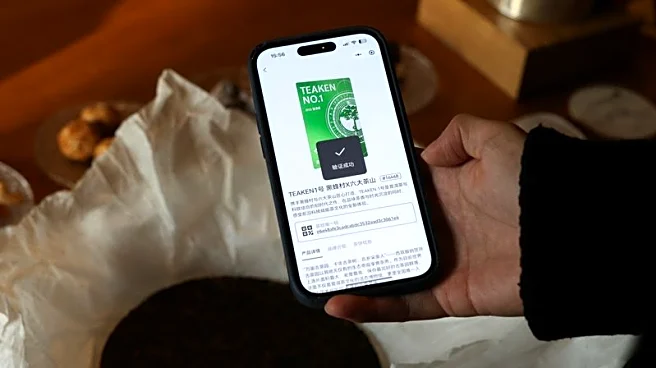
In Shanghai, startup Shanghai Teaken Technologies has issued digital assets that represent cakes of highly sought-after fermented pu'er tea. Like fine wine, the tea gains in value the more it ages and can be a good long-term investment.
Blockchain technology brings digital authentication to an industry plagued by counterfeiting - with tea stored, say, for only five years, often masquerading as 10-year-old tea, founder and CEO Eric Ma told Reuters in an interview.
"We really want to build a platform for tea collectors to safely own and share and maybe pass on this premium quality good tea with transparency and trust," he said, adding that his company would provide state-of-the-art storage cellars for the tea cakes.
Juno Zhu, a 27-year-old lover of tea from Xiamen city who works in advertising, said she had bought 100 digital cakes of tea at 700 yuan ($100) apiece and was not worried about compliance concerns.
"It's backed by something of value. It's not a token based on nothingness," said Zhu, who has given some to friends as gifts.
Other examples include China Qidian Guofeng Holdings which has said that some 62 metric tons of its baijiu have been used as the underlying assets in an RWA project. The project, arranged by a key shareholder, aims to raise HK$500 million.
($1 = 7.0554 Chinese yuan)
(Reporting by Reuters Staff; Editing by Edwina Gibbs)