



By Marc Jones and Pete Schroeder
LONDON/WASHINGTON, Sept 10 (Reuters) - Nervy markets were waiting for key U.S. inflation data on Thursday after the ECB lifted its interest rates for a second time this year and oil held above $100 a barrel following U.S. and Iranian tanker missile strikes in the Strait of Hormuz.
Oil prices remained a concern for investors after Brent crude climbed above $100 a barrel on Wednesday for the first time since July, raising fears of renewed inflation pressure just as bond
yields in major economies hover near multi-decade highs.
Wall Street opened the day lower again with the Dow Jones Industrial Average down 0.33% in early trading. The S&P 500 dropped 0.56% and the Nasdaq Composite fell 0.97%. MSCI's gauge of stocks worldwide was down 0.69%.
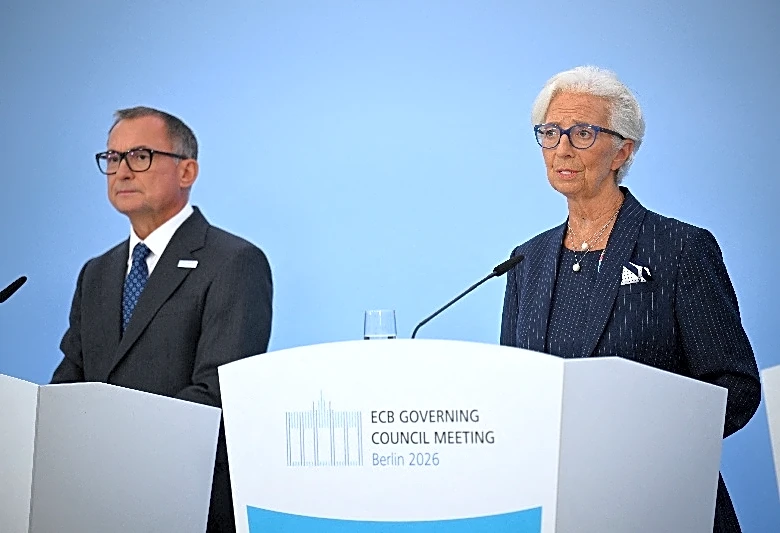
The European Central Bank's decision to raise its key interest rate to 2.50% from 2.25% on Thursday came as little surprise given the recent signals and barely moved the region's stock markets [.EU] and the euro.
Germany's 10-year bond yield held at 3.45%, the highest since the heat of the euro zone crisis in April 2011, while France's OAT yield was at another post-2008 high of 4.35%.
Away from the euro zone, the UK's 10-year and 20-year yields bobbed near respective post-2007 and 1998 highs of 5.26% and 5.87% and benchmark 10-year U.S. Treasury yields ticked up to 4.91%.
Investors were also digesting signs of looser U.S. fiscal policy after President Donald Trump promised to pay every U.S. adult a $5,000 "Trump dividend" if his party wins November's congressional elections. The Treasury Department had also announced a $6 billion buyback of longer-dated U.S. bonds that disappointed some investors.
Attention will now shift to the U.S., where key inflation data ahead of a Federal Reserve rate-setting meeting next week could inform interest rate expectations. Markets are awaiting U.S. producer price index data due at 1230 GMT, followed by consumer price inflation data on Friday.
A majority of economists polled by Reuters expect the Fed to hold interest rates steady at its September 15-16 meeting and for the rest of this year.
OIL PRESSURE
In the commodity markets, Brent crude futures jumped another 3.8% to $105 a barrel amid the re-escalation of the Iran war and as traders grappled with the prospect of yet more inflationary pressure. [O/R]
"I think that Brent pushing through the $100 level will be seen by many in the market as a significant event in the current scheme of things," said Nick Twidale, chief market strategist at ATFX Global.
Twidale said traders who had been holding off in hopes of a Middle East peace deal may now "hit the trigger as the realities of a longer conflict kick in."
Investor attention will stay on the bond market. After the global selloff pushed 30-year yields to their highest level since 2007, Treasury Secretary Scott Bessent in August said that the government would increase buybacks of longer-dated bonds.
"Bessent has laid down the gauntlet to a group of sophisticated traders who don't like to be told what to do," said Matt Simpson, senior market analyst at StoneX.
"He may win a battle or two, but he'll only win the war if bond traders let him."
(Reporting by Marc Jones and Pete Schroeder; Editing by Elaine Hardcastle and Joe Bavier)