
LONDON, Jan 21 (Reuters) - U.S. President Donald Trump's policies around debt, trade, sanctions, security and the country's key institutions are likely to be critical in determining the extent of a shift
away from the dollar, Wall Street bank Morgan Stanley has said.
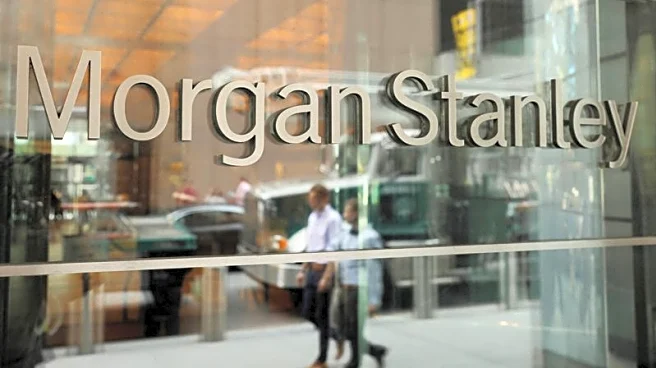
In a report on Wednesday ahead of a speech by Trump in Davos where he is expected to reinforce his push to acquire Greenland, the U.S. investment bank said the transition toward a "multipolar world" was raising questions about the dollar's status.
"On net, we think these (policy uncertainty) factors are neutral to slightly accelerating this transition away from the dollar, but their evolution over the near term will likely be critical in determining the extent of this shift," it said.
While the dollar's international role has been on a gradual downward trajectory for the last 25 years, there was no obvious alternative global reserve currency, and gold, currently trading at record highs, remains its "biggest challenger," the bank said.
The doubling of the gold price over the last 18 months means foreign central banks now hold more in gold - at around $4 trillion - than in U.S. Treasuries at $3.9 trillion, for the first time since 1996.
The current questions affecting the dollar also include U.S. debt and its sustainability, as well as the pressure being put on the head of the Federal Reserve and the independence of top institutions more broadly.
There is also elevated trade uncertainty and Trump's use of tariffs as a means to extract political concessions, now being witnessed in his standoff with several European countries over Greenland, which also strains the NATO military alliance.
Such tensions bring both push and pull factors for the dollar.
Morgan Stanley said past analysis has shown alliances can boost reserves of the alliance leader's currency held by its partners by approximately 30 percentage points.
In that respect, a NATO breakup could be detrimental for the dollar although an increasingly insecure geopolitical backdrop could also produce "a flight to quality" driving demand for dollars as a safe-haven asset, Morgan Stanley said.
(Reporting by Marc JonesEditing by Tomasz Janowski)