



By Hyunjoo Jin and Heekyong Yang
SEOUL, July 30 (Reuters) - Samsung Electronics on Thursday reported a more than 250-fold jump in chip profit and announced multi-year supply deals with major data centre operators, saying it expects global chip shortages to become more acute and extend into 2028.
The bullish outlook from the world's largest memory chip maker nevertheless failed to ease investor concerns about technology firms' hefty AI infrastructure spending curbing growth.
Samsung stock ended down
0.7% after rising as much as 8.4%, though it fared better on the day than cross-town rival SK Hynix which ended down 5.6%.
"The chip narrative has weakened. Investors are questioning how long their record-high margins will be sustainable," said market analyst Kim Seok-hwan at Mirae Asset Securities, after Samsung's chip unit booked a record 70% operating profit margin.
The South Korean conglomerate has signed supply agreements with the five biggest global data centre firms and is nearing deals with five other major players, it said without identifying them.
"Almost all customers are requesting multi-year supply contracts," Jaejune Kim, executive vice president of Samsung's memory business, told analysts on an earnings call.
Samsung aims to secure contracts covering about two-thirds of its memory output over the longer term, Kim said, joining rival efforts to reduce exposure to boom-and-bust cycles.
The deals will last at least five years and typically include upfront payments and floor pricing aimed at hedging the risk of capital investment, Kim said.
The comments come after a selloff in chip stocks in recent months due to investor concerns about the mounting cost of AI infrastructure and competition from China that could squeeze earnings.
Meta Platforms booked a 91% drop in second-quarter free cash flow on Wednesday, after Alphabet last week reported its first cash-flow-negative quarter.
A 250-FOLD PROFIT SURGE
Samsung's semiconductor unit posted operating profit of 89.2 trillion won ($61.7 billion) in the second quarter, up more than 250-fold from a year prior. The group's operating profit rose to 89.5 trillion won, in line with its earlier estimate.
Overall revenue rose 130% to 171.5 trillion won.
However, surging chip prices hurt Samsung's mobile division, which reported its first quarter in the red with a 700 billion won loss.
"The chips enriching one side of Samsung are now hurting the other, leaving the group more exposed than ever to memory pricing and the durability of hyperscaler demand," said analyst Josh Gilbert at eToro.
Samsung's quarterly profit surpassed its combined earnings over the past three years, helping lift net cash to 167 trillion won as of June-end and fuelling expectations for increased shareholder returns. Its stock has dropped nearly 40% over the last month but is still up 72% so far this year.
Chief Financial Officer Park Soon-cheol said Samsung is "in active discussion" over special dividends and other aspects of its shareholder return program for this year.
"We remain fully committed to delivering on the program as promised and will provide for the update very soon," he said.
"Although the management did make some positive comments on shareholder returns and demand outlook, it seems due to high volatility investors are fleeing the market," said Sanjeev Rana, head of research at CLSA Securities Korea.
SHARP TURNAROUND
The earnings represent a turnaround for Samsung as the firm gains ground on SK Hynix in supplying high bandwidth memory (HBM) chips used in AI processors.
Samsung, which counts Nvidia and Advanced Micro Devices among its HBM customers, expects HBM4 revenue to more than triple in the third quarter. It said that would help bring its HBM market share in line with that of its dynamic random access memory (DRAM) chips in the second half.
The company also said its foundry business, which competes with TSMC and Intel, is likely to turn around "in the near future" driven by rising factory utilisation rates and chip prices.
It said it is on track to start operations at its Taylor fabricating plant in the U.S. state of Texas this year and that it aims to break ground on a second fab which could start mass production in 2030.
SK Hynix on Wednesday reported bumper quarterly results yet fell short of investor expectations. It flagged plans to raise capital spending this year by around 50% to meet AI demand.
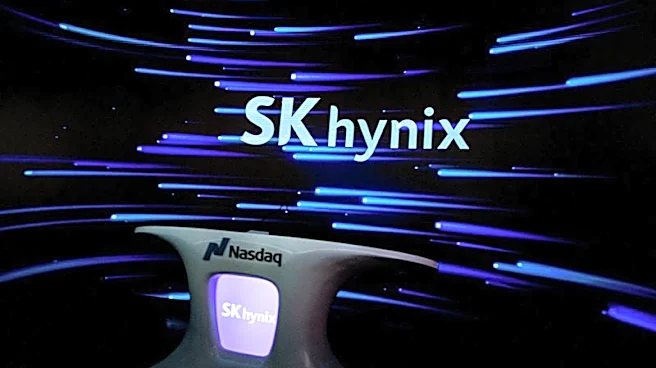
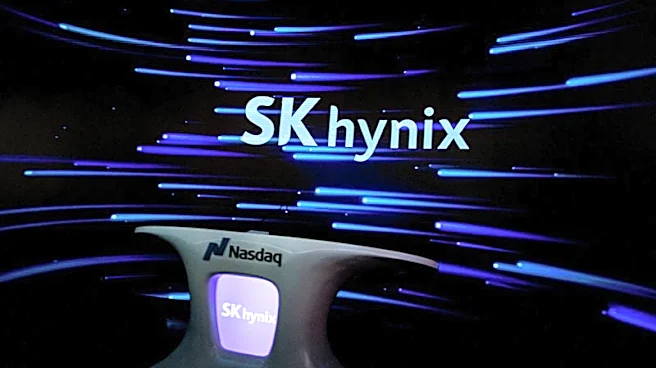
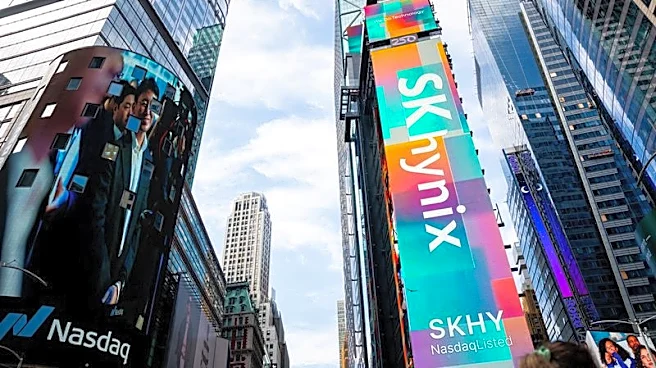
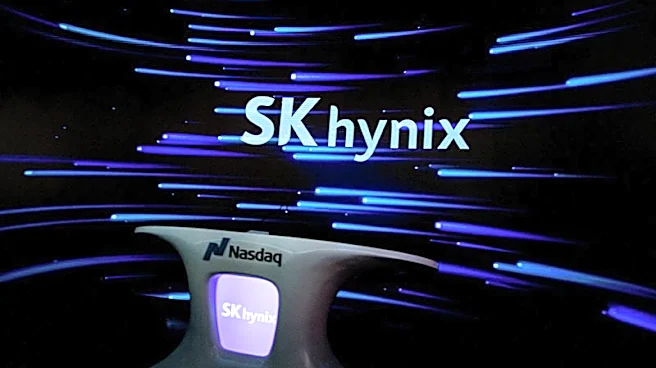
The firm issued American depositary receipts (ADRs) and debuted on the U.S. market this month. Samsung is not considering following suit, Park said.
Samsung has little need to raise funds given the stable cash generation from its diversified business portfolio, Park said.
($1 = 1,446.2700 won)
(Reporting by Hyunjoo Jin, Joyce Lee and Heekyong Yang; Editing by Miyoung Kim, Sonali Paul and Christopher Cushing)