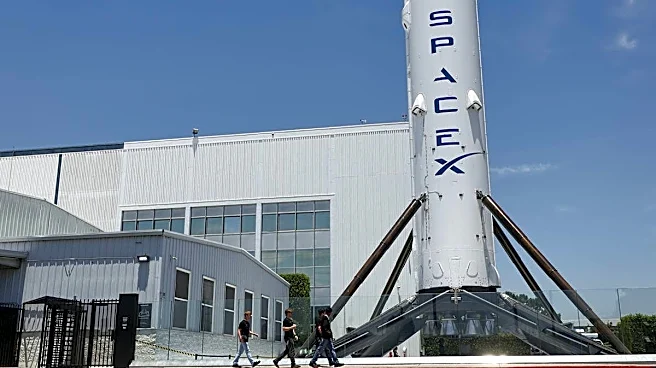







June 11 (Reuters) - Elon Musk's SpaceX raised $75 billion in its blockbuster initial public offering on Thursday, shattering records and eclipsing Saudi Aramco's 2019 listing by a wide margin to become the largest IPO ever.
The rocket and satellite maker is set to debut on the Nasdaq on Friday, a listing expected to usher in a wave of mega IPOs.
High-profile private startups, including ChatGPT-maker OpenAI and rival Anthropic, have in recent weeks taken key steps toward stock market listings.
FROM SPACEX
TO ALIBABA: WORLD'S BIGGEST IPOs
Here is an overview of the biggest IPOs globally, ranked by deal size:
The listing also dwarfs some of the biggest technology companies of the world:
AI GIANTS MOVE CLOSER TO MEGA IPOs
Here is an overview of some of the other mega IPOs expected in 2026:
OPENAI
OpenAI, which operates AI chatbot ChatGPT, revealed on Monday it had confidentially filed for a U.S. initial public offering as investors seek exposure to the AI boom.
"We have not decided on timing yet; it may be a while because there are things we want to do that are likely easier as a private company," OpenAI said.
"But it's a complicated set of tradeoffs and this gives us the option to go public sooner if that ends up being best."
OpenAI is aiming to go public as early as September, Reuters reported last month. It was laying the groundwork to go public in an offering that could value it at up to $1 trillion.
In May, the Sam Altman-led company fended off an existential court challenge from Elon Musk, simplifies the path for OpenAI to proceed with a stock market listing.
ANTHROPIC
AI heavyweight Anthropic revealed earlier this month it had confidentially filed for a U.S. initial public offering, setting the stage for what could become a watershed moment for Wall Street's AI frenzy.
Anthropic, which operates AI chatbot Claude, last raised $65 billion at a post-money valuation of $965 billion in late May, putting it ahead of rival OpenAI.
The listing would represent one of the most consequential stock market debuts in years, potentially reshaping benchmark indexes, investor flows and the broader narrative driving U.S. equities.
(Compiled by Arasu Kannagi Basil and Manya Saini in Bengaluru; Editing by Arun Koyyur)