


By Promit Mukherjee
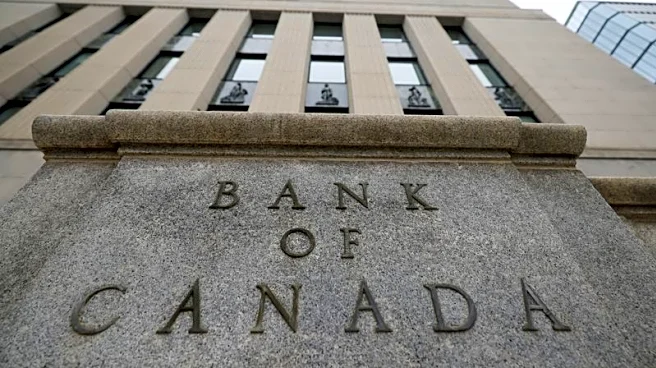
OTTAWA, Jan 26 (Reuters) - The Bank of Canada is widely expected to keep its policy interest rate on hold at 2.25% on Wednesday but economists and money markets are divided over where Canada's monetary policy cycle is headed for the rest of the year due to economic uncertainty.
From December, money markets have started betting on odds of a rate hike late this year after a long pause for most of the year. But some economists differ given the uncertainty around the upcoming renegotiations
of the United States-Mexico-Canada (USMCA) free trade pact.
The central bank had indicated in October after cutting rates by 25 basis points that the benchmark rate was about the right level as inflation continued to be within its target range.
It had also admitted that it did not have the tools to tackle the structural impacts to the economy unleashed by the U.S. tariffs and the related uncertainty.
A Reuters poll of economists showed on Friday that nearly 75% of the 35 economists polled forecast the central bank will keep rates steady through 2026, a larger majority than the just over 60% who expected that outcome in December.
Money markets are pricing policy to remain on hold or tilt slightly toward easing through mid-2026, before turning to modest tightening expectations in the final quarter of 2026.
The BoC had reduced rates by 100 basis points last year, bringing them down to the lower level of its neutral range, a so-called policy interest rate band where the economy is neither being stimulated nor restricted by rates.
However, some economists say that for the rates to be actually stimulative and support the economy, they have to come down even further outside of the neutral range.
"We are still in the zone of what the bank thinks to be neutral," said Doug Porter, chief economist at BMO Capital Markets.
"If the unemployment rate is rising and we have a lot of trade uncertainty, why would rates just be neutral," he said.
A recent survey of businesses and consumers by the BoC showed that business sentiment of Canadian companies remained subdued amid trade tensions and consumers were worried about their jobs and debt payments.
However economic data has also shown that there has been limited impact of tariffs beyond the directly hit sectors of steel, aluminum, lumber and automotive. Consumer prices have largely remained stable, the economy has grown modestly and job creation has been solid from September through November.
"Our baseline is they hold rates until a year from now and then they hike, not a start of a tightening cycle, but basically return the policy rate to the neutral midpoint," said Tony Stillo, director of Canada Economics at Oxford Economics.
He cautioned, however, this assumption was based on a successful renegotiation of the USMCA deal, where the tariffs on some sectors remain but to a lesser extent than what they are now.
The BoC will announce its monetary policy decision on January 29 at 9.45 a.m. ET (1345 GMT). It will also release the quarterly Monetary Policy Report, where it will resume its previous practice of sharing single-point forecasts for the economy and inflation.
The MPR is expected to have an updated outlook on the impact of the federal budget on the Canadian economy.
(Reporting by Promit MukherjeeEditing by Nick Zieminski)