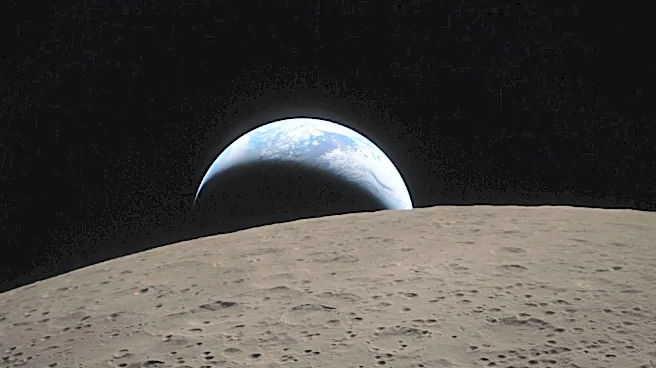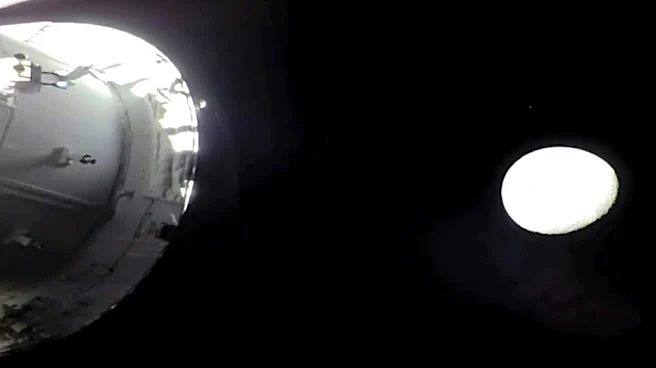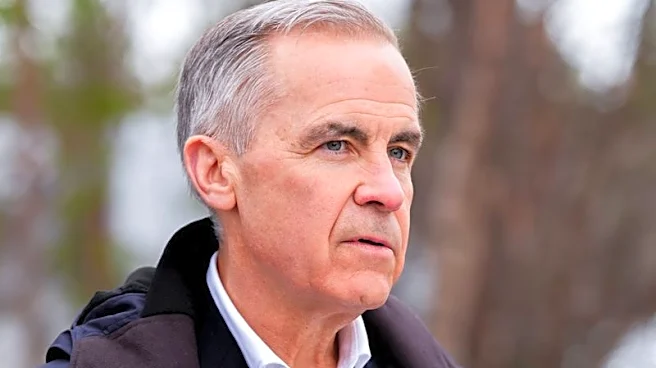




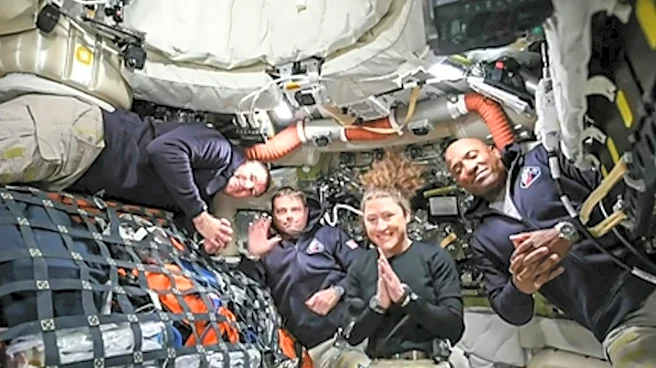
TORONTO, April 8 (Reuters) - Canada's Prime Minister Mark Carney spoke to astronauts on the Artemis II mission on Wednesday, celebrating the first Canadian to fly around the moon and marking a lighter moment in U.S.-Canadian relations that have been strained under U.S. President Donald Trump.
Jeremy Hansen, a 50-year-old Royal Canadian Air Force colonel, is the first non-U.S. citizen to fly on a lunar mission. He is joining three U.S. astronauts on NASA’s Artemis II mission, a lunar flyby and a key
step in a program aiming to return astronauts to the moon’s surface by 2028, ahead of China.
The 10-day mission is due to end with the space capsule's splashdown near San Diego on Friday.
“Canadians couldn’t be more proud of you personally, both this mission and our collaboration with the United States," Carney told Hansen.
The prime minister also joked that Canadians hoped the preference was for maple syrup over Nutella on pancakes in the morning, following the viral moment when cameras caught a jar of Nutella floating through the microgravity inside the capsule. The maple leaf is Canada's national symbol.
Hansen, who promised to bring Carney a Canadian flag he brought on board, was selected for Canada’s astronaut corps in 2009, and his role on Artemis II reflects long-standing U.S.-Canadian partnership in human spaceflight. He also spoke of the value of risk-taking in space and on Earth.
"As a country, we have to be willing to have some failures," Hansen said. "And we fail in this space program, but we just assure ourselves we're not going to stay or rest in those failures. We're going to push through them," said Hansen, who also took questions from Canadian school children.
The mission coincides with tense trade relations between the two countries after Trump raised tariffs on Canadian goods and repeatedly suggested that Canada consider becoming the 51st state. The record-breaking lunar flyby has offered a moment of positive attention for the United States at a time of heightened international tension over U.S strikes on Iran, tariffs, and disruptions to global institutions.
(Reporting by Wa Lone, Kyaw Soe Oo and Daniel Trotta; Editing by Stephen Coates)