
By Saqib Iqbal Ahmed
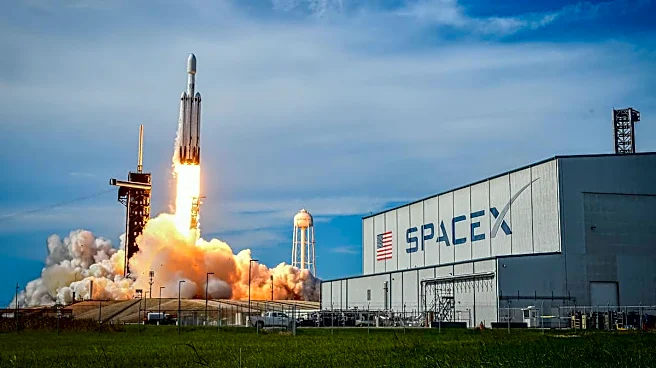
NEW YORK, June 9 (Reuters) - Short sellers beware: Elon Musk's SpaceX IPO may be too hot to handle.
On the face of it, the company is a natural target for short sellers -- investors
who sell borrowed shares to profit from a future slide in prices.
With an estimated price-to-revenue multiple of 56, eye-popping even for the fastest-growing companies, and concerns about governance, it makes for a logical short bet. But the market's recent bull run -- led by tech giants valued at $1 trillion or more, of which SpaceX will be one -- has been brutal for those betting against shares.
As a result, few expect investors to come out with guns blazing against the long-awaited market debut, set to value SpaceX at $1.75 trillion.
"It's an extremely risky short play," said Gabriel Shahin, CEO of Falcon Wealth Planning in Los Angeles, whose firm has allowed its investors to buy SpaceX shares on private markets. He said there is too much interest from bullish investors, including retail participants, for a safe short bet.
That's not to say SpaceX does not have some characteristics that could attract shorts. The company's valuation exceeds most other mega-caps, and the economics around its xAI platform and technologies like orbital data centers are uncertain, Morningstar analysts said in a recent note.
WAIT-AND-SEE
Peter Hillerberg, co-founder of Ortex Technologies, which provides stock lending and short interest analytics, said the high profile of the IPO, retail and institutional interest, and divergent views on its valuation, are "normally ingredients that can create a broad spread of opinion, which is often where short sellers become interested."
He noted it is too early to gauge actual demand.
One longtime Tesla bear was taking a wait-and-see approach. "There are large natural buyers in the indexes that will almost immediately add the stock, most notably the Nasdaq 100," said Mark Spiegel of Stanphyl Capital Partners, who considers SpaceX "grotesquely overvalued."
The IPO is expected to be the largest ever, at $75 billion, but its public float would be less than 5% of its outstanding shares.
Spiegel said he may contemplate a SpaceX short after the "unlock dates," when more shares become available for borrowing, compared with immediately after the IPO, when the cost and relative difficulty of borrowing would temper shorts. "Very few people will short an IPO right away."
While most newly public companies impose broad restrictions on insider sales for roughly six months after listing, SpaceX has created exceptions for some participants and plans a phased release of restricted shares.
MUSK FACTOR
Shorting Musk's other company, Tesla, has generally been a losing bet. On paper, Tesla short sellers have lost $27 billion since June 2021, including both directional bets against Tesla shares and index hedges used to account for Tesla's inclusion in the S&P 500, according to S3 Partners. Over the last 10 years, shares have risen more than 2,500%.
"If you think back the experience of all of that was pretty unpleasant," said Sam Pierson, director of research at S3 Partners.
Musk himself has waged a highly public battle against those shorts, which include prominent investors like Jim Chanos, David Einhorn, and "Big Short" investor Michael Burry. He has taunted his detractors by selling red satin shorts and even sent a box of shorts to Einhorn.
In August 2018, Musk posted his infamous "funding secured" tweet, announcing he was considering taking Tesla private at $420 per share, prompting a surge in Tesla's share price and dealing about $1.3 billion in mark-to-market losses to shorts.
Musk, Chanos, Einhorn, and Burry did not respond to requests for comment.
SHORT-SELLER PAIN
More broadly, short sellers have been pummeled over the last decade due to the prolonged bull market, and challenges intensified with the meme stock mania in 2021.
The Goldman Sachs Most Shorted Rolling Index, an equal-weighted basket of the 50 highest short-interest names in the Russell 3000 Index, is up 29% this year, on pace for its fourth straight year of gains.
The activist short seller playbook was dealt a blow recently by the fraud conviction of prominent investor Andrew Left, a development that could have a chilling effect on the practice.
Even investors skeptical of market euphoria may opt to avoid the challenges of shorting a new issue like SpaceX.
"As a short seller you want to make a case that the stock has reached a level that's untenable and that's much easier to do with trading history," said Giuseppe Sette, co-founder of AI analytics platform Reflexivity.
With stocks trading near highs, short sellers have plenty to choose from.
"If SpaceX pops 100% on its IPO, is that still the best short out there in a market where you've had absolute parabolic activity across the board?" said Mike Treacy, head of market risk at Apex Fintech Solutions, a clearing and custody platform serving retail brokerages.
"I just don't think it is."
(Reporting by Saqib Iqbal Ahmed; Additional reporting by Laura Matthews and Anirban Sen; editing by Megan Davies and David Gaffen)