






By Robert Harvey
LONDON, Sept 1 (Reuters) - Oil prices gained on Tuesday as the resumption of fighting between the U.S. and Iran in the Middle East renewed fears of supply disruptions from the world's key crude-producing region.
Brent crude futures were up $1.18, or 1.3%, to $91.67 a barrel at 0739 GMT, while U.S. West Texas Intermediate crude was up $1.27, or 1.48%, to $87.03.
On Monday, U.S. President Donald Trump threatened further strikes against Iran following the first exchange of direct attacks
between the countries since late July, raising tensions in a conflict that had recently shifted into an economic standoff.
"The tit-for-tat missile exchanges between the US and Iran bring validation to those who believe that even if not a ‘forever war’, this conflict will run and run," said PVM analyst John Evans.
Iran's President Masoud Pezeshkian said on Tuesday that his country would immediately reciprocate if the U.S. returned to its commitments under the interim peace deal signed in June.
Efforts by mediators including Qatar and Oman to broker a deal to reopen the Strait of Hormuz, which carried about a fifth of global oil supplies before the war erupted in late February, have so far proven inconclusive.
On Monday, the number of visible commodity vessels transiting the Strait of Hormuz held at about five per day, below the 10-day average of around 14, shipping data from Kpler showed. None of the five ships were liquid tankers.
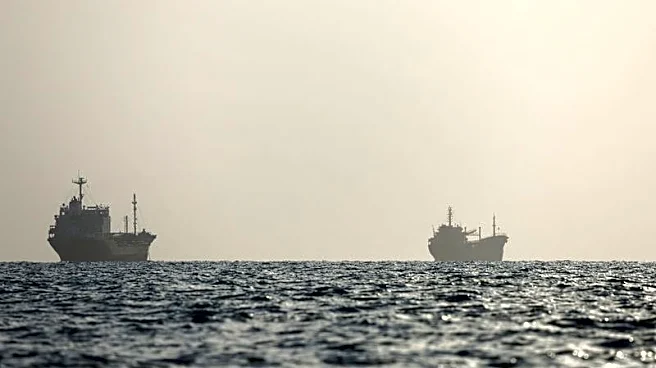
Highlighting the risks that remain to shipping and oil supply, the United Kingdom Maritime Trade Operations agency (UKMTO) said on Tuesday a tanker reported being struck by three projectiles while sailing out of the Strait of Hormuz. No casualties or environmental impacts were reported.
"Despite satellite tracking firms suggesting oil flowing through Hormuz is around 6 million barrels per day, that is well below pre-conflict levels," said ANZ analysts in a note.
"In the meantime, the buffers the global oil market has been relying on are becoming exhausted. U.S. inventories are nearing minimum levels, while China's ability to keep imports low will be tested as seasonal demand picks up."
Analysts polled by Reuters in August expect oil prices to remain above $80 a barrel in 2026 as shipping disruptions continue. [O/POLL]
(Reporting by Robert Harvey in London, Noel John and Sumit Saha in Bengaluru, Emily Chow in Singapore; Editing by Christian Schmollinger, Aidan Lewis)