





By Anushree Mukherjee
July 30 (Reuters) - Oil prices rose for a second day on Thursday as renewed attacks between the United States and Iran disrupted oil flows through key shipping routes.
Brent futures rose $1.06, or 1.17%, to $91.80 a barrel as of 0812 GMT after touching a low of $89.02 in the session.
U.S. West Texas Intermediate (WTI) crude gained 39 cents, or 0.46%, to $84.85 a barrel after hitting a session low of $83.21.
Geopolitical tensions continued to simmer after the U.S. military said it had
hit dozens of Islamic Revolutionary Guard Corps targets in Iran, including military command centres and drone facilities, in a two-hour operation launched after Tehran fired ballistic missiles at U.S. forces in the Middle East.
The operation began at 0000 GMT and ended at 0200 GMT on Thursday, U.S. Central Command (CENTCOM) said.
"Until safe passage through the Strait of Hormuz is no longer a gamble, the risk premium in oil is not going anywhere — hope for diplomacy is welcome, but the market is pricing the reality of ongoing strikes," said Tim Waterer, chief market analyst at KCM Trade.
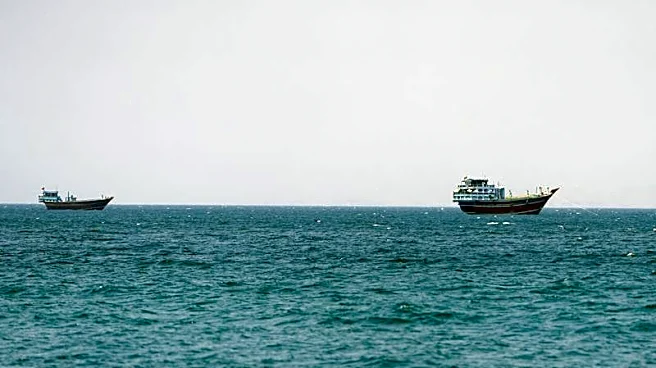
The Strait of Hormuz, which normally handles around a fifth of global oil and gas flows, has remained a focal point for oil markets since the conflict began on February 28.
On Wednesday, the U.S. and Saudi Arabia attacked Iran-backed paramilitary forces in Iraq, the first time that Saudi had publicly joined U.S. air strikes, in retaliation for drone attacks on Saudi oil targets launched from Iraq.
However, analysts said investor focus was on the volume of oil exiting the key chokepoints and possibility of a diplomatic breakthrough.
Iran's Fars news agency said a Qatari LNG tanker passed through the Iran-designated route in the Strait of Hormuz with Iran's permission.
The Al Areesh tanker, which loaded a cargo at Qatar's Ras Laffan terminal around July 4 to 6, sailed out of the strait overnight on July 29, according to Kpler and LSEG data.
The conflict has also disrupted shipping through the Bab el-Mandeb strait, creating a second pressure point for global oil flows alongside the Strait of Hormuz.
Yemen's Houthi group is considering imposing fees on commercial ships sailing through the southern Red Sea, a week after declaring a naval blockade on Saudi Arabia, regional sources with knowledge of the matter told Reuters.
"For Brent to break convincingly above recent highs and sustain a move higher, we would need clearer evidence of prolonged physical disruption — either a sustained reduction in flows through Hormuz or confirmed damage to key energy infrastructure," Waterer added.
In another blow to supply, the Caspian Pipeline Consortium, quoted by the Russian news agency Interfax, said on Thursday that it had suspended oil loadings following a drone attack on a tanker.
(Reporting by Mohi Narayan in New Delhi and Colleen Howe in Beijing; Editing by Lincoln Feast, Christian Schmollinger, Ros Russell)