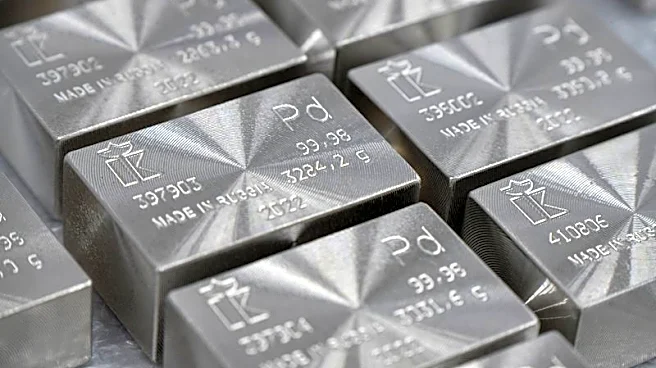







MOSCOW, May 21 (Reuters) - The United States has moved closer to slapping prohibitive tariffs on imports of Russian palladium after the Department of Commerce made a final determination on a countervailing duty of 109.1%.
In April 2026, it also issued a final ruling setting an anti-dumping duty on Russian palladium at 132.83%.
The duties will take effect if a parallel investigation conducted by the independent International Trade Commission determines that the U.S. industry has suffered harm.
These
decisions support a petition by Johannesburg-based Sibanye-Stillwater, which last summer, together with the United Steelworkers union, asked Washington to consider imposing duties on imports of Russian palladium to ensure the long-term sustainability of U.S. supply.
Russia’s Nornickel, the world’s largest palladium producer with about a 40% market share, declined to comment on Thursday.
The U.S. anti-dumping investigation into Russian palladium has increased market volatility, although it is not expected to affect fundamental market conditions in the long term, the company said previously.
"As palladium and platinum markets remain largely balanced, and palladium is a critical metal for automotive catalyst manufacturing, we do not expect a long-term increase in prices, as the global market is well able to rapidly reallocate material flows," Nornickel said in a market review.
Nornickel expects its palladium production to fall to 2.415–2.465 million ounces (75.1–76.7 tons) in 2026 from 2.725 million ounces (84.8 tons) in 2025, which could mark the lowest level in 20 years.
Russian palladium imports in the U.S. rose to 27.6 tons in 2024, from 23.8 tons in 2023 and 20.4 tons in 2022.
Palladium, used to reduce emissions in gasoline vehicles, has so far avoided U.S. sanctions.
Spot palladium prices have fallen about 16% since the start of the year to around $1,370 per ounce.
(Reporting by Anastasia Lyrchikova; Editing by Alison Williams)