







By Stella Qiu and Alasdair Pal
SYDNEY, May 13 - Australian Prime Minister Anthony Albanese’s move to wind back tax breaks for property investors has been welcomed by would-be homebuyers but criticised by investors, in what could be the defining policy of his second term as electoral power shifts to younger generations.
The Labor government curbed tax deductions for investors and replaced a flat 50% discount on capital gains tax (CGT) for assets held over a year with one linked to inflation in Tuesday's
budget, breaking a promise made before last year’s election not to touch either policy.
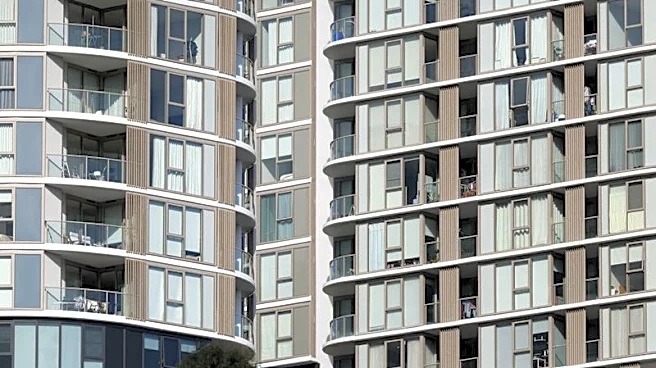
It's a policy shift that has outsized importance in Australia, where property is a national obsession and seen as the primary way to build wealth, but where real estate is consistently some of the world’s most unaffordable.
The government laid the groundwork by talking repeatedly about intergenerational fairness, a message political analysts say is aimed at young voters, and initial reaction was split between many young people welcoming the move while established investors questioned its effectiveness.
“I think for too long, the way that tax has been set up in this country massively benefits those who already have wealth, those who already have assets, those who already own homes, those who are already investing,” said Sharath Mahendran, a 24-year-old student in Sydney who does not own a home and supports the changes.
But Jack Henderson, a 29-year-old investor who owns 17 properties, said the changes would disproportionately impact part-time investors without access to advanced tax planning.
“Your normal mum-and-dad investor who is literally just trying to get ahead by buying one or two investment properties, which is over 80% of property investors in Australia, that's who it's going to affect, which is sad,” he said. “They’re not going to know what to do.”
DECADES OF RUNAWAY GROWTH
Introduced in 1999 by a conservative coalition government, the CGT discount, combined with decades of falling interest rates and high immigration, has seen house prices move well out of reach of the average Australian without inherited wealth.
In his budget speech, Treasurer Jim Chalmers noted that house prices had risen over 400% since 1999, more than twice as fast as average incomes.
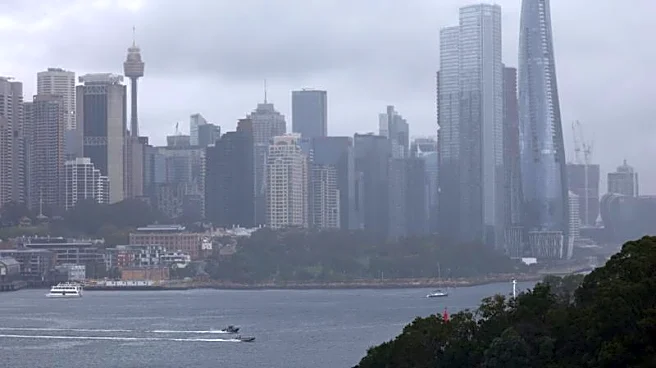
Now, on a price-to-income basis, five of the 15 most unaffordable cities in the developed world are in Australia, with only the densely packed Hong Kong more expensive than Sydney, according to Demographia.
In opposition, Labor lost an election as recently as 2019 campaigning on the reforms. It has been emboldened by winning power in 2022 and then substantially increasing its majority at last year's election, but was still not expected to change the CGT discount or negative gearing.
Chalmers agreed on Wednesday that the shift would prove “very politically contentious”, and the conservative opposition slammed the government for breaking an election promise and vowed to fight the changes.
Analysts said it was unusually bold for the normally cautious Albanese.
"Once they won with such a massive majority, what really came out of that was not so much of a vindication of their election strategy, but pressure from voters to say, "hey, you don't have any excuses anymore",” said Greg Jericho, chief economist at the Australia Institute think tank.
The election last year was the first when Millennial and Generation Z voters outnumbered the so-called Baby Boomers - people born between 1946 and 1964 - who have so far disproportionately benefitted from the tax breaks.
Chalmers said 75,000 home buyers who had been locked out of the housing market would now be able to buy homes due to the policy changes.
“It's becoming increasingly clear and increasingly unacceptable to see so many young Australians, and Australians more broadly, locked out of the dream of owning their first home,” Chalmers said in a television interview on Wednesday.
(Reporting by Alasdair Pal and Stella Qiu in Sydney; editing by Praveen Menon and John Mair)