

By Ju-min Park
BEIJING, April 26 (Reuters) - An American YouTuber is giving foreign visitors a first-hand look at the Chinese high-tech cars many U.S. consumers can only see online.
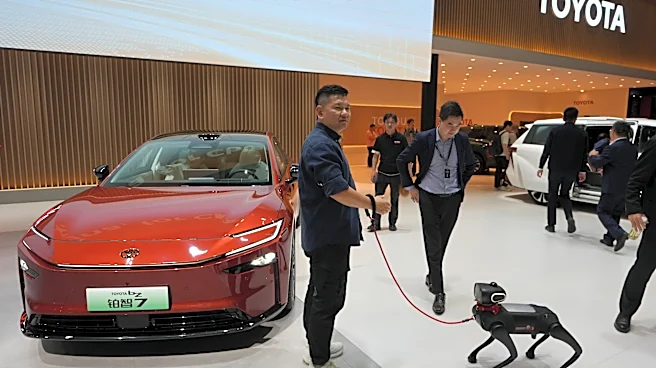
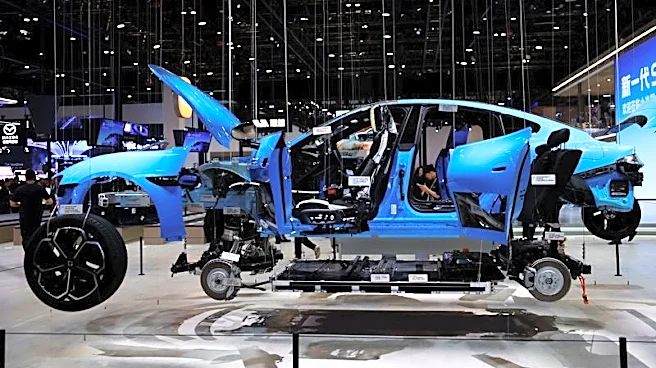
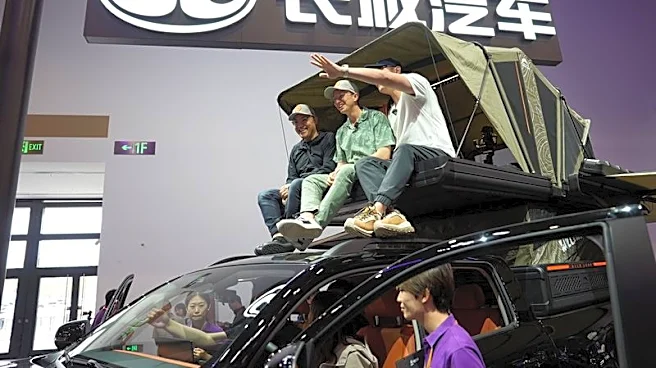
At the Beijing Auto Show, which opened on Friday, 34-year-old Ethan Robertson shepherded more than a dozen people from Australia, New Zealand, the United Arab Emirates and elsewhere through sprawling halls packed with electric SUVs, pickup trucks and futuristic concept cars — offering an up-close look at the vehicles making
China's auto industry increasingly hard to ignore.
The North Carolina native is the co-founder of Wheelsboy, a YouTube channel specialising in Chinese cars for English-speaking audiences. For many on his tour, the appeal of the vehicles was obvious: low prices, advanced technology and plenty of variety.
At one booth, he showed off a luxury electric SUV from Stellantis-backed Leapmotor, which sports wide screens and a fridge in the back seat.
"You're looking at a car that's maybe $30,000 and that car is fully equipped," he said. "Whereas $30,000 barely gets you into any electric vehicle or hybrid" in the United States.
'CAN'T BELIEVE U.S. WON'T ALLOW THIS CAR'
That price difference is a big reason why his largely American audience reacts with a mix of fascination and frustration.
"Our comment section is full of people saying things like, 'I can't believe the government won't allow them to sell this car in my country,'" Robertson told Reuters.
One participant on the tour, New Zealand retiree John Cordell, was drawn to a shiny yellow Deepal S07 midsize crossover.
"First of all, I was attracted to the color," the 77-year-old former heating and ventilation engineer, said. But it was more than the paintwork that won him over. He praised the interior, the heads-up display, the screens and the surround-view camera system.
His brother-in-law and his son accompanied him on the two-day, $399 per person tour.
Cordell already owns a Chinese EV back home — a BYD Atto 3 — and said technology was a major selling point. "Everything is very well engineered," he said.
PERCEPTIONS CHANGE OF CHINESE VEHICLES
Andrew Pertsoulis, a 62-year-old retired performance coach from Sydney, said what stood out most was how futuristic the cars felt inside. "It's what separates them," he said. The large screens and tech-rich interiors made him feel like he had "stepped into a new generation of vehicle".
Robertson, who lives in China, said the perception of Chinese cars among U.S. viewers has changed in the six years he has been covering the industry. While the cars were seen as low-quality copycats early on, that's given way to recognition that many brands are now pushing the industry forward in areas such as battery performance, software and charging speeds.
Robertson, who started studying Chinese as an undergraduate, said he still sometimes gets accused of working for Chinese companies or the government because of positive coverage on his channel, which has 210,000 subscribers. He doesn't work for either, he said.
More Americans are starting to follow the industry more closely.
Lei Xing is the American co-host of the China EVs & More podcast. Even for him, China's industry - with more than 100 automakers - is huge and complex. "I get lost," Lei said.
While Lei doesn't expect Chinese brands to enter the U.S. market quickly, due to hostile politics, he expects the cars will eventually reach American shores.
"It's a matter of time," Lei said. "I know in my life I'm going to be able to buy a Chinese EV."
(Reporting by Ju-min Park and Zhang Yan; Editing by David Dolan and David Holmes)