


By Gianluca Lo Nostro and Mirko Miorelli
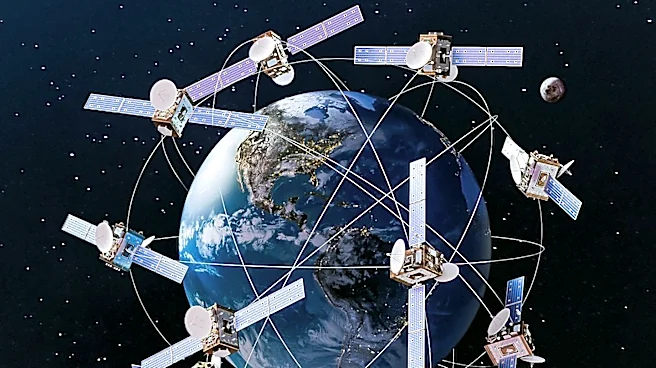
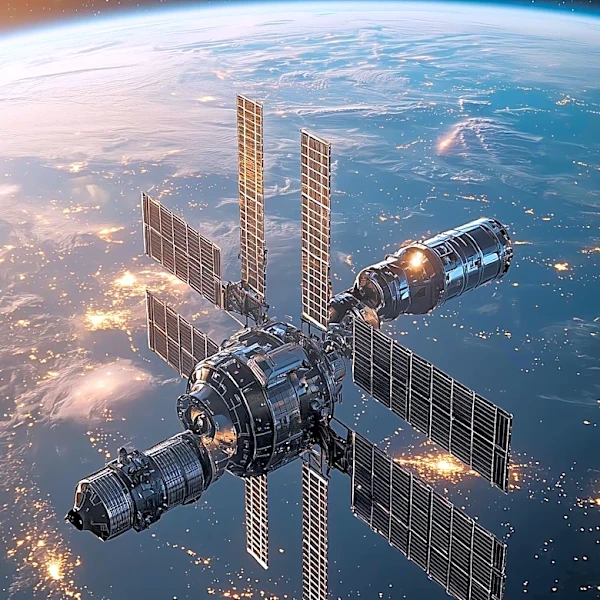
Nov 27 (Reuters) - The US Federal Communications Commission authorised Elon Musk's SpaceX on Wednesday to deploy 1 million satellites to support data centres in space, a fleet that would dwarf the total number of active satellites currently orbiting Earth.
The FCC said it was approving the SpaceX Starmind constellation to help meet rapidly growing demand for AI computing.
SpaceX's Starlink pioneered the era of large satellite networks, known as megaconstellations,
with rivals including Amazon and Chinese operators developing similar systems.
But putting satellites into orbit on the scale envisaged by Starmind would take the boom to a new level, intensifying concerns among scientists about space junk, atmospheric pollution and the transformation of the night sky.
SpaceX did not immediately respond to Reuters' request for comment on this story early in the US day.
Here are some environmental questions surrounding projects such as Starmind:
WHAT WOULD 1 MILLION SATELLITES MEAN FOR THE ENVIRONMENT?
Scientists and regulators disagree over how much environmental damage Starmind could cause and how much can be known before the satellites, each with a wingspan of 75 metres (246 feet), begin flying.
In a recent study, University College London researchers estimated that 1 million satellites could increase emissions from launches and re-entries by roughly 70 to 150 times from current levels.
They said the resulting emissions could affect ozone, climate and air quality, and that SpaceX's filing lacked the information needed to fully assess those risks.
The FCC, however, said those questions largely fell outside its remit.
"Potential concerns related to the emissions of rocket launches and the subsequent impacts on the human environment as an indirect result of the Starmind system are outside of the Commission’s purview," the regulator said.
It also dismissed concerns about satellites burning up in the atmosphere as insufficiently established.
"Other concerns, including impacts on the atmosphere caused by satellites burning up on re-entry, remain speculative and not supported in the record," the FCC said.
WOULD SPACE JUNK INCREASE?
Almost certainly.
Low-Earth orbit, where Starlink and the proposed Starmind satellites would operate, is already becoming increasingly congested, and experts say the amount of debris there would probably keep rising even if all space activity stopped today.
As of February 1, there were more than 231 million debris objects in orbit measuring between 1 millimetre and 10 centimetres (4 inches), according to the European Space Agency, which has repeatedly called for measures to reduce collision risks.
SpaceX told regulators in a later submission in response to the FCC that it would initially deploy satellites at lower altitudes for testing before moving them higher. It said onboard propulsion would enable collision-avoidance manoeuvres, station-keeping — keeping satellites in their assigned positions — and eventual deorbiting.
The company also said it would continue refining satellite designs to reduce collision risks and use controlled re-entries aimed over oceans. SpaceX said its satellites would be designed to burn up completely during re-entry.
But the sheer number of satellites changes the calculation.
University of Birmingham professor Hugh Lewis said even a failure rate of 1% could leave thousands of derelict satellites in orbit each year, which could increase the risk of collisions.
WHAT WOULD HAPPEN TO THE NIGHT SKY?
Scientists say it could change dramatically.
Following the FCC's approval, the American Astronomical Society said the proposed constellation would undermine decades of public investment in astronomical facilities and impair scientists' ability to study the universe.
Lewis said some of the Starmind satellites would be in "sun-synchronous" orbits and would always be illuminated, adding that they could contaminate astronomical images.
Visual simulations shared online by Virginia Tech aerospace professor Shane Ross show bands of satellites stretching across large portions of the sky, potentially outnumbering visible stars.
The FCC rejected requests for additional conditions, saying protection of optical astronomy falls largely outside its rules and that SpaceX's commitment to coordinate with the US National Science Foundation was sufficient.
IS IT REALISTIC TO SEND 1 MILLION SATELLITES TO SPACE?
Not quickly. It would be impossible for SpaceX to launch 1 million satellites at the same time. The largest number of payloads carried by a single SpaceX rocket is 143.
Satellite operators sometimes request approval for higher numbers of satellites than they intend to deploy to buy design flexibility.
For example, SpaceX sought approval for 42,000 Starlink satellites before it began deployment of that system. The growing network currently has just over 11,000 satellites in space.
The FCC authorisation requires the company to place its first Starmind satellite into orbit by November 2033, have half in orbit by 2038 and complete deployment by 2040. No operator has ever sent 1 million objects into space.
The proposed network is central to Musk's vision of moving energy-intensive AI computing into orbit with solar-powered data centres. However, SpaceX itself told investors ahead of its stock market listing that the ambition to build space-based data centres relied on unproven technology and may not be commercially viable.
(Reporting by Gianluca Lo Nostro and Mirko Miorelli; Additional reporting by Deborah Mary Sophia in Bengaluru; Editing by Josephine Mason and Hugh Lawson)