


By Colleen Howe and Chen Aizhu
BEIJING/SINGAPORE, May 22 (Reuters) - The Hengli Group, built by a husband and wife duo over three decades from a bankrupt textile mill into a Fortune Global 500 giant and one of China's largest private oil refiners, has been thrust into the centre of a geopolitical power struggle.
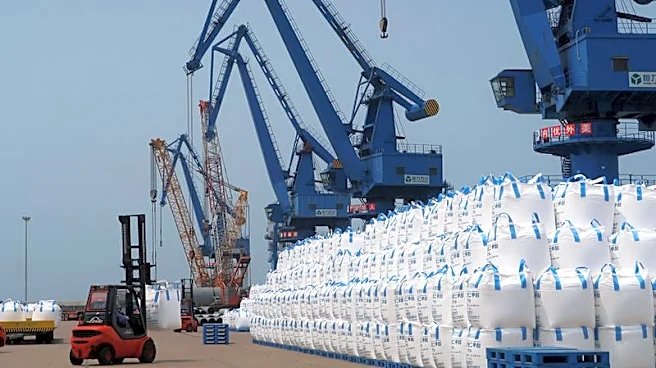
Last month, its Hengli Petrochemical arm, which runs a 400,000 barrel-per-day refinery in the northeastern city of Dalian, was hit with sanctions by the United States for buying Iranian oil,
which the group denied.
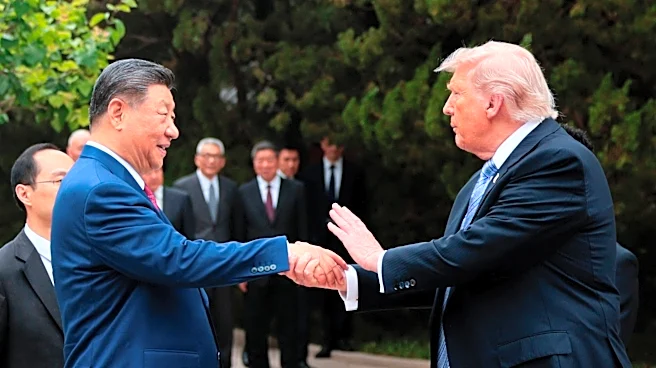
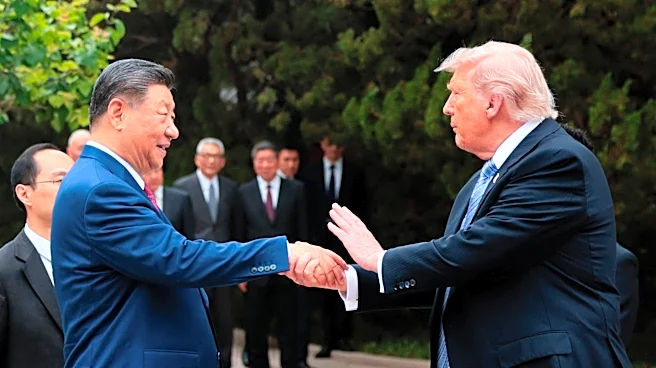
The blacklisting of Hengli and about 40 shipping firms and vessels came as Presidents Donald Trump and Xi Jinping prepared to meet and as Washington looked to Beijing to pressure Tehran to accept a deal to end the conflict that started when the U.S. and Israel attacked Iran in February.
Hengli is the largest Chinese refiner sanctioned by the U.S.
Beijing, which has long rejected such unilateral measures, rushed to its defense, invoking for the first time a 2021 law to stop companies complying with foreign sanctions.
Previously, Washington had targeted peripheral players including small Chinese independent refiners known as teapots, the main Iranian crude buyers, since reimposing sanctions on Tehran in 2018.
"Hengli is no teapot refinery. It is a world-class, world-scale plant that is representative of the large integrated refining and petrochemical facilities in which Beijing increasingly wants to consolidate its refining capacity," said Erica Downs, senior research scholar at Columbia University's Center on Global Energy Policy.
"This is probably why Beijing felt compelled to use its anti-sanctions law for the first time," she said.
Hengli and its billionaire founders, Chen Jianhua and his wife Fan Hongwei, did not respond to a request for comment.
IMMEDIATE IMPACT
The sanctions had an immediate impact.
Hengli's main offshore unit, a Singapore trading arm that employed about 100 people, is set to shut this month, Reuters reported. China's Wanhua Chemical, meanwhile, suspended a long-term agreement to buy benzene from Hengli Petrochemical.
The sanctions could jeopardise a preliminary agreement reached in 2024 with oil giant Saudi Aramco to take a 10% stake in Hengli Petrochemical, traders said. Aramco declined to comment.
However, Hengli's mostly domestic focus, and Beijing's backing, means it can continue operating largely as usual despite the sanctions. It has said it continues to buy oil in Chinese yuan - outside the dollar settlement system.
There is precedent: last year, rival Shandong Yulong Petrochemical was hit with British and European sanctions for dealing in Russian oil, which meant it ended up relying even more on Russian crude.
Traders have said Hengli is also likely to be forced to rely more on sanctioned oil and has already redirected its petrochemical sales to the domestic market.
Asked on his flight from Beijing last Friday whether he'd consider lifting sanctions on Chinese firms that bought Iranian oil, Trump said he would consider it.
"We talked about that and I'm going to make a decision over the next few days," he said.
As of Thursday, there was no change.
'THE ROAD AHEAD MAY NOT BE SMOOTH'
Nine days before the sanctions, Fan, who chairs Hengli's Shanghai-listed arm, struck a cautious tone in a shareholder letter after Hengli Petrochemical posted 2025 earnings of 7.07 billion yuan ($1.04 billion) on revenue of 201 billion yuan.
"Great-power competition continues to evolve and intertwine, and geopolitical turbulence has never ceased," she wrote. "We are well aware that the road ahead may not be smooth."
Hengli has taken on daunting challenges before.
Chen, 55, was born in the Suzhou district of Wujiang, where most households once raised silkworms, and dropped out of school before 14, building his first fortune trading scrap silk.
Last year, Chen Jianhua, whose given name can be translated as "build China", recounted in a speech to the National Young Entrepreneurs Conference how at age 23 he bought a bankrupt textile mill with 27 employees.
That was in 1994, as China's economic reforms were taking off under Deng Xiaoping's leadership.
To help China's push to break the foreign stranglehold on synthetic fibre production, Chen's Hengli ventured upstream, eventually moving into the state-dominated refining sector to become a fully-integrated petrochemical producer.
Hengli became the template for a new breed of large, private petrochemical producers churning out materials to make plastics and other products for China's mushrooming manufacturing sector.
In an audacious bet, Hengli built what became an $11 billion complex on then-remote Changxing island off Dalian, directly challenging state giant China National Petroleum Corp's nearby refinery.
"There was no electricity, no water, and no mobile signal - just a mountain, a stretch of sea and a small road. For a full four years, I lived and ate on the construction site," Chen recounted.
'THE TIME IS NOW'
Hengli is now the world's largest producer of purified terephthalic acid (PTA), used in making synthetic fibres.
In 2022, heeding Beijing's call for infrastructure investment to boost the pandemic-hit economy, Hengli bought an idled shipyard on Changxing island.
"At the start, all the shipowners didn't trust us and wouldn't place orders, so we placed our own orders," building two 300,000-ton very large crude carriers and an 82,000-ton bulk carrier, he said.
Hengli Heavy Industry last year won orders for 115 vessels worth more than 100 billion yuan, counting Greek, Norwegian and Japanese shippers among customers.
In February 2025, Chen was invited to a gathering of private sector leaders with Xi, who urged them to support China's goals of technological self-reliance and supply chain security.
Chen recalled Xi's message: "Show your talent, the time is now."
($1 = 6.8012 Chinese yuan renminbi)
(Reporting by Colleen Howe and Chen Aizhu; Additional reporting by Trixie Yap, Siyi Liu and Lewis Jackson; Editing by Tony Munroe and Sonali Paul)