
By Promit Mukherjee and David Ljunggren
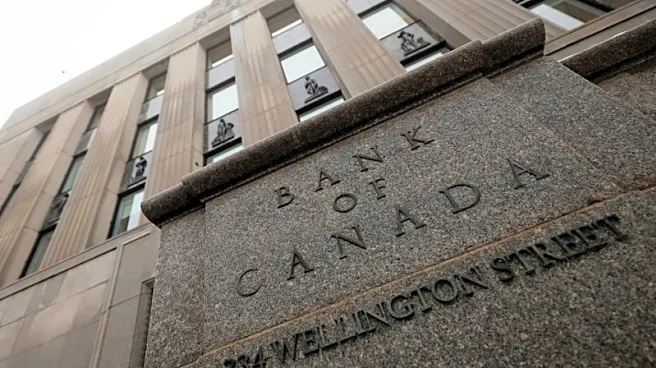
OTTAWA, Jan 28 (Reuters) - The Bank of Canada on Wednesday held its policy rate at 2.25%, as widely expected, and Governor Tiff Macklem said the high level of uncertainty
made it difficult to predict when and how rates might next change.
In a quarterly monetary policy report, the central bank maintained its forecast for modest growth in 2026 and 2027 and said inflation would hover around the 2% target.
Wednesday's decision was the second time in a row the bank has stayed on the sidelines. Businesses will take time to adjust to the effect of U.S. tariffs, it said, noting that hiring intentions remain soft.
"While Council judges the current policy rate is appropriate based on our outlook, the consensus was that elevated uncertainty makes it difficult to predict the timing or direction of the next change in the policy rate," Macklem said in his opening remarks after the rate announcement.
Economists and markets are divided on where monetary policy is headed this year.
Many economists expect there could be another cut to support an economy grappling with President Donald Trump's tariffs. Money markets though are pricing in no cuts through 2026, but bets tilt toward a hike in the last quarter.
"Geopolitical risks are elevated and the upcoming review of the Canada-United States-Mexico Agreement is an important risk to the outlook," Macklem said.
Money market bets did not change much after the rates decision was announced.
The Canadian dollar firmed after the decision with the loonie trading up 0.28% to C$1.3535 against the U.S. dollar, or 73.88 U.S. cents.
"I find their wording to be that they see risk," said Doug Porter, chief economist at BMO Capital Markets.
"They see a wide range of outcomes that the economy could see this year, and one of those would likely entail a lower interest rates," Porter said.
Canada's economy has held up relatively well amid tariffs on critical sectors such a steel, autos and aluminum.
The bank says 2025 growth was 1.7%, up from the earlier projection of 1.2% in October.
The growth outlook for 2026 remains 1.1%, while 2027 was revised a notch down to 1.5% from 1.6% projected last year.
Macklem reiterated that the risks to inflation going up due to tariffs would likely be offset by downward pressure on prices due to excess supply.
Household spending is expected to continue growing modestly, supported by past rate cut and rising disposable incomes, Macklem said, adding that the central bank expected modest strengthening in business investment.
The BoC expressed hope that the restructuring the economy was going through due to tariffs would support some recovery in productive capacity.
"But it will all take time," Macklem said.
(Reporting by Promit Mukherjee and David LjunggrenAdditional reporting by Nivedita Balu and Divya Rajagopal in TorontoEditing by Nick Zieminski)