




By Rajesh Kumar Singh, Doyinsola Oladipo and Dietrich Knauth
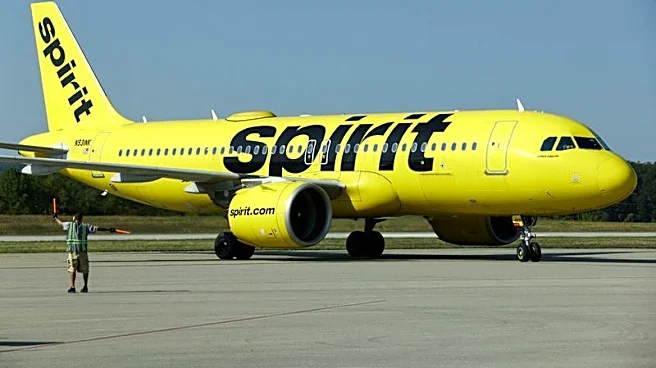
CHICAGO/NEW YORK, April 16 (Reuters) - Spirit Airlines' bankruptcy exit plan is under renewed pressure after a sharp rise in jet fuel prices undermined key assumptions behind its restructuring.
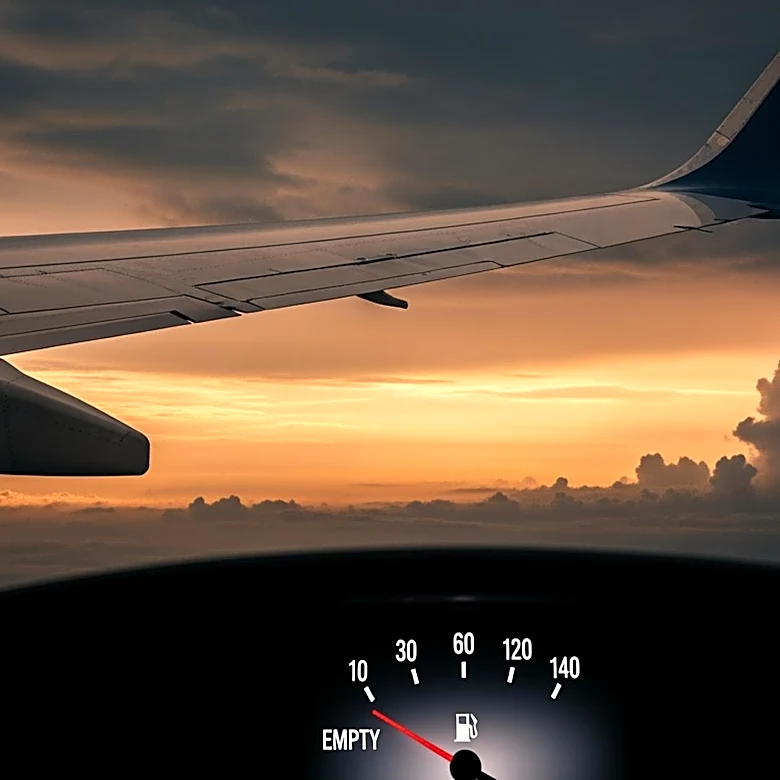
The ultra-low-cost carrier built its turnaround on fuel costs averaging about $2.24 per gallon in 2026 and $2.14 in 2027, based on its March disclosures. By mid-April, jet fuel prices were around $4.24 a gallon, roughly double the level assumed in its projections.
J.P. Morgan estimates that if fuel stays near current elevated levels, Spirit's forecast 2026 operating margin could deteriorate to about negative 20%, from the 0.5% margin the airline assumed in its restructuring plan. That would add about $360 million in incremental costs, more than the airline's year-end unrestricted cash, according to the bank.
Spirit has already flagged the risk. In its latest annual report, the airline said the recent increase in fuel prices would have an "immediate and substantial negative impact" on results and warned that if higher costs make it harder to reach agreements with creditors and other stakeholders, it could be forced to liquidate. Spirit in an email to pilots on Thursday, seen by Reuters, said the airline continues to operate normally.
The pressure comes as Spirit seeks court approval for a second restructuring in less than a year, after emerging from bankruptcy in March 2025 and continuing to face elevated domestic capacity, weak leisure demand and a difficult pricing environment.
Spirit declined to comment for this story.
PLAN BUILT ON LOWER FUEL
Spirit's restructuring plan, known as "Project Soar," relies heavily on lower fuel prices.
The plan calls for shrinking the airline to about 76 aircraft by mid-August 2026, reducing aircraft-related debt and focusing on routes with stronger revenue potential. The company says the smaller airline would lower cash needs, improve margins and reduce debt.
Spirit is targeting nearly $1 billion in 2026 cost reductions alongside revenue gains from pricing, premium seating and other changes. It has said early 2026 results show improvement, with projected first-quarter operating margins of negative 5.6%, compared with negative 27.1% a year earlier.
CREDITORS PUSH BACK
But creditors say the plan leaves little margin for error. In a court objection last week, Citibank, acting as administrative agent for lenders under Spirit's revolving credit facility, said the airline's projections assume fuel prices ease later this year and do not show how the business would perform if they remain high.
The lenders said higher fuel prices represent "an entirely new and unbudgeted strain" not reflected in the projections, raising questions about whether the plan is feasible.
Citibank also said Spirit is already in default under parts of its credit agreement and may need to repay more than $35 million or pledge additional collateral. It warned that confirming the current plan could lead to almost immediate liquidation, in part because lenders would have the right to repossess aircraft engines and spare parts pledged as collateral.
Separately, the U.S. Trustee has objected to Spirit's disclosure statement, saying it does not adequately explain why the restructuring path was chosen over other options, including a potential sale.
LIQUIDATION RISK IN FOCUS
Reports about a near-term liquidation have circulated this week due to elevated fuel costs.
Spirit is not expected to liquidate this week, a person familiar with the matter said. While liquidation remains possible, it is not the most likely outcome, the person said.
The person said the carrier is "shaking all the trees" to raise cash and shore up its position.
Spirit's finances leave limited capacity to absorb a prolonged fuel shock.
At the end of 2025, the airline reported about $273 million in unrestricted cash and roughly $591 million in restricted cash.
Under its smaller 76-aircraft plan, the company projected its cash balance would fall to about $87 million at its lowest point, compared with about $410 million under its earlier plan. It expected monthly net cash flow to turn positive in November 2026, with full-year net cash flow of about $97 million.
Under its restructuring agreement, it must also use $150 million of encumbered cash to repay the bankruptcy loans it used to keep operating, maintain minimum restricted balances and make an additional $100 million payment to lenders upon exit, while securing new financing.
Spirit's March filing says it has responded to the fuel spike with fare increases and capacity cuts, and argues that its position in bankruptcy gives it flexibility to reduce capacity and fixed costs if high fuel prices persist.
(Reporting by Rajesh Kumar Singh in Chicago, Doyinsola Oladipo and Dietrich Knauth in New York; Editing by Rod Nickel)