






By Roshan Thomas and Nikita Maria Jino
Aug 13 (Reuters) - Treasury Wine Estates said on Thursday it expects annual operating earnings to be at least in line with the previous financial year after a 36% drop in 2026, easing investor concerns and helping its shares close higher after early losses.
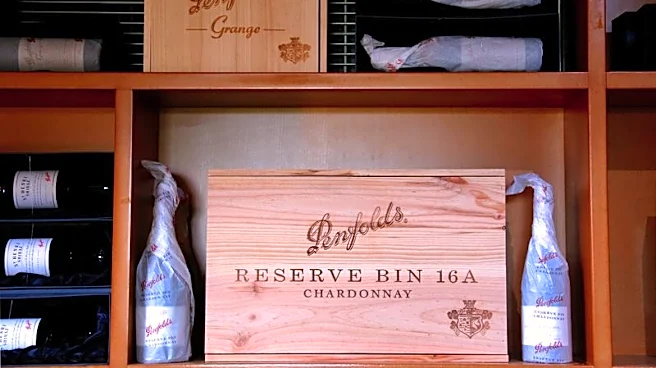
Australia's biggest standalone wine producer expects revenue growth at its luxury Penfolds brand to offset the effect of distributor inventory rebalancing in the United States and declines in non-priority brands,
among other headwinds.
Shares of the company swung between gains and losses in early trade before ending up 4.9% at A$5.77, their highest close since December 2, 2025.
"The market reaction reflects the fact that investors were already braced for the headline loss and large impairment charges, meaning attention quickly shifted to what the result said about the future," said Marc Jocum, senior ETF strategist at Global X ETFs.
"In many respects, TWE's result was a case of investors expecting a category-five storm and just getting heavy rain instead."
Treasury Wine logged A$492.3 million ($346.87 million) in earnings before interest, tax, self-generating and regenerating assets and material items (EBITS) for the year ended June 30, compared with A$770.3 million in the previous year and within its forecast range.
The company, however, logged a statutory net loss attributable of A$1.08 billion, compared to a profit of A$436.9 million in the previous year.
The loss followed an A$1.12 billion impairment of its U.S. assets and an A$611.3 million charge tied to a strategic review of its Americas business and supply chain changes.
Treasury Wine's Americas operations have been a major drag on earnings, with EBITS for the division diving 61.4% as weak U.S. demand and distribution disruptions left the company with excess inventory, prompting a broad overhaul.
Demand for Penfolds remained resilient in key markets, though revenue declined as Treasury Wine reduced customer inventories and restricted shipments that were contributing to parallel imports into China instead of authorised distribution channels.
($1 = 1.4192 Australian dollars)
(Reporting by Roshan Thomas and Sneha Kumar in Bengaluru; Editing by Diti Pujara and Subhranshu Sahu)