
By Dan Catchpole
SEATTLE, Jan 26 (Reuters) - Boeing's plans to increase jetliner production and its outlook for improving free cash flow in the coming years will be key topics for analysts and investors
when the planemaker reports fourth-quarter earnings on Tuesday. While the company is expected to report another quarterly loss, investors are looking for continued recovery from years of crises.
Boeing's share price has nearly caught up to where it was about two years ago, before a mid-air panel blowout on a nearly new Alaska Airlines 737 MAX. The accident exposed systemic production-quality problems at Boeing that dropped the share price over 30% in 2024.
Last year appears to have been a turnaround year for Boeing, which stabilized and raised output of its cash-cow 737 MAX jet. It also sold subsidiary Jeppesen for $10.6 billion, acquired its largest supplier Spirit AeroSystems, won the U.S. F-47 fighter contract, and beat European rival Airbus on new orders for the first time in several years.
CERTIFICATION STRUGGLES CONTINUE
But the company is still struggling to certify the 737 MAX 7 and 10 - the smallest and largest variants of the popular single-aisle jet - and the wide-body 777X, which is already six years behind schedule.
Boeing is expected by Wall Street analysts to post a loss of 39 cents per share in the fourth quarter, according to LSEG data.
The view among many top analysts is that Boeing has more upside than risk - 24 of 29 analysts surveyed by LSEG recommend buying. Which way it goes depends in large part on whether Boeing can continue increasing 737 production above a federally imposed cap of 38 airplanes a month. Federal regulators approved increasing output to 42 per month in October.
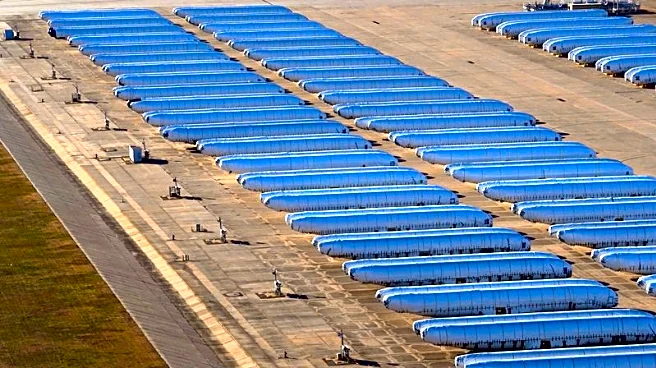
"They built up a lot of inventory over the last couple of years, so 42 a month is not a major challenge," Bernstein aerospace investment analyst Doug Harned said. "When they get to 47 a month, then they're going to have to get the supply chain to ramp up."
Boeing CEO Kelly Ortberg has previously said the company will not increase the rate more often than every six months. Even taking nine to 12 months to increase the production rate is OK, so long as it is stable and not plagued with quality and safety problems as it was after the pandemic, Harned said.
With enough jet orders to keep it busy past 2030, investors want to know when Boeing's free cash flow, a metric closely watched by investors, will break $10 billion. Bernstein forecasts passing that mark in 2028. Cash flow was expected to be negative in 2025.
The "math needs to add up to more than $10 billion" in free cash flow sooner than later to "satisfy the bulls," BNP Paribas analyst Matthew Akers wrote in a research note previewing earnings. A rare bear on Boeing, Akers projects Boeing hitting $9 billion in free cash flow in 2029.
(Reporting by Dan Catchpole in Seattle; editing by Peter Henderson, Rod Nickel)