
By Fabio Teixeira and Ricardo Brito
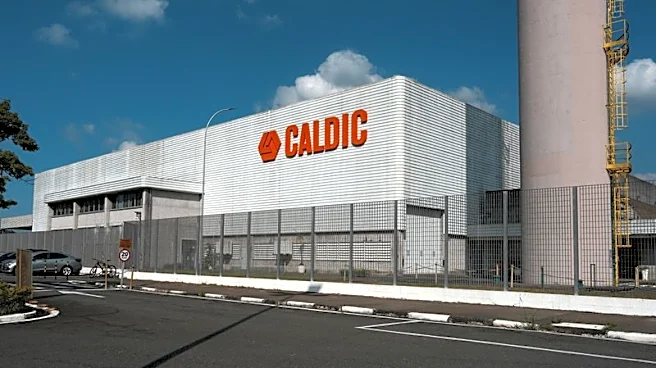
RIO DE JANEIRO/BRASILIA, April 23 (Reuters) - Caldic, a global chemicals distributor majority-owned by U.S. private equity firm Advent International, is under investigation
in Brazil for allegedly supplying a vast methanol smuggling racket, according to the company and official documents seen by Reuters.
Last year, investigators busted what they called a $10 billion fuel fraud scheme involving gas stations run by Brazil's largest crime syndicate, the First Capital Command (PCC), which illegally sold methanol as fuel.
Caldic was the main source of the methanol under investigation, according to a source directly involved in the probe.
Although police have not found evidence that Caldic or Advent knew sales were likely being diverted, the source said, the investigation led by Sao Paulo state prosecutors underscores how even sophisticated U.S. investors can be entangled with criminal elements infiltrating wide swathes of Latin America's economy.
Reuters is the first to report that Netherlands-based Caldic is under investigation for alleged ties to the fuel fraud scheme orchestrated by the PCC crime syndicate.
GPC Quimica, another distributor, also faces scrutiny over its methanol sales, Reuters reported in August, although the suspect volumes are smaller than Caldic’s, the source said.
Founded three decades ago in a Sao Paulo prison, the PCC has become South America's largest drug trafficking group, with a money laundering arm penetrating deeper into the formal economy across real estate, fintech startups and the fuel sector.
The PCC has become a source of diplomatic tension, as the United States pressures Brasilia to classify it as a terrorist group as part of a regional strategy to address transnational gangs involved in “narcoterrorism.”
Prosecutors aim to bring charges in the methanol case by June and are still evaluating the extent and nature of Caldic's role in the scheme, said the source, adding that the firm could face a civil suit and employees could be criminally charged.
Asked about the criminal probe, Caldic provided a statement from its Brazilian subsidiary Quantiq, saying that it is cooperating with investigators and "is firmly committed to the highest standards of compliance and integrity." In the statement, Quantiq said an internal audit had found no wrongdoing by its management.
GPC Quimica, which neither confirmed nor denied it was under investigation, told Reuters it conducts business "strictly following the legislation and current regulations."
Advent, which regularly ranks among the ten largest U.S. private equity firms, did not reply to a request for comment.
Brazil's fuel regulator ANP said it has opened an ongoing "administrative proceeding" to probe Quantiq's methanol sales. Documents in that independent regulatory probe, now under seal, show it was a response to the separate criminal investigation and cites prosecutors’ preliminary findings, including emails between Quantiq employees and individuals linked to the PCC.
The regulator has already restricted Caldic’s methanol sales in Brazil and could revoke the firm's authorization to distribute it, ANP documents show.
Methanol, a controlled substance in Brazil, is hazardous to vehicles and lethal to humans. Since 2024, ANP has held distributors responsible for improper use of the chemical by their customers.
One of ANP's documents from November, part of the regulator's sealed investigation seen by Reuters, said nearly a quarter of Quantiq’s methanol sales raised red flags because the declared buyers, including some linked to the PCC, were not operational, did not receive the shipments or had no clear use for the volumes purchased.
The document alleged Quantiq failed to implement minimum compliance protocols, contributing to "the irregular methanol trade, with potential risk to public health and to the regular supply of fuels." Reuters has not independently verified these claims.
In response to questions about the findings in the document, Quantiq said it would not comment on speculation, unnamed sources or selectively disclosed information.
Sao Paulo's prosecutors' office declined to comment on details of the ongoing investigation, which is under seal.
METHANOL SMUGGLING
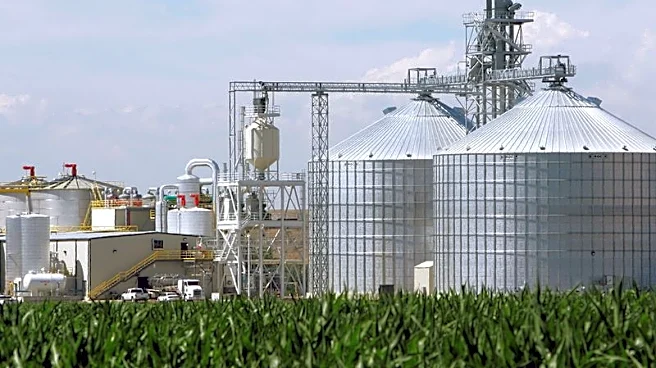
Both methanol and ethanol are central to Brazil's booming biofuels industry. Methanol is used in small quantities for biodiesel production, while ethanol is widely used as both an additive and substitute for gasoline in Brazilian automobiles.
Methanol is often cheaper than ethanol, so bad actors can mix the two to boost profits from fuel sales, said Carlo Faccio, director of ICL, an industry group created to combat fuel fraud in Brazil.
As part of the multibillion-dollar fuel fraud and money-laundering scheme targeted by authorities in August, members of the PCC acquired methanol to adulterate fuel sold to distributors and gas stations, the government said at the time.
Among those hit with warrants were two people who had worked for over a decade at Quantiq, the Caldic subsidiary, according to documents in the ANP probe. Those individuals, who were not senior managers, exchanged emails coordinating methanol shipments with people directly linked to the PCC, said the source familiar with the investigation.
The company said its own audit found "no indication of involvement by Quantiq's representatives or management" in the alleged methanol smuggling, without commenting further on specific allegations. Quantiq declined to provide documentation of the audit or who conducted it and Reuters could not verify its findings.
MISSING CARGOES
Last year, Quantiq was Brazil's second-largest importer of methanol, behind GPC Quimica, according to ANP data.
Documents from ANP's investigation said Quantiq sold about 190 million liters of methanol from January to August of last year.
Hundreds of those shipments, which Quantiq imported via the Paranagua port in southern Brazil, never made it to the stated buyers, according to financial tracking data analyzed by ANP officials in their sealed administrative proceeding.
Quantiq also sent methanol cargoes to firms that were no longer operational or had no clear use for it, ANP found.
Where customers did demonstrate a use, ANP officials found that several bought far more than their documented needs.
For example, Quantiq sold about 25 million liters over eight months to a buyer that told ANP in October it uses around 630,000 liters of methanol per month, the ANP documents said. Reuters could not establish what happened to the remainder.
In November, ANP barred Quantiq from selling methanol, while it looked into the issues flagged by the criminal investigation last year. At the time, ANP flagged a regulatory investigation into similar issues in 2023, when it warned the company to strengthen its compliance measures.
Asked about ANP's latest findings, Quantiq said it maintained compliance and due diligence procedures for clients, "incorporating regulatory recommendations."
In February, the regulator allowed Quantiq to resume some methanol sales to specific buyers with new safeguards, until it makes a final ruling based on its ongoing administrative probe.
(Reporting by Fabio Teixeira in Rio de Janeiro and Ricardo Brito in BrasiliaEditing by Brad Haynes and Frank Jack Daniel)